Developer: Studio Aurum
Publisher: Studio Aurum
Platform: Switch (2), PC, PS5, Xbox Series X|S
Tested on: Switch 2
Monster Crown: Sin Eater – Review
If we count DLC, it has been a very long time since we’ve had a holiday season without a major Pokémon release. Unless Nintendo decides to shadow-drop Ruby and Sapphire on the eShop, it looks like Pikachu and pals are taking a well-earned rest this year, ahead of the arrival of Pokémon Wind & Waves in 2027. Fortunately, there are options for scratching that Poké-itch outside of revisiting Legends: Z-A. We’ve taken a look at several Poké-clones in the past, including Coromon and Doki Monsters Quest, but one title that slipped under our radar was Monster Crown: Sin Eater. The game actually debuted in late April of this year, but as the last decade conditioned us to play some form of a Pokémon game around this time of year, we figured we may as well slip this one in as our next backlog review.
Story
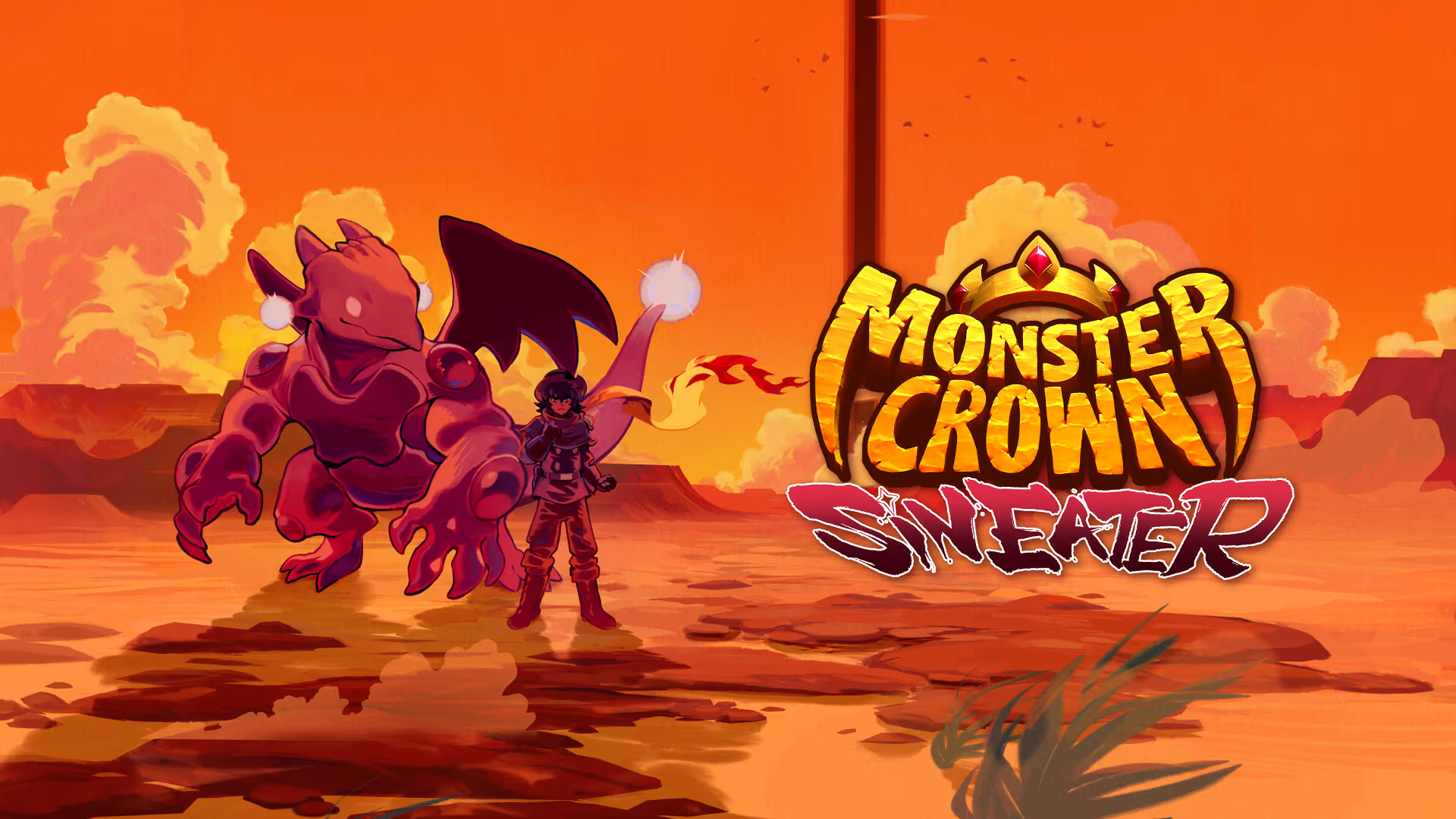
Although Sin Eater is set in the same universe as the original Monster Crown, it is presented as its own standalone story. There are lore connections between the two games, and returning players will definitely get a kick out of the references they encounter, but you can perfectly use Sin Eater as an entry point. Set in the Crown Nation, Sin Eater follows the journey of Asur, a young farmer whose older brother Dyeus has been away from home to become a successful monster tamer. Our story kicks off when Dyeus returns to warn Asur of an imminent threat, leading the authoritarian Lord Taishakuten’s goons to break into the family home, seize Dyeus, and kill his beloved monster companion. This prompts Asur to don the mantle of a monster tamer himself and embark on a path of rebellion to take down the oppressive government and seek justice. Unlike its genre compatriots, Sin Eater features a much darker tone with mature themes. Monsters are dangerous animals here, used for profit or treated like objects, rather than friendly creatures. The branching story is shaped by dialogue options and choices regarding who to trust or align with, all leading up to a satisfying final confrontation with Taishakuten himself.
Graphics
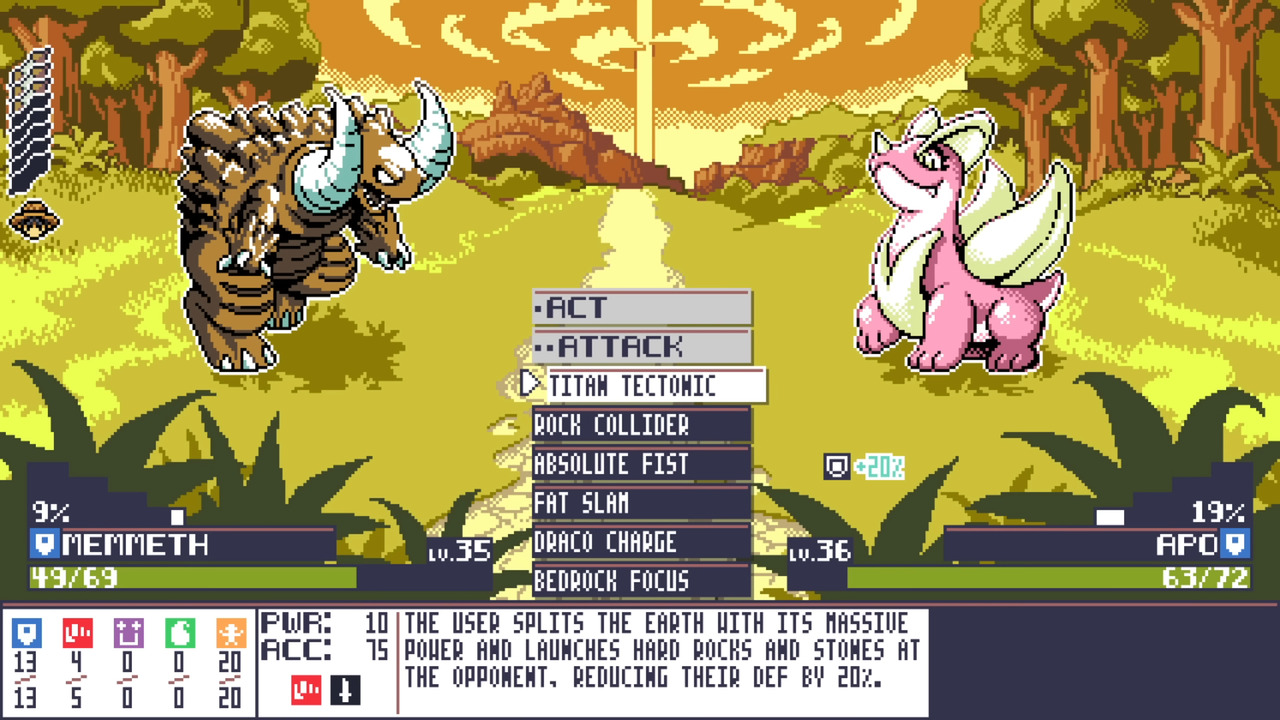
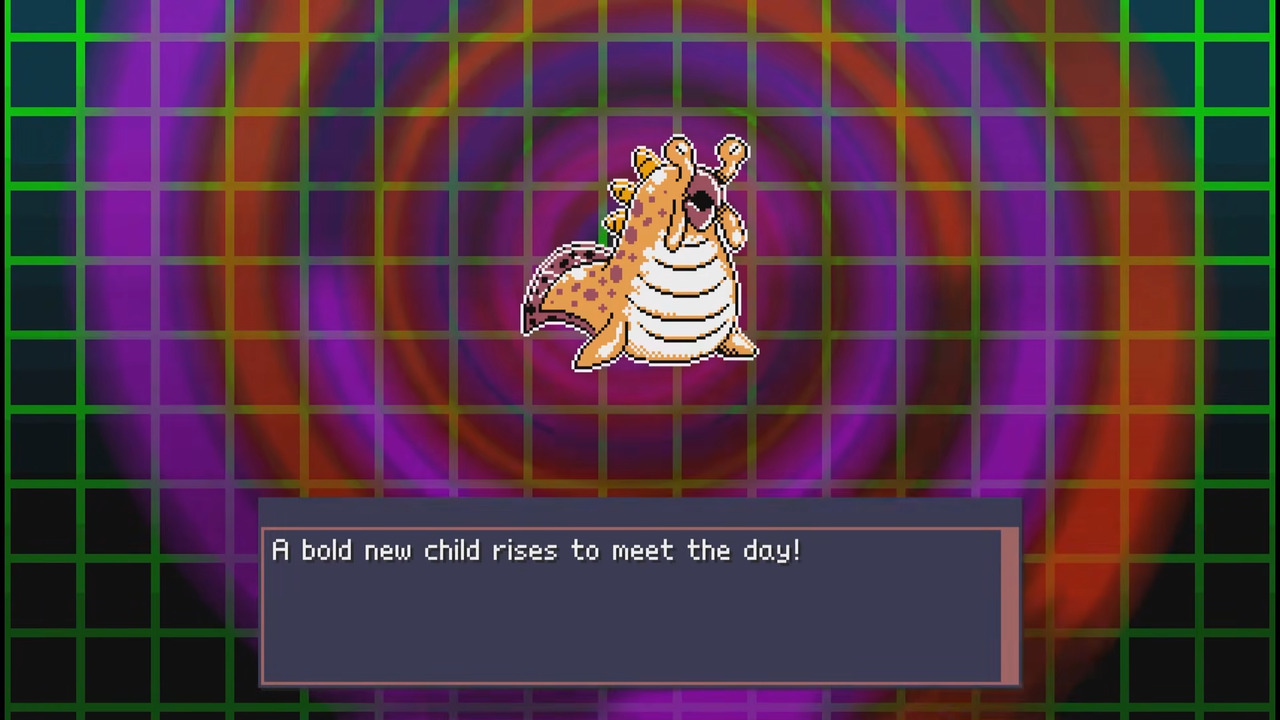
The retro-inspired pixel art aesthetic of Sin Eater sits somewhere between the graphics of the Game Boy Colour and the Game Boy Advance. The limited colour palette in particular brings the former to mind, but the outdoor environments and battle backdrops feature a level of detail that the GBC wouldn’t be able to handle. The Crown Nation feels like a living place, thanks to moving parts like wind-swayed bushes and real-time visible monsters in the overworld. The monster designs feature over a thousand unique hand-crafted sprites of various sizes. True to the era that the game harkens back to, they remain static during battles, but all attacks feature their own varied animations. Unsurprisingly, Sin Eater isn’t too taxing and runs very well, both docked and in handheld.
Sound
In true Game Boy-era fashion, retro-inspired music occupies the bulk of Sin Eater’s soundscape. The musical score is powerful, perfectly well-mixed, and fitting for the game’s darker aesthetic and tone compared to the more cheerful tunes we’ve come to expect from the genre. Where Sin Eater’s sound design surpasses that of its main source of inspiration is in its environmental ambience, which shifts alongside the in-game day and night cycle. Battle sound effects are also thorough and executed to a high standard, with unique audio cues for attacks and menu navigation. You can even independently customise the soundscape through separate master, music and SFX bars.
Gameplay
The core formula of Sin Eater is one we’ve come to know and love over the last three decades. In the unlikely case that you’re unfamiliar with the monster catching genre, Sin Eater lets you explore an open world where you capture monsters and use them in turn-based battles against rival tamers and bosses. Monsters can be bred and, in this series, can also be fused, allowing you to build an even stronger team. Wild monsters are visible in the overworld, displaying different behaviours, from fleeing to attacking you, and can be manipulated using bait. While the main gameplay purpose of monsters is to fight, eventually you’ll also unlock movement abilities like swimming or boulder breaking that allow you to travel to other parts of the overworld.
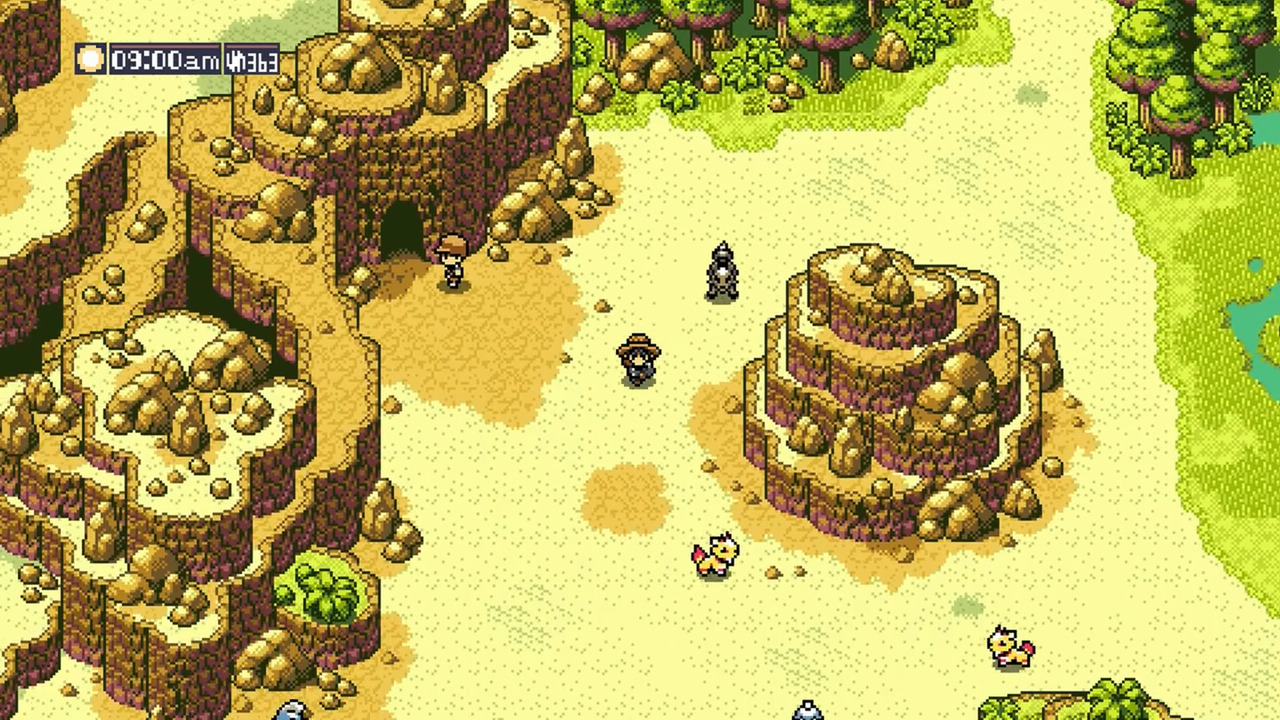
The classic 1v1 turn-based elemental system forms the backbone of Sin Eater’s combat, though the game does introduce its own twists to battles. There are five monster types, and weaknesses and resistances interact with a rock-paper-scissors system. Battles also feature a Synergy meter, which fills when dealing or receiving damage, allowing you to boost moves and trigger a powerful “Crowned” transformation, which is often the key to winning battles. Asur himself can also participate in combat directly, using his own HP bar and abilities. These unique mechanics open up the combat mechanics in new ways, though there is one major caveat preventing Sin Eater’s battles from achieving perfection. The game lacks an Exp. Share mechanic, meaning only active, surviving participants earn experience, which leads to slower progression and a need to grind to keep your party somewhat equally leveled.
Playing through Sin Eater at a leisurely pace took us around 20 hours, though with a branching storyline and different difficulty settings, completionists can easily rack up a playtime in the triple digits, especially since wild-caught monsters are generally weaker than fused or bred monsters. The sheer depth of the game’s breeding and fusion mechanics makes it so that completing the game’s equivalent of the Pokédex, the Monster Binder, is nigh-on impossible though. There are 200+ base species in the game, but once you factor in the way appearances, types, movesets, passives, and colour palettes are dynamically mixed through crossbreeding, you’re left with thousands of permutations. Both Sin Eater’s retro appearance and its relatively low €24.99 price tag belie just how big of a game it really is once you get stuck in.
Conclusion
We’ve played plenty of Poké-clones of varying quality, so we feel confident in saying that Monster Crown: Sin Eater is one of the better ones out there. While the game stays true to the core gameplay formula of the genre, its grittier, darker story and sophisticated breeding/fusion mechanics make Sin Eater stand out. If you’re in the market for a Pokémon alternative to bide your time until Wind and Waves, look no further.