

Developer: Badger Punch Games
Publisher: Thalamus Digital
Platform: PC, Evercade
Tested on: PC
Roguecraft DX – Review
Within the ever-growing lineup of games available on the Evercade, Roguecraft DX stands out. It may look and feel like a retro game, but it’s actually a modern game that debuted on the handheld system in 2025. As the ‘DX’ in the title indicates, it’s an improved version of the original Roguecraft, an award-winning Amiga game… that was released in 2024, despite Amiga hardware having been discontinued for three decades at that point. By this point we’re already several layers deep into Roguecraft DX’s position in the retro gaming Venn diagram, but we’re going to go just one layer further: the most recent version of Roguecraft DX is a Steam port of the game. That PC release is the one we’ll be looking at in our review. If you’re wondering why this short history lesson about the game’s origins is relevant, then read on as we’ll tell you everything you might want to know about Roguecraft DX.
Story
There is no overarching story hook or complex world-building present in Roguecraft DX. Instead, the game tries to hook you in by dynamically generating your adventure through emergent gameplay moments on each run, ranging from unexpected traps, risky potion gambles, or encounters with bizarre dungeon inhabitants. The game’s premise centers on three adventurers descending into the procedurally generated Dungeons of Mordecoom, pushing ever deeper through its floors. Although the game’s setting is its own original IP, it leans heavily into familiar fantasy tropes, and borrows ideas from both classic D&D and Lovecraft’s cosmic horror. That said, the focus is on gameplay rather than delivering a neatly rounded story.
Graphics
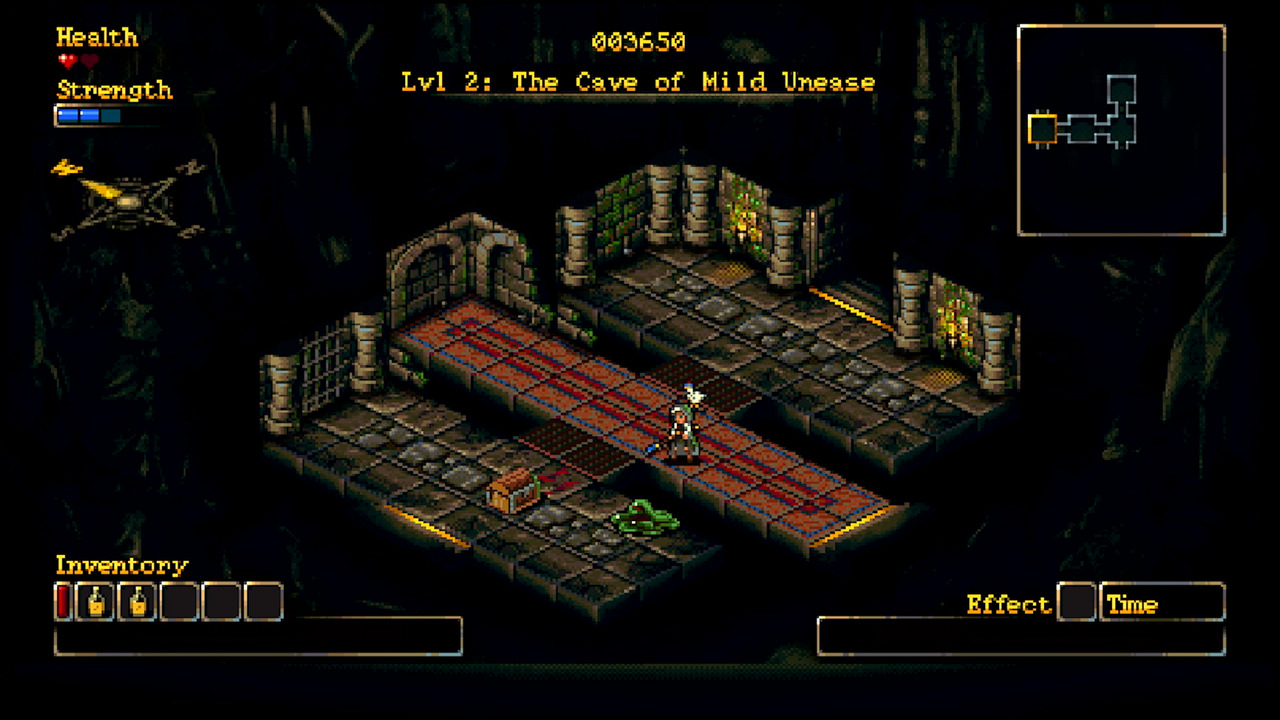
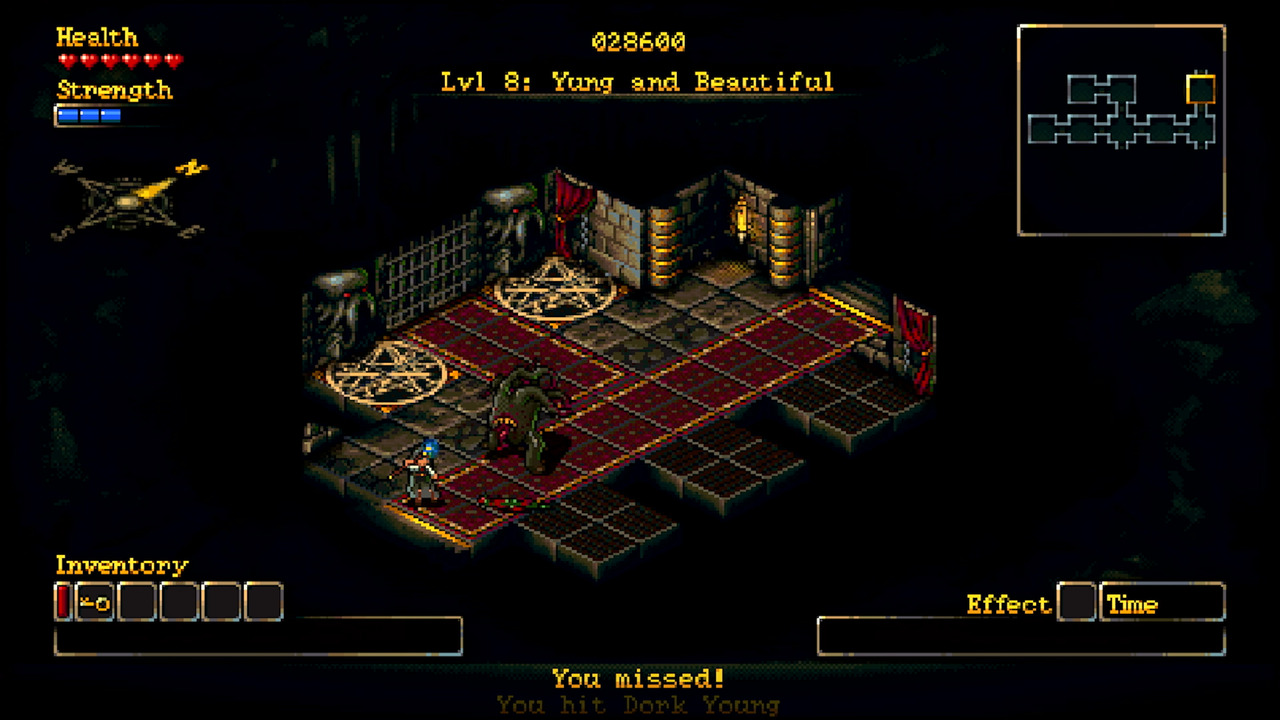
The isometric dungeon rooms of Mordecoom utilise a mature, detailed and clean pixel art style that act as a retro throwback to authentic retro 80s and 90s titles as well as the series’ Amiga heritage. The game succeeds in evoking a nostalgic feeling as a result, though we did feel like optional retro screen effects, like a CRT filter, could’ve made the game feel even truer to the era it emulates. The game’s environments consist of repetitive forests, dungeons and castles that grow increasingly eldritch and Lovecraftian as you descend. Both player characters and monsters are chunky and small, with their simple designs prioritising readability over visual splendor. An auto-map also clearly visualises floor layouts and door placements. Performance is nigh-on flawless, with zero technical hiccups and near-instantaneous loading times.
Sound
Both Roguecraft DX’s sound effects and its music are complementary to the game’s retro identity. The Amiga-style tracker soundtrack creates a strong atmospheric vibe, even if the music feels like it lacks a direct thematic connection to the game’s fantasy setting. Combat sounds are crunchy and have weight to them, adding a real sense of physicality to landing blows. Other sound effects add depth and nuance to the soundscape. The flapping sounds of bat wings differ depending on their size, for example. Unfortunately, voice acting is absent. While this isn’t a huge loss, given that Roguecraft DX doesn’t put a whole lot of emphasis on storytelling, this would’ve still added just a tad more depth to the overall experience.
Gameplay
Now we get to the point where Roguecraft DX’s origin story really becomes noticeable. The game marries old-school dungeon crawling with modern game design sensibilities, resulting in something that feels true to the late 80s and early 90s but pulls off gameplay that simply wouldn’t have been possible in that same era. The core gameplay loop sees you pick one of three characters and descend through procedurally generated dungeon floors, where you defeat monsters, locate keys and trapdoors, and try to reach the dungeon boss before dying. The game’s “standard” Classic mode consists of 15 floors, resulting in surprisingly fast-paced runs that typically take around 30 minutes to complete.
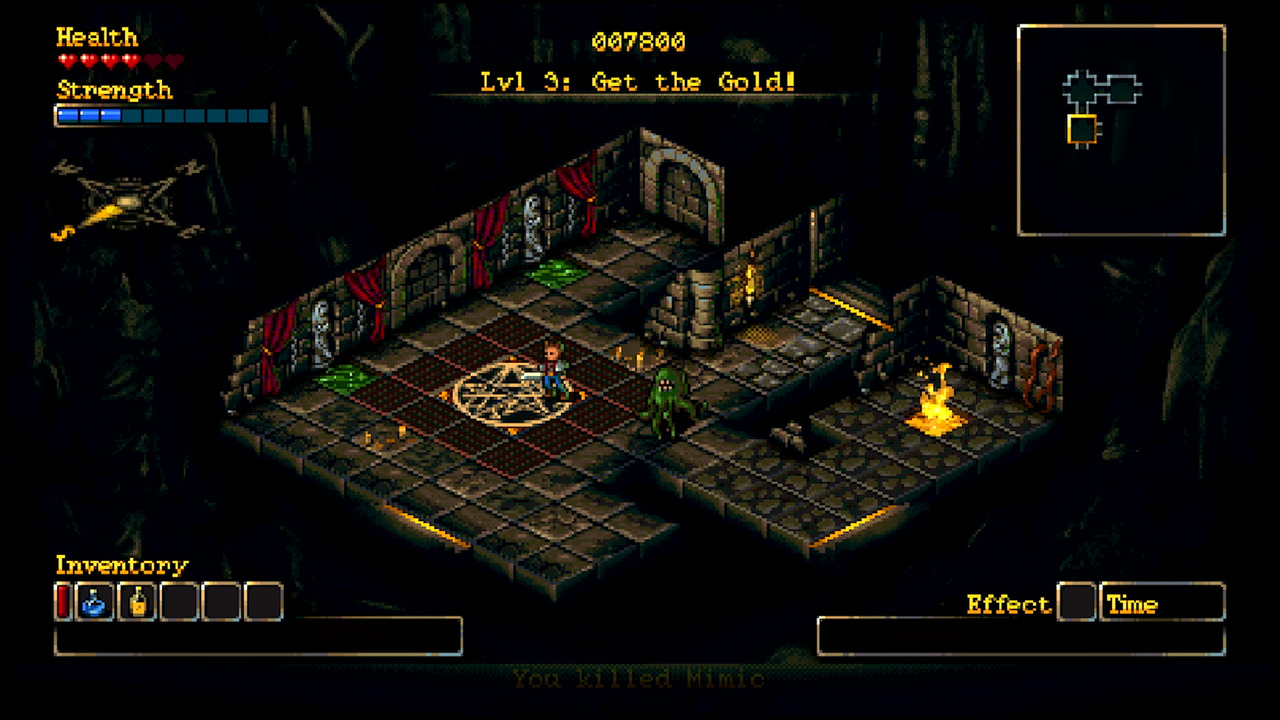
Movement is both turn-based and grid-based, with every step or action you take seeing monsters on the same floor advancing simultaneously in lockstep. There are no combat transitions, with combat occurring on the same grid. Combat is executed simply by bumping into adjacent enemies, with no active block, parry or hit-chance control. Success relies heavily on positioning, environmental hazards like fire, spikes, or poison, and RNG. The way this worked felt reminiscent of the Mystery Dungeon series. Each of the three playable classes brings their own spin to combat as well, with the Warrior being the most straightforward and forgiving character to play as, as he has high hit points compared to his compatriots. The Wizard is much more fragile but can exploit ranged attacks, whereas the Rogue is able to teleport, opening up new strategies.
Unlike in other roguelike dungeon crawlers, there is no meta-progression or permanent upgrade system in Roguecraft DX. Progression relies entirely on familiarising yourself with enemy patterns and mechanics. Even then, the effects of colour-coded potions are randomised each run, and figuring out what a potion does requires risky experimentation. This fits with the overall sense of both fun and adventure that permeates the game. This is a game where you can strike temporary alliances with animal companions to grab hard-to-reach loot and where gold serves primarily for arcade-style scoring or identifying mimics that disguise themselves as chests rather than supporting a persistent shop. Because each run offers a completely fresh start, Roguecraft DX ends up being much more challenging and punishing than other genre entries, but it’s also really, really fun and definitely achieves that “just one more run” feeling. While Roguecraft DX’s €12.25 RRP may seem steep initially compared to its depth, the game’s high replay value definitely makes up for that.
Conclusion
While Roguecraft DX is technically a modern game, it fits right in with actual retro titles, and subsequently feels right at home on the Evercade. However, the Evercade remains a niche platform, and Roguecraft DX’s arrival on PC gives an entirely new audience the opportunity to explore Mordecoom’s dungeons to their heart’s content. If you’re in the market for a “new” retro game, you shouldn’t look any further.




No Comments