


Developer: Redlock Studio
Publisher: Redlock Studio
Platform: PC
Tested on: PC
HYPNOS – Review
We’re fans of H.P. Lovecraft as an author. Not as a person, because the man was notoriously racist, even for the time that he lived in. Still, there’s no denying that he left his mark on fiction through his mythos, which introduced the likes of Cthulhu, Hastur (don’t say his name thrice), and the Necronomicon into the top of mind of horror fans. To say that we were intrigued by HYPNOS would be an understatement. Billed as a Lovecraftian megastructure fever dream on Steam, HYPNOS definitely seems poised to fit right in with the likes of The Mound or Cthulhu: The Cosmic Abyss. Does the game offer a Lovecraftian nightmare worthy of the Great Old Ones or is it a snoozefest?
Story
Although HYPNOS shares its title with a 1922 short story written by Lovecraft, the game isn’t a direct adaptation of said story. In fact, there is little to go on here as far as the story is concerned. Rather than unfolding as a clear, traditional narrative, HYPNOS emerges in vague, ambiguous story clumps. The writing does outright borrow names and titles from Lovecraft’s fiction, but any connections to the actual mythos are superficial and vague enough that they come across as accidental rather than intentional. The game puts you in the role of Choron, a vagabond burdened by his past, who is searching for a faceless boy who haunts his dreams. To find his target, he must make his way through the Nameless City in the Dreamlands, in the shadow of the holy mountain of Kadath. Things are kept very vague throughout, and it’s up to you to piece together the story. Dialogue choices determine which of the four possible endings you’ll see unfold.
Graphics
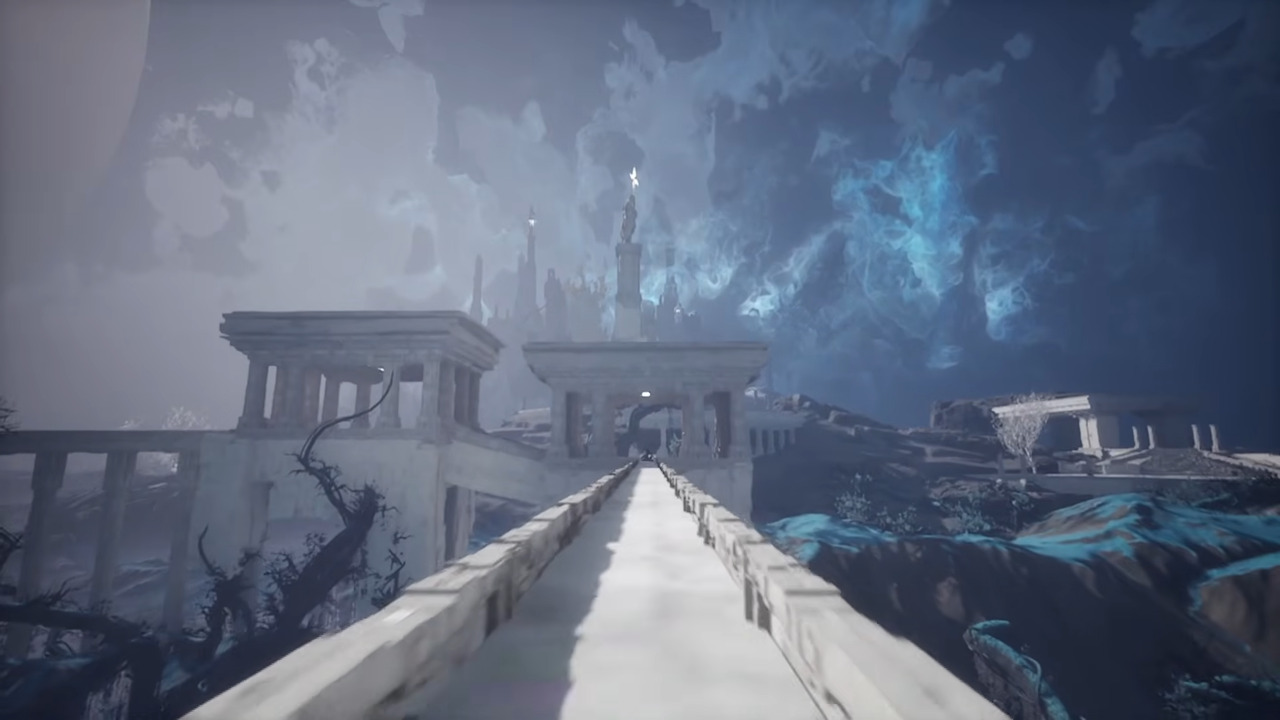
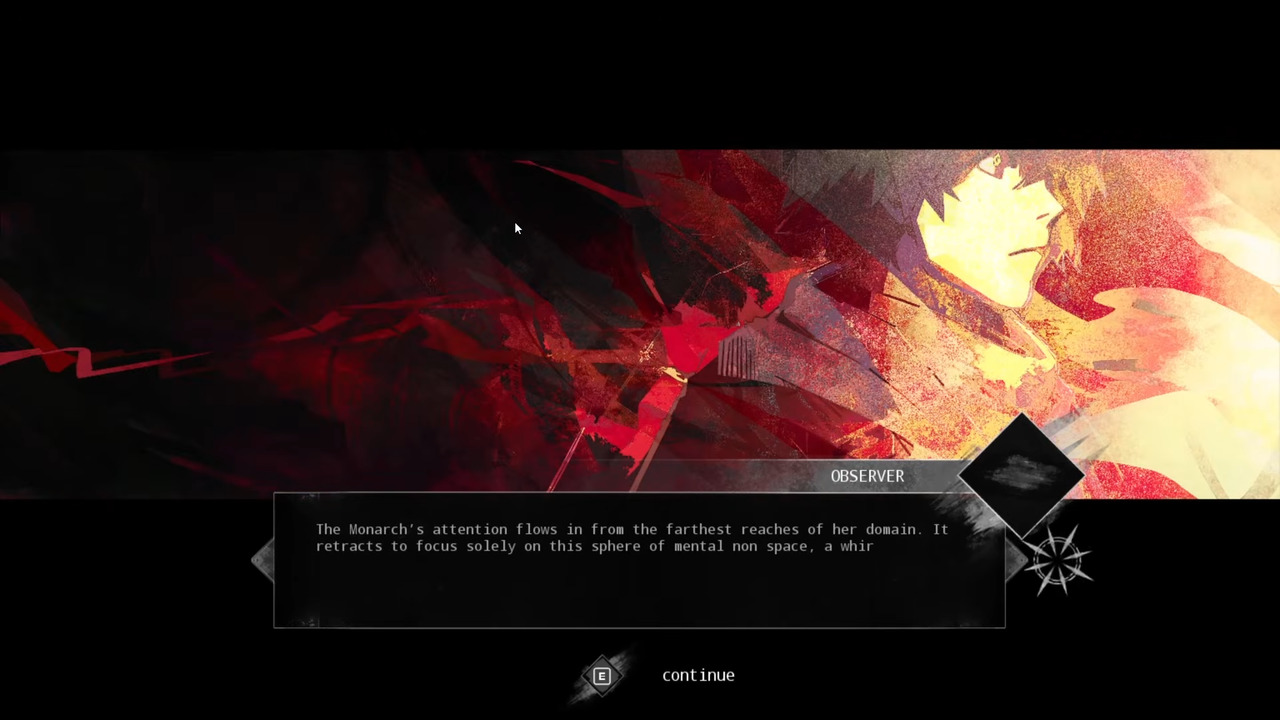
Several art styles are thrown together to bring the Dreamlands to life. The dreamlike (well, not exactly ‘like’) landscapes that you find yourself in play the biggest part here, with fully realized 3D environments that are presented in a semi-cell-shaded style. The biggest strength here is their verticality, designed to evoke a sense of awe. The inhabitants of the Dreamlands are depicted as 3D models as well, although during dialogue sequences, they are shown using 2D anime-style artwork. During major narrative sequences, HYPNOS’ visuals shift to a comic book style presentation, with a rough sketch-like aesthetic. In terms of performance, HYPNOS underdelivers, unfortunately. Organic textures in particular suffer, coming across as stiff and artificial. The game’s large environments are as demanding as you’d expect, and stuttering is unfortunately common, especially when you’re moving the camera around to take in your surroundings.
Sound
While HYPNOS’ environments are visually impressive and evocative, the same cannot be said for the game’s ambience. The world’s soundscape is unsettlingly sparse, lacking expected ambient sounds such as wind, city buzz, or atmospheric hums. Sound effects primarily consist of your own footsteps and certain key sounds. The game’s soundtrack keeps things from getting too silent, though we’re not entirely sold on the music. It comes across as too relaxed and cosy for the mysterious atmosphere that the game tries to create with its narrative.
Gameplay
The core gameplay loop of HYPNOS is that of an atmospheric walking simulator. Rather than solving mysteries or engaging with environmental puzzles, the focus is entirely on observing your physical surroundings. As Choron, you follow a guided path through the Nameless City, admiring its scenery from within strict, linear boundaries. The game omits things like combat, crafting, or survival mechanics. There are no meaningful rewards for off-path exploration either. Navigating the Nameless City relies on following obvious visual clues, ranging from pylons and staircases to brightly lit areas. Interestingly enough, the game takes advantage of its dreamworld setting to stray away from conventional physics. There are instances where you can walk directly up steep, seemingly blocked surfaces, a mechanic that’s the closest thing to actual puzzle mechanics that HYPNOS has to offer.

Naturally, this results in a gameplay experience that comes across as more laid-back than challenging, particularly because there are no real fail states in the game. We’re not entirely sure that HYPNOS achieves what it sets out to do here… though then again, we’re not entirely sure what it is that the game attempts to achieve. As impressive as the level designs are, they feel squandered on a game with so little freedom to explore, and as tenuous as the connections to the Lovecraft mythos are, the source material simply doesn’t seem like a good match for the gameplay. Give us mind-bending horror, bring in the shoggoths, or at the very least give us the feeling that the narrative is coherent. This could simply be a matter of mismatched expectations, but given that the devs literally use the word ‘Lovecraftian’ in their description of the game, it’s not unreasonable that players go in with the idea that HYPNOS is an entirely different beast.
It took us roughly three hours to make our way through HYPNOS. There are supposedly four unlockable endings, though given how linear the gameplay is, we’re not sure how much they diverge or how to reach all four. We felt like one stroll through the Nameless City was enough. It’s perhaps ironic that if you strip away the Lovecraftian elements, then HYPNOS becomes a more interesting experience. There is some merit to the game if you look at it as what it is: a walking sim through a dreamscape. The developers likely assumed that by attaching the game to the Lovecraft name, it would generate more sales, but the mismatch between HYPNOS the game and, well, Hypnos the story actually undermines the overall experience.
Conclusion
All in all, HYPNOS is a decent game on its own, but not a good Lovecraft game. We’d be willing to overlook this if the game wasn’t billed as Lovecraftian on its Steam page. As a ‘generic’ walking sim, HYPNOS impresses, if only because of those massive environments and the way it is able to evoke that sense of dreaming through the way that it defies conventional physical logic. The game is worth a look, as long as you don’t go in expecting to encounter Elder Things.





No Comments