


Developer: Chugga Chugga LLC
Publisher: Chugga Chugga LLC
Platform: PC
Tested on: PC
Slumber Realm – Review
We do love ourselves a good roguelite deck-building game. However, after Slay the Spire single-handedly redefined the genre, an abundance of mediocre copycats flooded Steam and console storefronts alike. It can be difficult to separate the wheat from the chaff. Fortunately for us (and for you), the subject of today’s review, Slumber Realm, is wheat. Take it from us: this is a fantastic little deck builder. If you need more convincing, read on, as we’ll go in depth about what makes Slumber Realm worth checking out.
Story
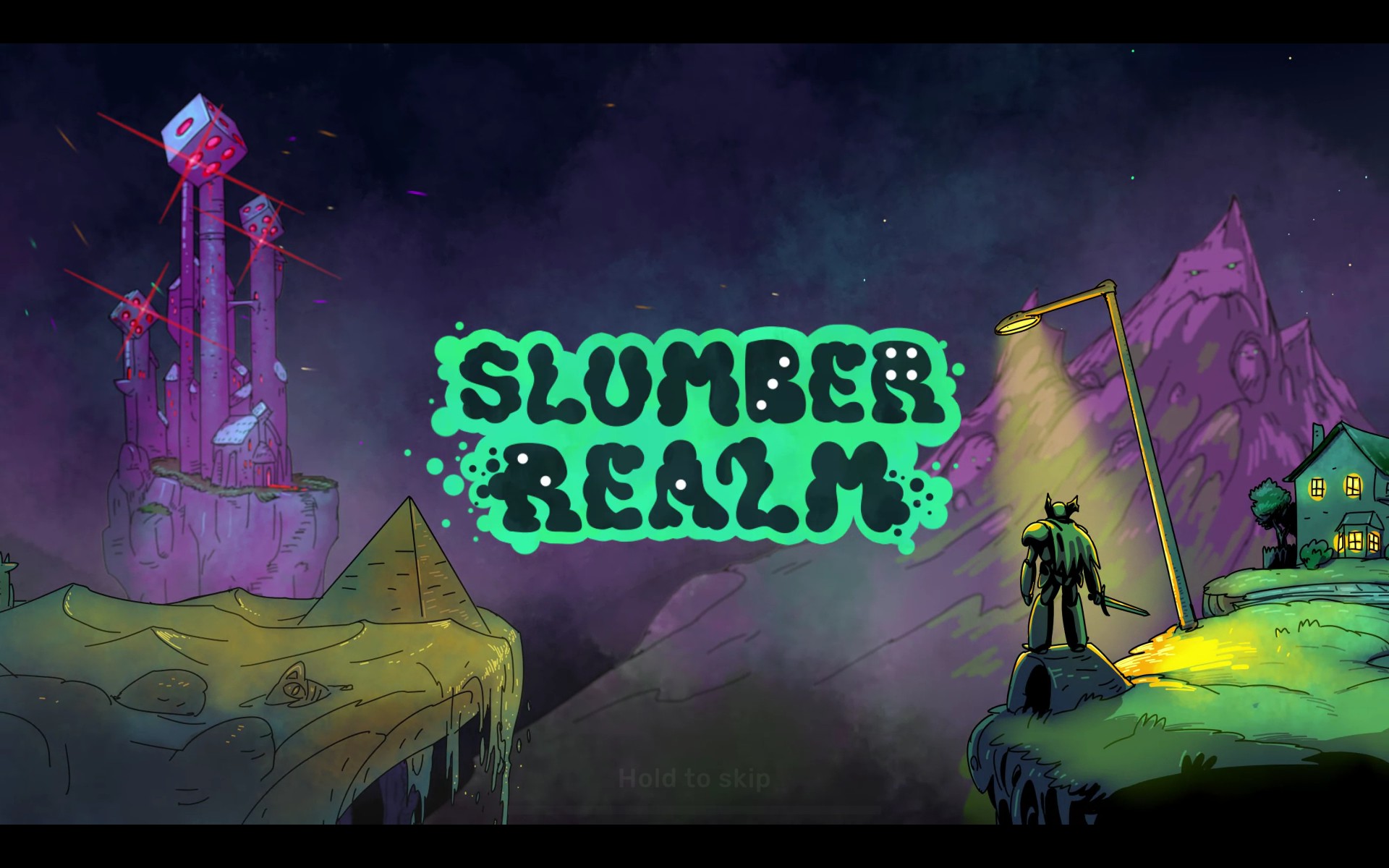
The year is 1997, and you’re 13 years old. During the day, your life is the same as that of any average 13-year-old: you go to school, your parents tell you to eat your broccoli, and you listen to cassette tapes in your room. By night, however, you enter the Slumber Realm. Here, you’re a brave knight, ready to take on your worst (k)nightmares. Your everyday struggles manifest here in the shape of monsters, but with your knightly strength, cunning, and a little bit of luck, you’re ready to overcome them. That’s about it as far as story is concerned, which is a wee bit of a letdown. We would’ve enjoyed it had things been fleshed out a bit more.
Graphics
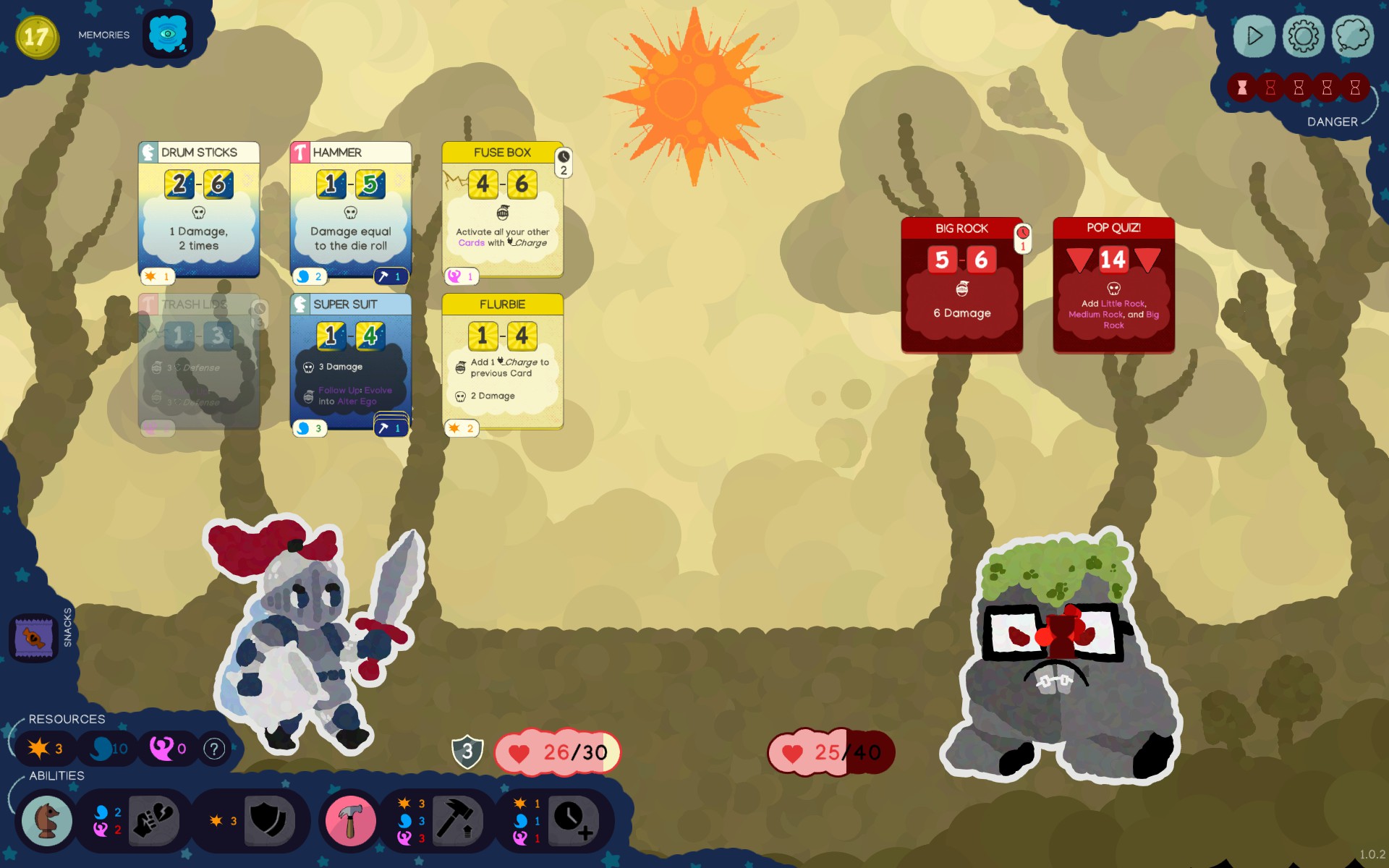
Aesthetically, Slumber Realm’s visuals resemble something a 13-year-old would doodle in their dream journal… which probably isn’t a coïncidence. What stands out here are the monster designs, which include a broccoli-themed muscle man and an evil clown, to name a few. Although there is a lot going on at any given time, the game’s UI remains structured and clean. Detailed information about cards and abilities can be made visible by simply hovering your mouse over the relevant icons. Character animations are as simplistic as it gets but this does fit with the hand-drawn art style. This also means that Slumber Realm isn’t very taxing, and there were no notable performance issues or egregious frame drops.
Sound
The opening scene of Slumber Realm is fully voiced, but unfortunately, the game is lacking when it comes to voice work beyond its introduction. Instead, the game relies on grunts and groans from its characters, and crisp sound effects for both fighting and other in-game actions to bring things to life. Slumber Realm’s ethereal soundtrack fits with the dream theme, though at times it veers dangerously close to 1970s-style psychedelic tunes.
Gameplay
We couldn’t help but be reminded of Dicey Dungeons when we started playing Slumber Realm. The latter has enough of an identity of its own to not be considered an outright clone, but there is enough overlap here that fans of Distractionware’s 2020 game will feel instantly at home here. For those of you unfamiliar with either title, what you’re getting here is a roguelite deckbuilder with a central mechanic based around dice rolls. The basics are easy enough to understand: you roll a die and watch card effects resolve in the form of a turn-based battle. However, beneath this deceptively simple mechanic is an elaborate, layered system where you rely on synergy between your cards to claim victory.
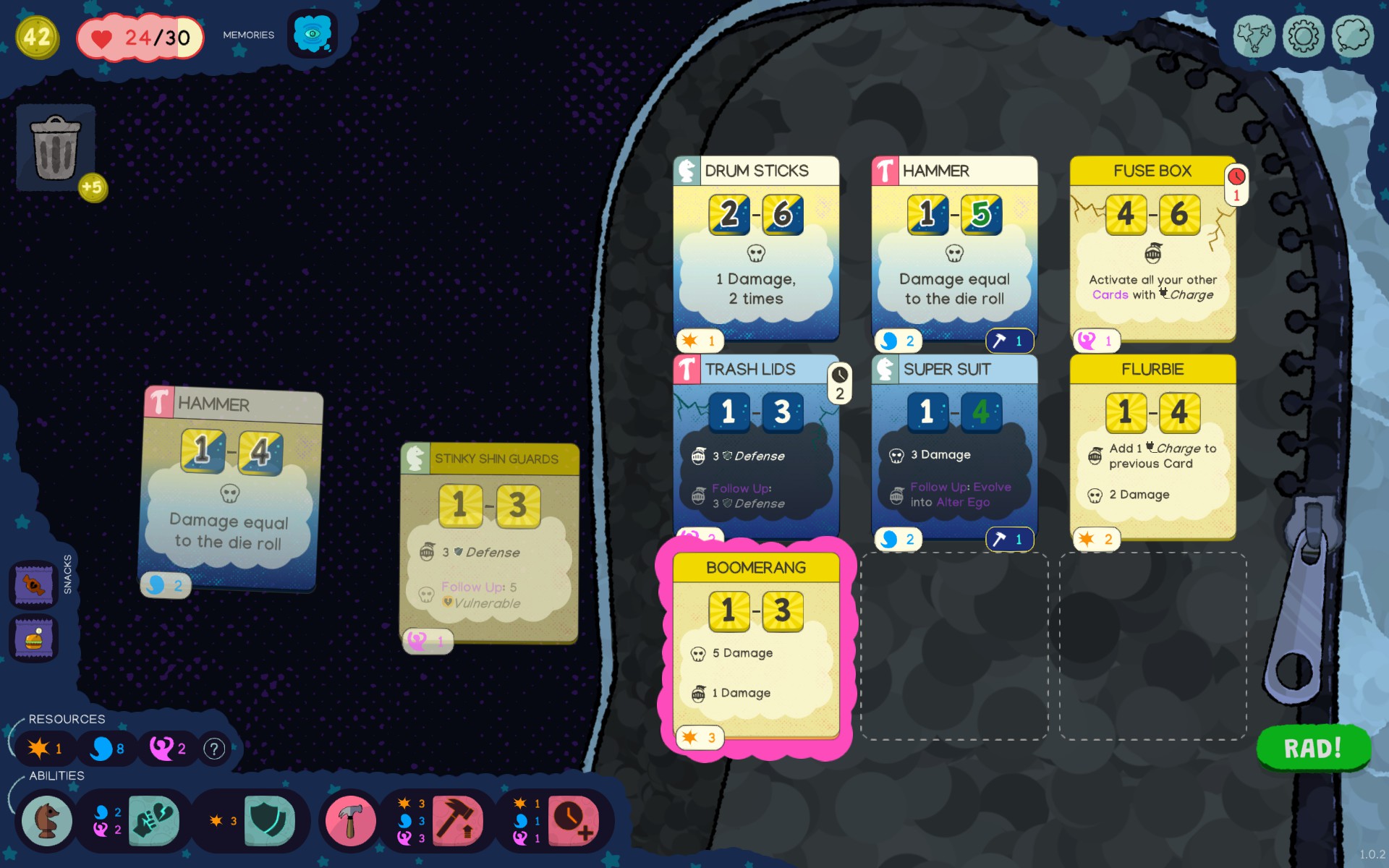
Although everything happens automatically once you roll that die, Slumber Realm isn’t an auto-battler. All of the action that happens is the result of a carefully crafted setup phase that takes place between every turn. Cards generate energy when triggered, which you can then spend to activate your abilities, resulting in a very satisfying loop… provided you roll high enough, that is. The outcome of your success depends on that die roll, so you’ll need to set things up in such a way that whichever number it lands on, at least some of your cards trigger. This is where things like items and class abilities come in. The Tinker aspect, for example, can adjust the range within which cards trigger: got a card that only activates when you roll a 1, 2, or 3? Tinker with it and make it also trigger on a 4! At the start of a run, you pick two aspects that come together to form your class. Classes determine which cards become available to you, so figuring out which aspects work well together adds yet another layer of strategy. Synergy, right?
We could go on about everything that is in the game: there is a day and night mechanic that determines whether or not specific cards trigger, which you can circumvent with energy drinks or sleepy time tea, for example, and an overarching Allowance system that lets you decorate the game’s hub area (your bedroom) for permanent unlocks, such as new cards and more challenging enemies. There are shops, random events and powerful cards that only have a limited number of uses… unless you’ve got tricks up your sleeve to expand their lifespan! There’s a mechanic where enemies grow more powerful if you don’t beat them in time! We’re only scratching the surface though. There is plenty to sink your teeth into here, yet the game manages to avoid mechanical bloat. Everything remains elegant and understandable throughout. Add a comparatively low price tag of €12.25 and the fact that the game is poised to receive free DLC in the form of themed mini expansions in the near future (with some of it already having been rolled out), and you’ve got a delightful deck-building treat that is well worth checking out.

Conclusion
Don’t be fooled by the lighthearted presentation of Slumber Realm: beneath its whimsical surface is an engaging deckbuilder that strikes a perfect balance between accessibility and strategic depth. The game probably could have done with a bit more narrative depth, but it makes up for this with an elegant, synergy-based combat system. Slumber Realm will delight newcomers and genre veterans alike, and with additional expansions in the pipeline, we’ll be returning to our knightmares more than once in the near future.





No Comments