


Developer: Tomas Pereyra, SoulBlade Studio LLC
Publisher: indie.io
Platform: PC, Switch, Switch 2
Tested on: PC
SoulQuest – Review
Mix a strong heroine, Celtic mythology, and lots of sword-slashing, and you get SoulQuest! A recent addition to the iconic ‘hack and slash’ genre, painted in a beautiful, pixelated art style, developed by SoulBlade Studio LLC, and published by Indie.io. This game was made by developer Tomas Pereyra, who aspired to make a game he’d have loved to play himself, all the way back in 2019 when he first began to develop SoulQuest. Seven years later, we’re going to take a look at what he has put out and if his work paid off.
Story
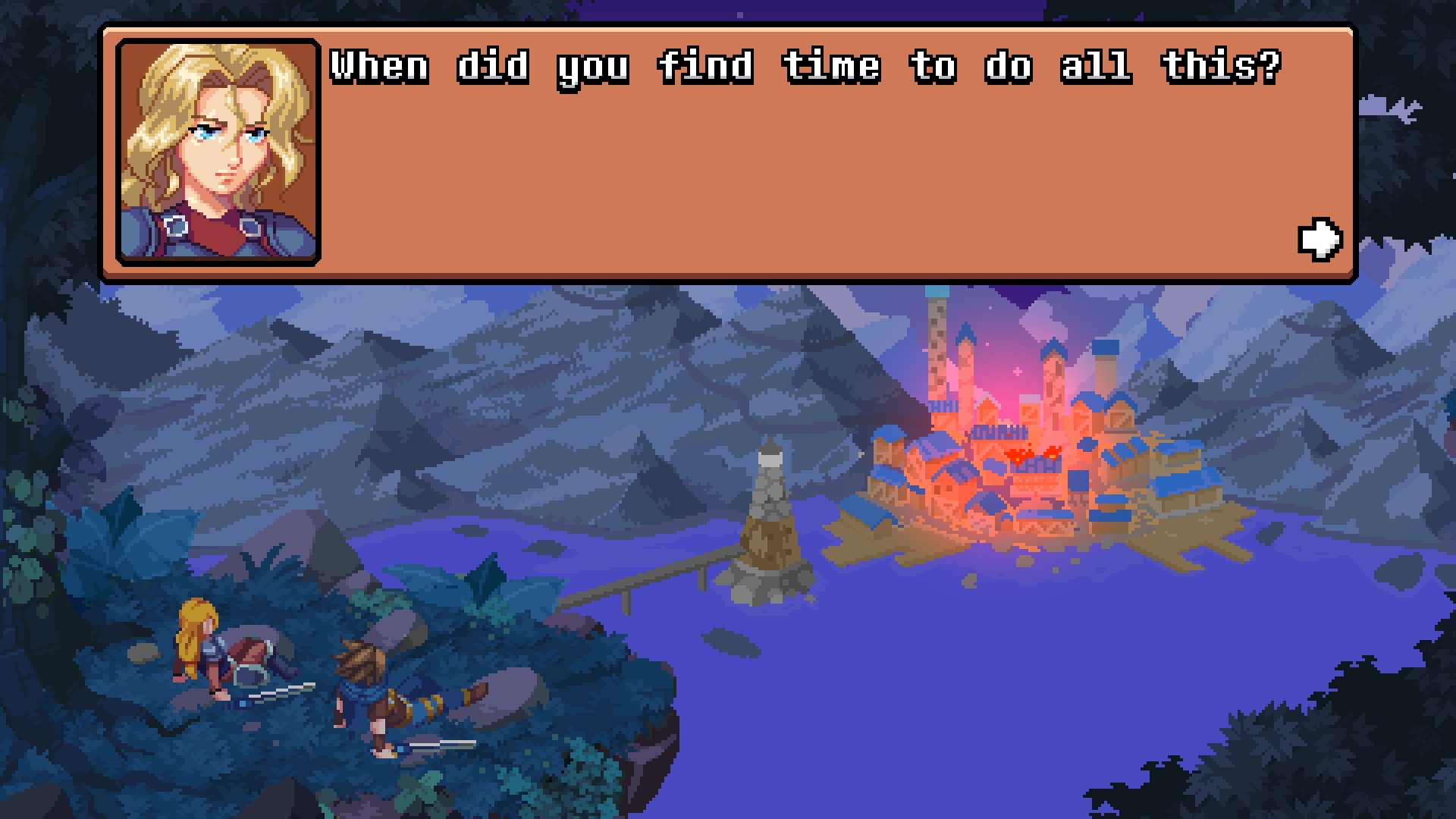
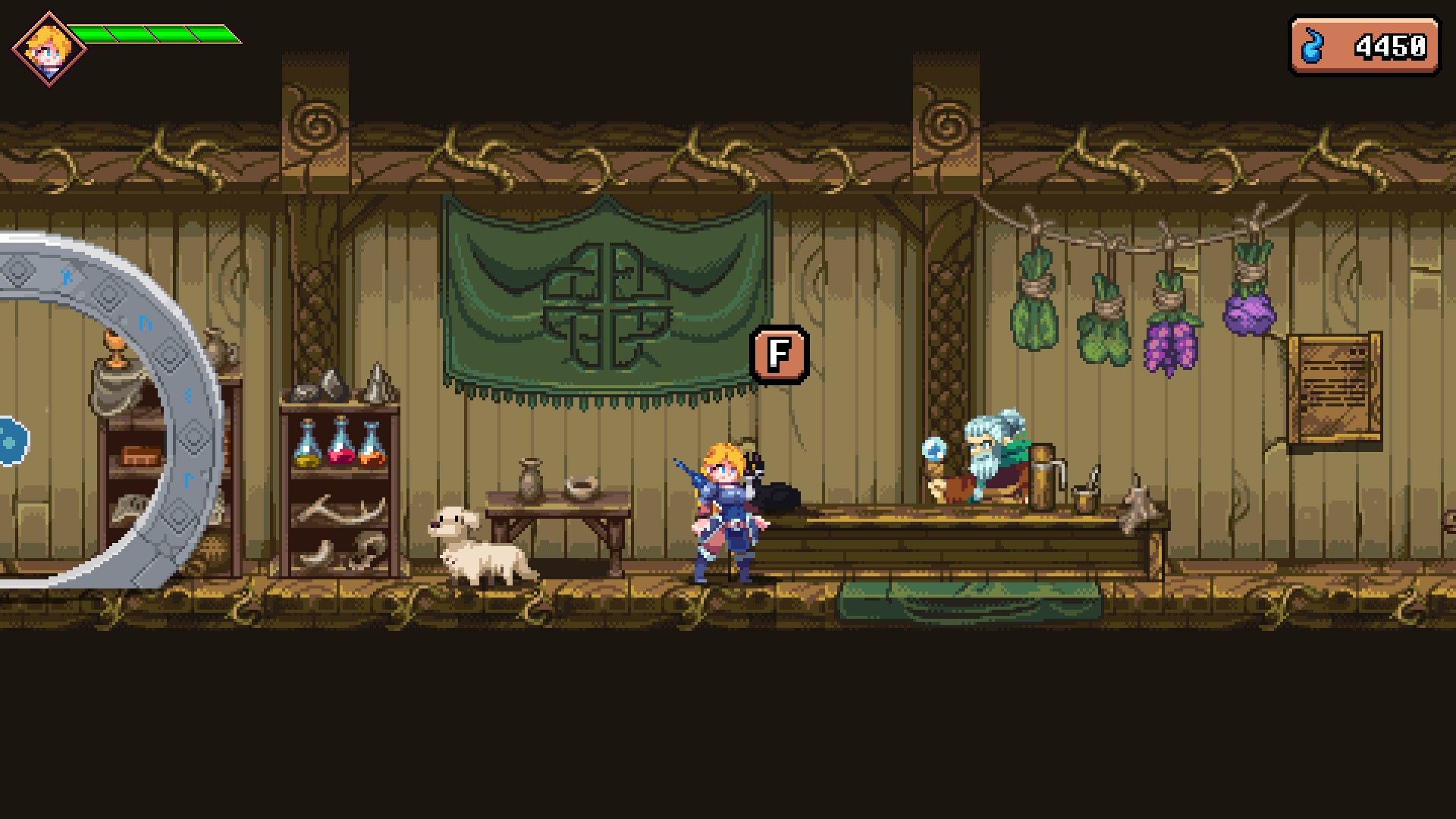
We find ourselves playing as Alys, a young blonde woman with a sword, initially portrayed as ‘just another knight’. Soon, we learn she is married to the big hero of the kingdom, Gwydre. Unlike Alys, her husband is blessed by the Gods and has these super epic powers that are showcased early on that make him look like some kind of DnD Superman. Unfortunately, he meets his demise, and Alys is left alone. Unable to accept her lover’s passing, she sets off to get his soul back. Comically enough, the moment she decides to do so, she meets a druid who was supposed to warn her husband of the incoming attack. This was in vain, as Alys’ husband succumbed to his wounds. Upon hearing Alys’ plans, the druid then acts as a local shopkeeper and guides the protagonist’s story.
The story clearly lacks depth, but it doesn’t bother us as much, given that the essence of the game lies in the presented combat rather than the narrative surrounding it. Though it does take away some appeal of the characters we meet along the road, our protagonist is fleshed out enough through quotes and little bits of story sprinkled in between to make the player root for her success. Furthermore, the developer is clearly a fan of games themselves, as the dialogue features various references to other famous franchises, giving us a quick chuckle before we proceed onward once more.
Graphics
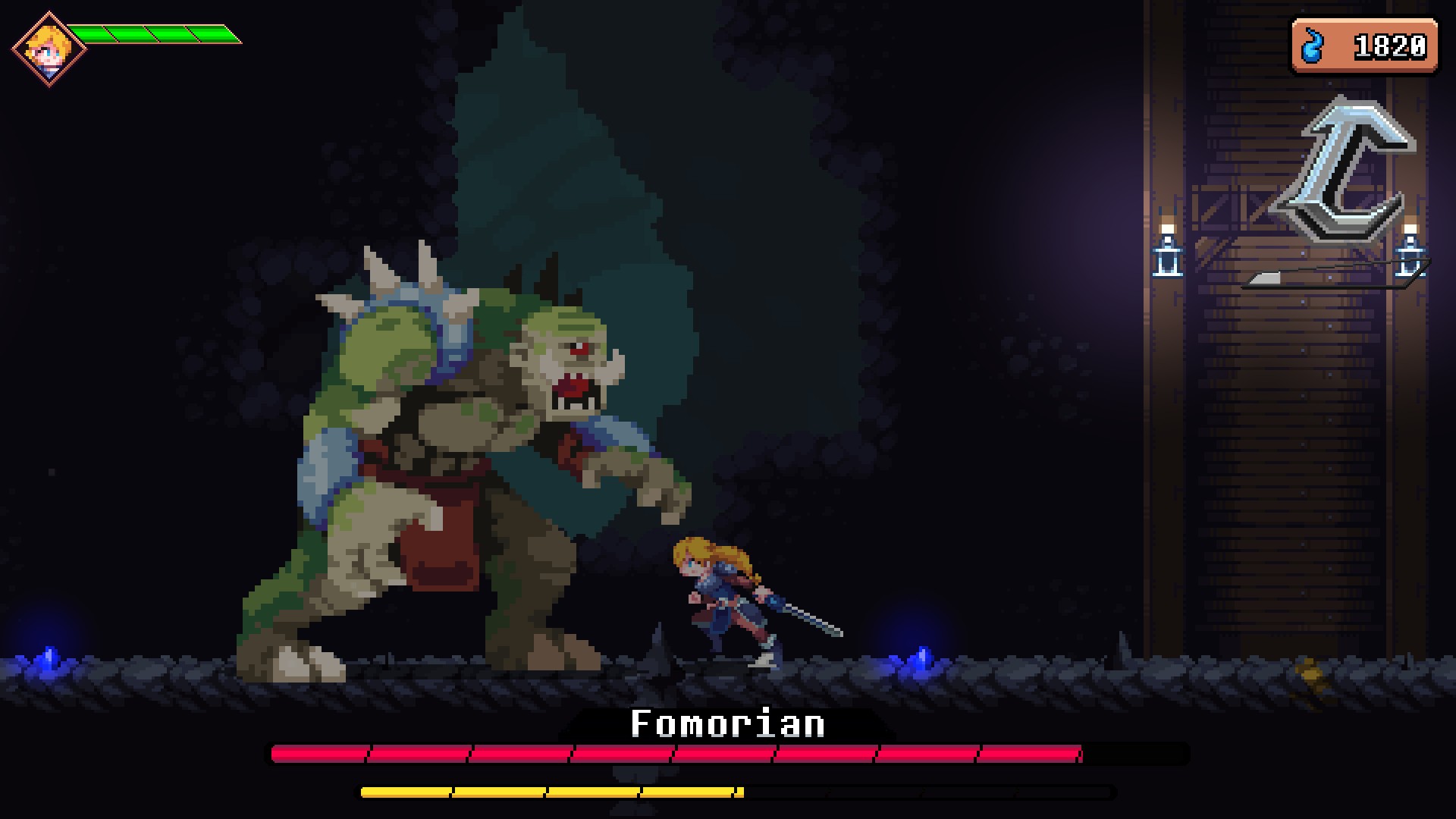
There is absolutely no doubt that SoulQuest is a beautiful game. Featured in a fully pixelated art style, the game feels so vibrant and alive, and surprisingly detailed. From the backgrounds to the platforms to the animations of your attacks, every little pixel is placed carefully to create a proper art piece in motion, making the game ever so pleasing to the eye.
Though hack and slash games can often feel chaotic, as you are trying your best to dodge attacks whilst weaving in your own combos, SoulQuest outdid itself with the readability of everything that’s going on. Sword slashes feature an obvious blue curve; health bars on enemies are layered visibly, and a red glint on your opponent’s face can indicate when they are about to attack. All these details in the animation make it easy for both experienced and new players in this genre to get used to the game.
Sound
When it comes to the music in SoulQuest, we fear it may be lacking a bit. The game brings nothing particularly new when we listen to the BGM for the first time. It’s a rather generic fantasy-adventure tune that sounds like you have probably heard it a dozen times already. Notably, as you progress through the game, this eventually becomes white noise, as the sound effects of your attacks take center stage anyway. Speaking of your attacks, these too have sound effects that add to the readability mentioned earlier. Every slash or ability you perform is paired with a sound effect that makes it easy to note if the hit actually connected or not. There is something ever so satisfying about hearing multiple slashes of your sword piercing through those pixelated enemies.
Another fun addition is that the story is fully voice-acted. It is a shame, however, that the portrayal of our characters isn’t the greatest. Alys’ husband sounds like the most generic ‘main character,’ whereas the druid sounds like he’s fighting back back a two-week-old cold. Our actual protagonist, Alys, luckily sounds as good as it can get. Though still generic, the voice actor clearly tried her best to deliver as much emotion and intonation as possible. This is a blessing, as almost every two or three attacks, Alys will quote a rather generic voice line against her enemies, who probably don’t understand her to begin with. It doesn’t help that she taunts these enemies upon taking damage with the same one-liner every single time. After a while, it can get tedious, though perhaps this could be seen as an encouragement not to get hit.
Gameplay
Played as a 2D hack-and-slash adventure game, SoulQuest features a simple ‘travel from point A to B’ gameplay. The main mechanic is that Alys clears dungeons that are shaped like a typical platformer and slashes all the enemies she meets along the way. Occasionally, there is parkour featured, where players will need to time their jumps or attacks to cross safely. What makes SoulQuest stand out amongst other games of its genre is the scoring system. Players are encouraged to juggle their enemies as much as possible. The more hits connect, along with airtime, the bigger your score gets. This is shown as a giant ranking on your screen, starting at ‘C’, going all the way up to ‘SSSS’. Whenever you take damage, or if you take too much time to connect another hit, the ranking goes down one point, eventually disappearing. Your highest ranking is considered at the end of the level, however, so there is no need to prolong fights more than is necessary.
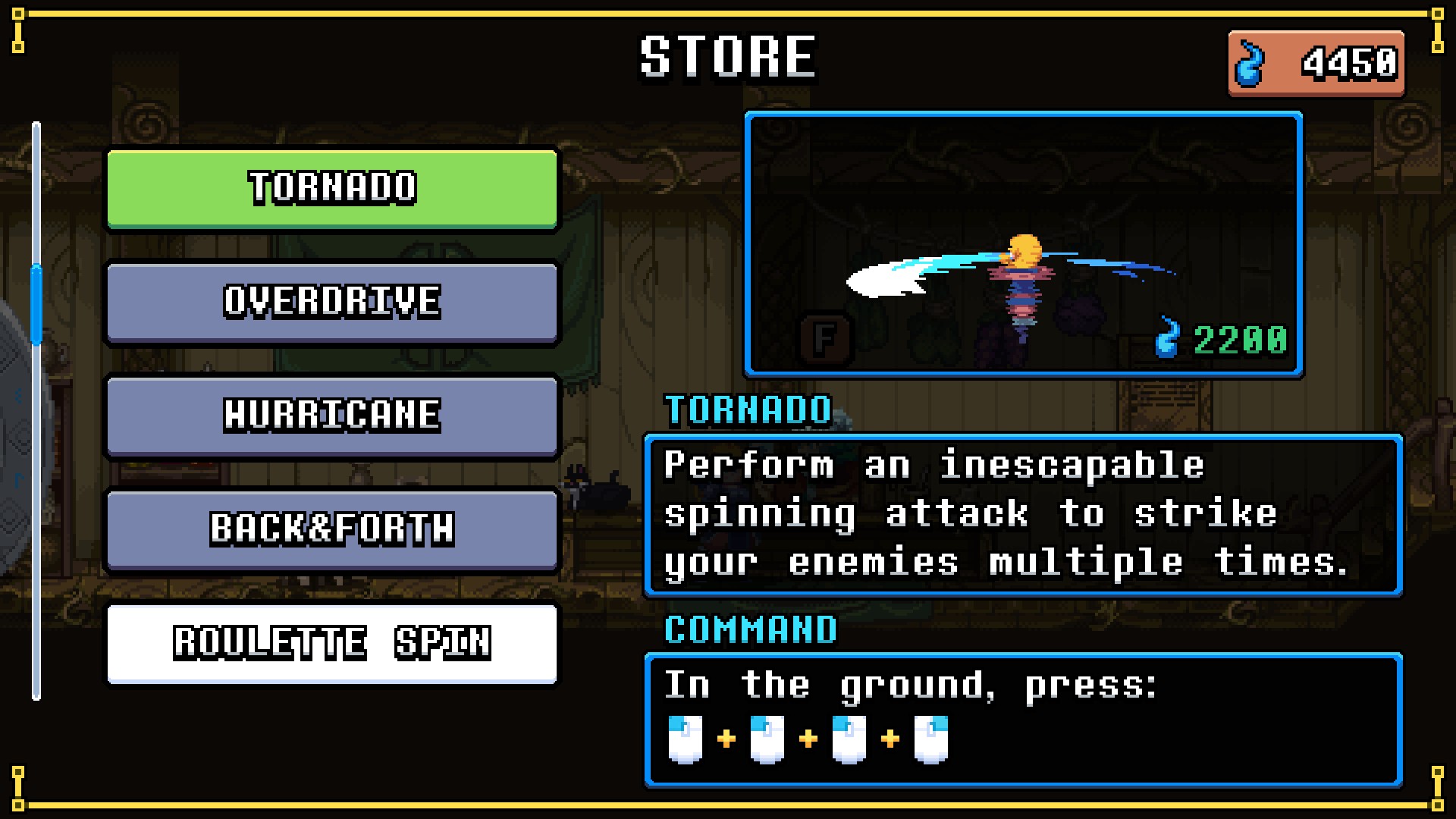
Now, aside from hacking and slashing, we can make Alys grow in her skills as well. Spread rather scarcely across your dungeons, the player will find portals that count as waypoints and healing areas. Inside, you can find the Druid’s shop, which will teach you passive skills or new attacks based on the souls you collected from defeating enemies. These vary from a double jump to spinning in the air like a tornado with your sword out. Acquiring these skills is crucial to making progress in the story, as they will allow Alys to take on the bigger foes she meets along the way. Luckily, the player can replay the same dungeon repeatedly to farm these souls, should they struggle to get past a harder level.
Some things to be considered, however, are that upon death, the player starts from the very beginning of their chosen dungeon. Even if you ran past a portal, death means a complete redo. It doesn’t help that even in easy mode, these portals are spread far apart from one another. It is possible to run back and fully heal as much as you want, so we suppose that kind of makes up for it. The difficulty per dungeon increases tremendously as well. After beating the first boss, players could be caught off guard by how much stronger the new enemies are in the second stage of the game, compared to what they’re used to otherwise. This is, of course, part of the charm, though casual gamers might not enjoy the curve as much.
Conclusion
Being a beautiful indie project that’s been in the making for 7 years, SoulQuest really tries its best to deliver a beautiful homage to the genre. Being far from perfect, the game is still enjoyable to both new and experienced players of the genre. Having a fleshed-out protagonist who grows as the story progresses really adds to the charm as well. Though we don’t think the full price is worth it, adding this one to your collection is definitely something you won’t regret anytime soon.


No Comments