


Developer: Sokpop Collective
Publisher: Sokpop Collective
Platform: PC
Tested on: PC
Grail – Review
As avid readers of 3rd-strike.com may know, our humble website is based in Belgium. We’ve hinted at our misplaced chauvinism before, when looking at games like Please, Touch the Artwork or Devil Jam, which were developed by our fellow countrymen. Now, when a game from our Dutch neighbours reaches us, we’re also paying attention. Part of that is the relationship between Belgium and the Netherlands, which is best described as a friendly rivalry. Grail is such a game, developed by Netherlands-based Sokpop Collective. The roguelike PVP card battler has seen a tremendously positive response from Steam users around the world, but how does it hold up under the scrutiny of a Belgian reviewer?
Story
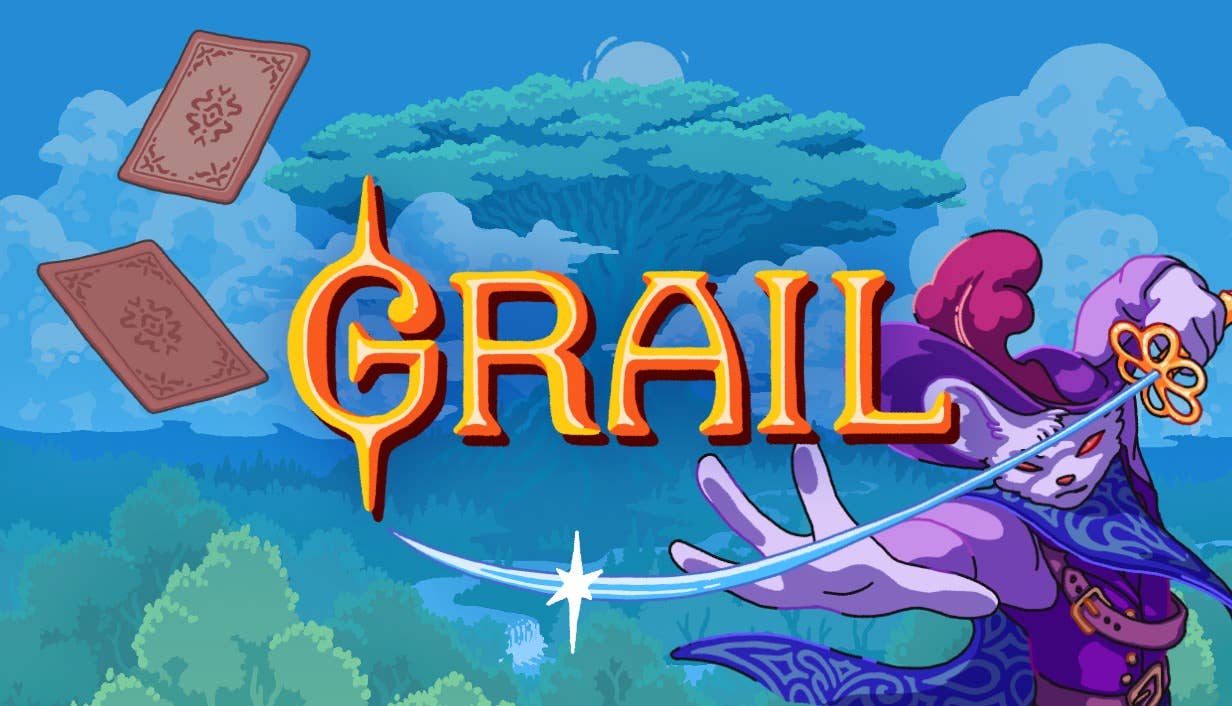
Move over, Mickey! The initial hero of Grail is Ratagnan, a mouse-ketier on a quest to find the titular Grail. This journey takes our anthropomorphic rodent protagonist through villages, farmlands, and forests, where he encounters a wide array of animal allies… and enemies! Beyond its basic setup, Grail mostly opts for a non-traditional way of fleshing out its story, with lore primarily featured on individual card unlocks. This makes it so that the basic premise remains clear and accessible enough for anyone to understand, and those that want to dig deeper into Ratagnan’s story can do so without the narrative getting in the way of gameplay. Eventually, other characters will join your roster too, each adding their own perspective on the hunt for the Grail.
Graphics
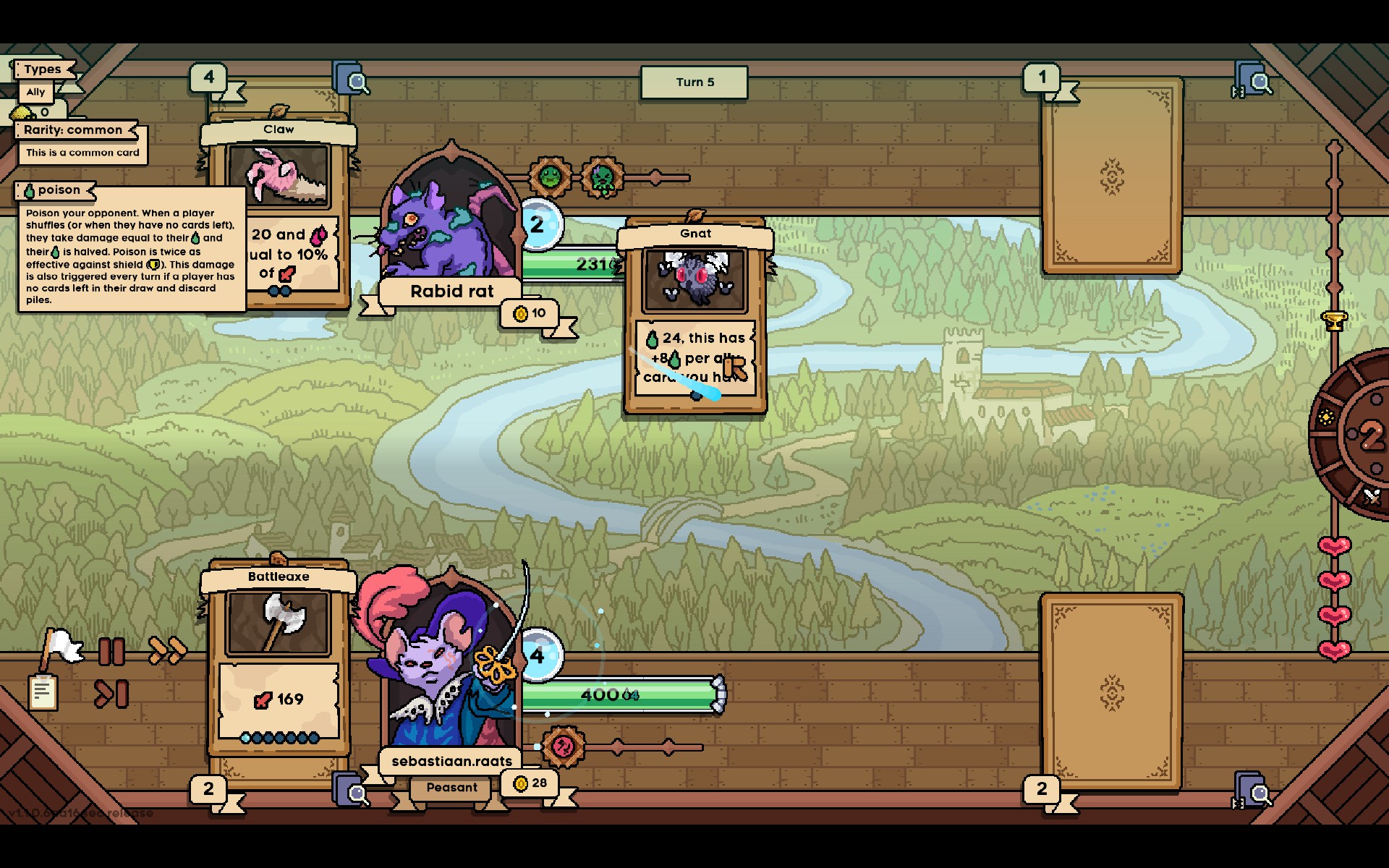
Visually, Grail sits somewhere between hand-drawn illustrations and pixel art, with an art style that feels reminiscent of early ‘90s PC games. The anthropomorphic woodland animal characters are expressive and the background art, which covers a wide range of locations, is stunning. Combat features fluid animations and dynamic particle effects, with colourful visual feedback bringing the cascading cart interactions to life. Grail’s visual performance is great as well, with no notable graphical bugs, frame drops or performance stutters during our playthrough.
Sound
The background music that plays throughout Grail fits with the game’s overall cosy tone. Sound effects serve as a way to punctuate card plays, status effects and hits. Occasional chatter sounds, like a character chuckling or reacting to something, are present, but Grail doesn’t feature fully fleshed-out voice acting. Not that the game needs this, mind you, since the narrative takes a backseat and most of the focus is on gameplay.
Gameplay
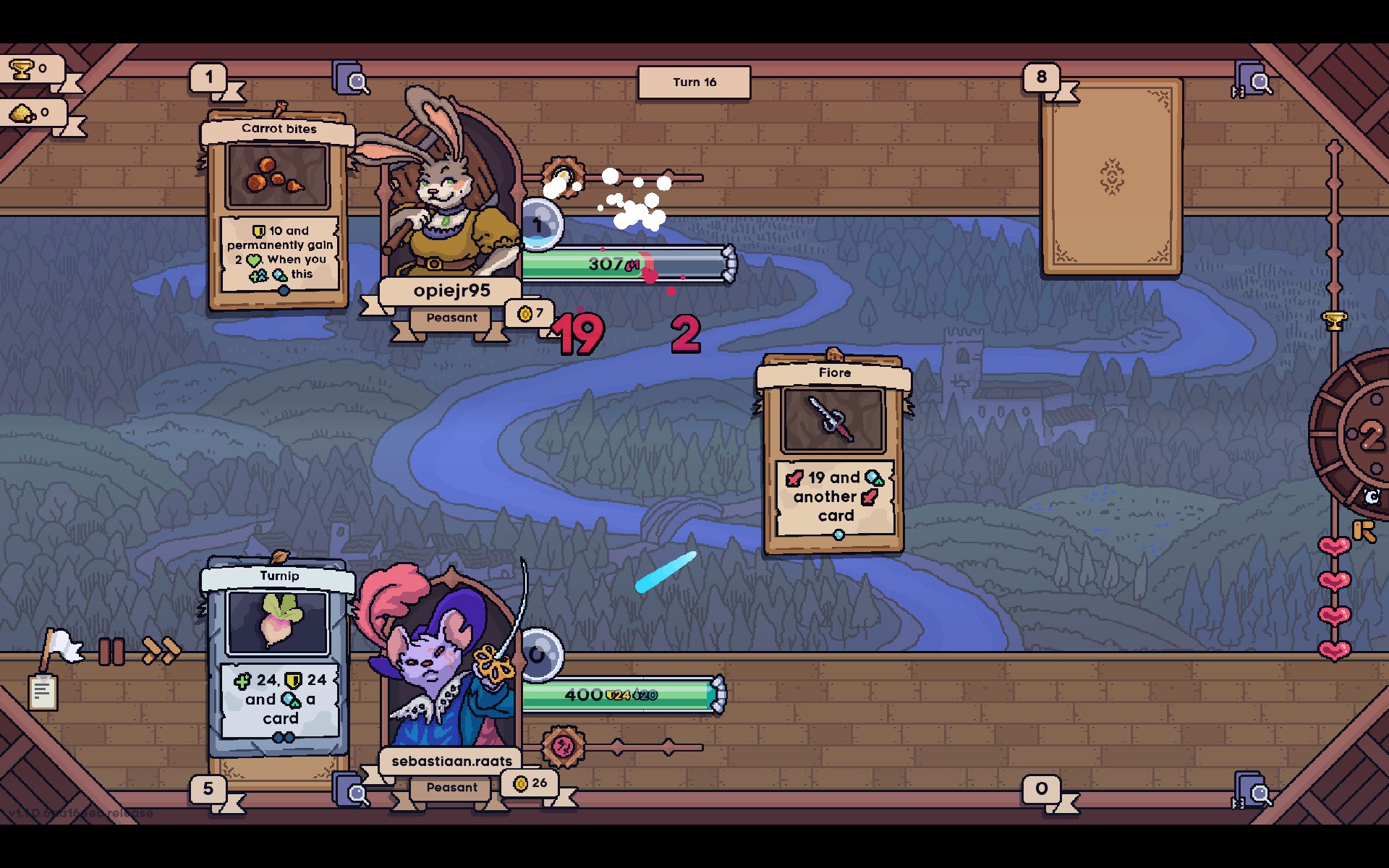
The main gameplay gimmick of Grail is that it is a roguelike PVP card battler where the deck plays itself. You set up deck synergies, energy management, and card order outside of combat, and during battles, cards draw and play on their own using energy generation. While card battles are resolved automatically, that doesn’t mean that the entirety of Grail plays itself. A run of the game is structured around daily events. During the day, you can choose from a multitude of non-combat events, whether it’s training against NPCs, taking on side quests, or even selling cards. A day culminates in an asynchronous battle against the “ghost” deck of another real-life player, which is where those automatic battles come on. Winning six battles against other players yields a full run victory.
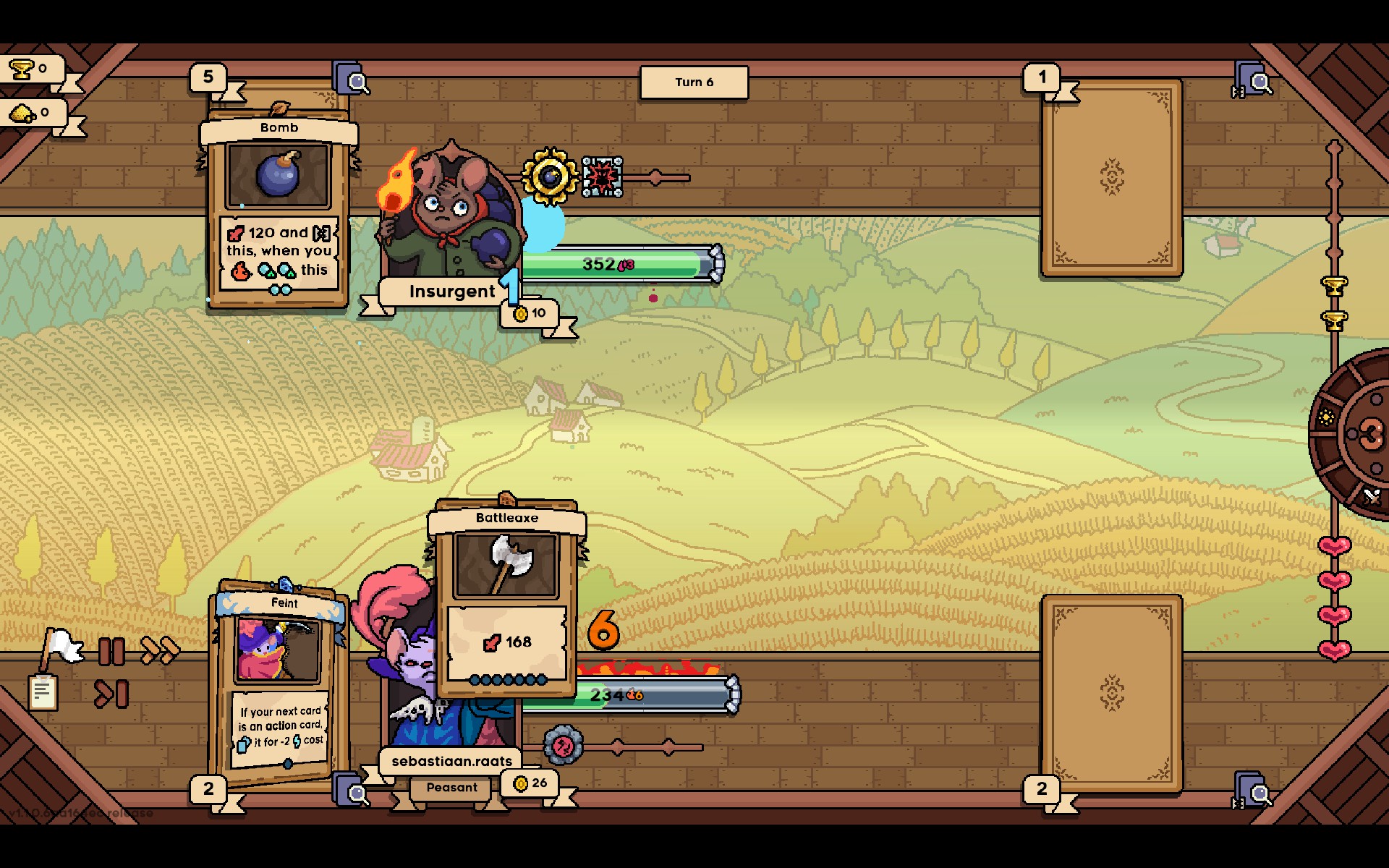
There is quite a steep initial learning curve here, due to dense card text, complex status interplay, and overwhelming keywords. Cards feature not only energy costs but status effects and different card types as well. And that’s before even getting into the stickers that can be used to modify cards to further customise your deck. Because the battles play out automatically, Grail is all about deck building, and once you get past that initial information dump and start to see synergies between different cards, you’ll find that there is both a ridiculous amount of freedom and a plethora of possible strategies here. Time will tell whether or not a ‘meta’ built around deck archetypes will eventually shape itself. This is still an asynchronous PVP game after all.
That inevitably translates into a game with extremely high replay value. There are multiple playable characters, hundreds of cards, and dozens of passive traits. Run wins unlock new character classes, card lore, and trophies. We found Grail to be far more forgiving of defeat than more traditional roguelikes too, and with short, snappy runs ranging from 15 to 45 minutes, it’s very easy to get in that “one more run” mindset. You’re looking at easily dozens, if not hundreds of hours of gameplay here. For just under €10, that’s a hell of a bargain in our books, and Grail should definitely be on your radar if you like card battlers.
Conclusion
With its wide array of strategies, seamless auto-battler framework and deep card customisation, Grail is a fantastic little game. While its steep learning curve may deter players, especially genre newcomers, we wholeheartedly recommend you give Grail a chance if you’ve been looking to dip your toes in deck building. The game’s charming presentation is the icing on the cake.




No Comments