


Developer: Terahard Ltd
Publisher: indie.io
Platform: PC
Tested on: PC
Dunebound Tactics – Review
How do you follow up on what is likely the greatest turn-based tactical RPG of the year? Why, with a much smaller indie entry in the same genre, of course. Don’t worry, we won’t be comparing Dunebound Tactics to Fortune’s Weave too much, as we’re well aware that the scope of both games isn’t even in the same ballpark. What piqued our interest here was that Dunebound Tactics tries to apply a procedurally generated, roguelite structure to its turn-based grid-based combat core. It’s a genre mashup that speaks to the imagination, but does it actually work?
Story
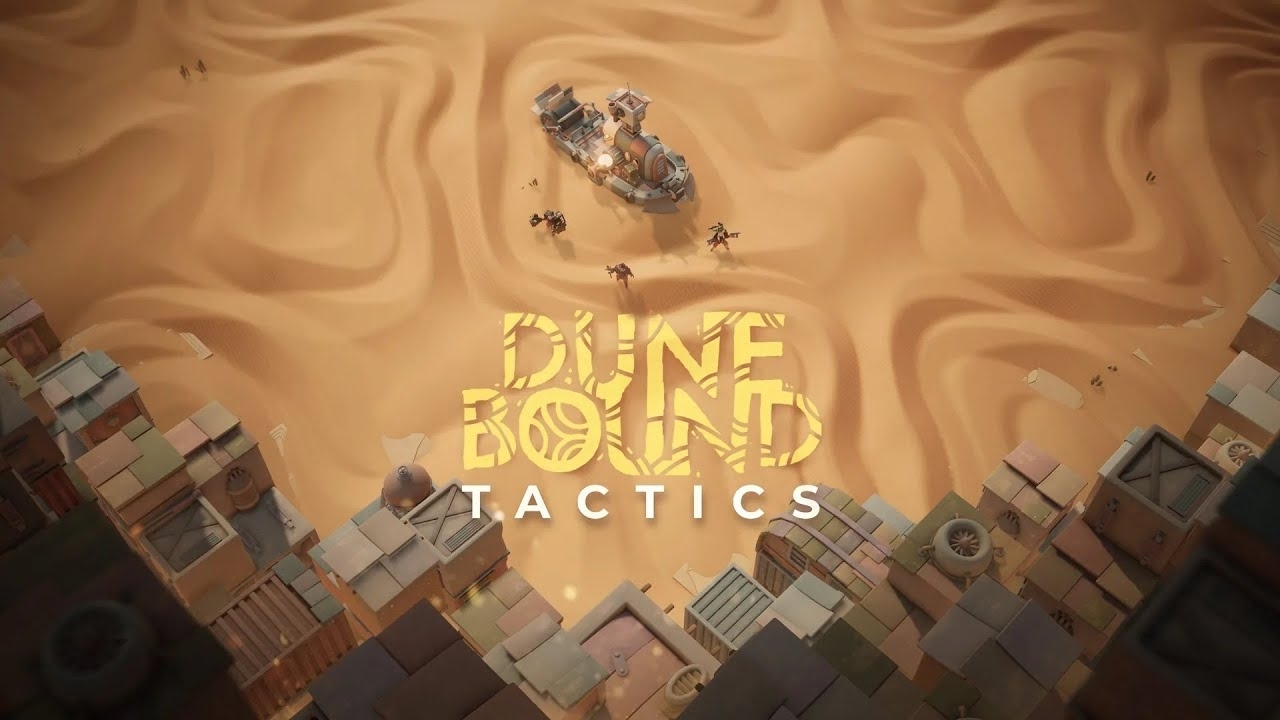
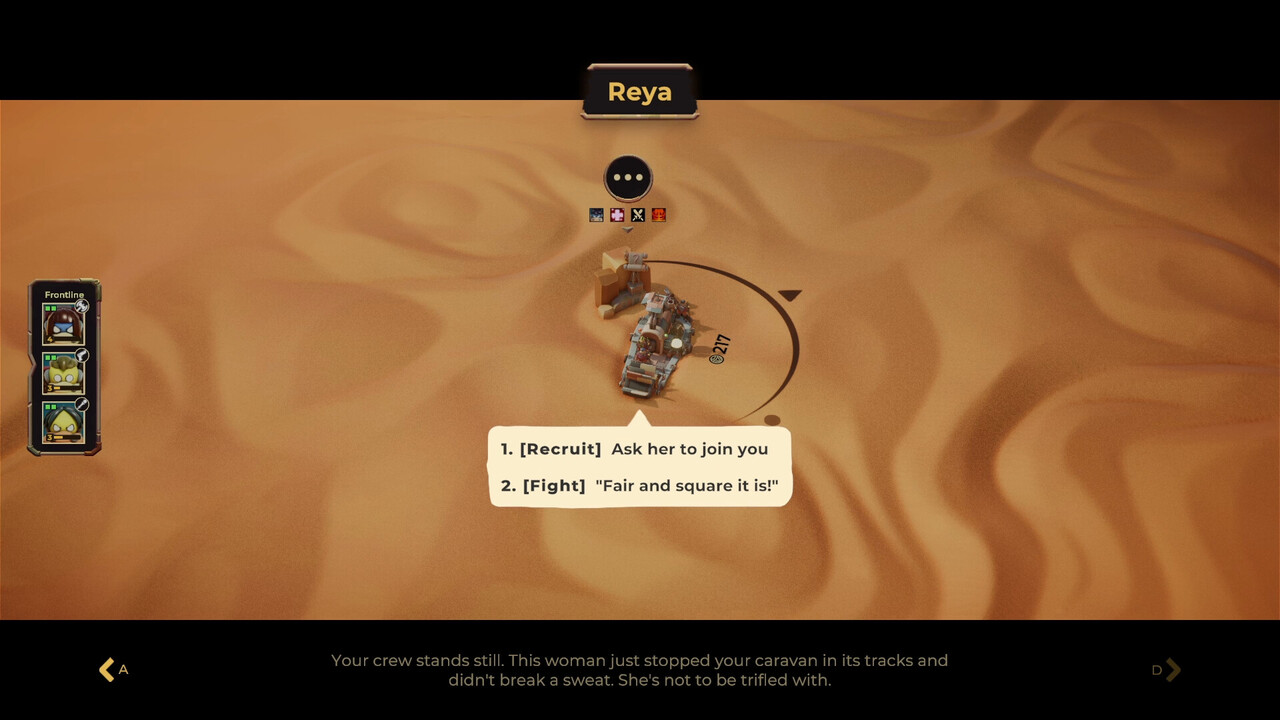
Forget about Paul Atreides or Baron Harkonnen. Despite the game’s title and setting, there are no official connections between Dunebound Tactics and Frank Herbert’s Dune universe. That said, there are more than a few thematic similarities between the two. Dunebound Tactics is set in a post-apocalyptic “magitech” desert wasteland controlled by a tyrannical empire. The world is saturated with dust, despair, and most importantly, a vital magical energy known as Elios. Elios powers everything, from landships to spells, serving simultaneously as engine fuel, currency, and a raw energy source. Our story follows a dune-crawling caravan following ley lines, searching for a new home and attempting to locate their sister, who vanished two decades prior during an expedition. There is no single fixed protagonist in the game, with your squad consisting of whichever procedurally generated survivors you recruit along the way. The result is an emergent narrative that shapes itself as you play, though the downside of this is that the core plot feels fragmented.
Graphics
Despite Dunebound’s grim, dust-filled post-apocalyptic desert setting, the game features a bright and colourful art style. The cel-shaded, comic book-like aesthetic is a major visual strength, although the procedurally generated nature of the game does result in environmental repetition across runs. The scenery consists mostly of homogeneous sand dunes, rocks, plants, and desert debris, after all. Likewise, although there are distinct archetypes for the 15 different unit types in the game, character designs lack true individuality. Technical performance is flawless across the board. Frame rates are buttery smooth; there are no pop-ins and load times are fast.
Sound
Environmental sound design is the unlikely standout here. Dunebound Tactics’ ambience effectively reinforces the desolate, wind-swept atmosphere of the wasteland. Sound effects are meaty and impactful, adding heft to the combat. Finally, music is atmospheric and integrates well with the desert setting. The game features no voice acting, with all dialogue and story choices presented purely through on-screen text.
Gameplay
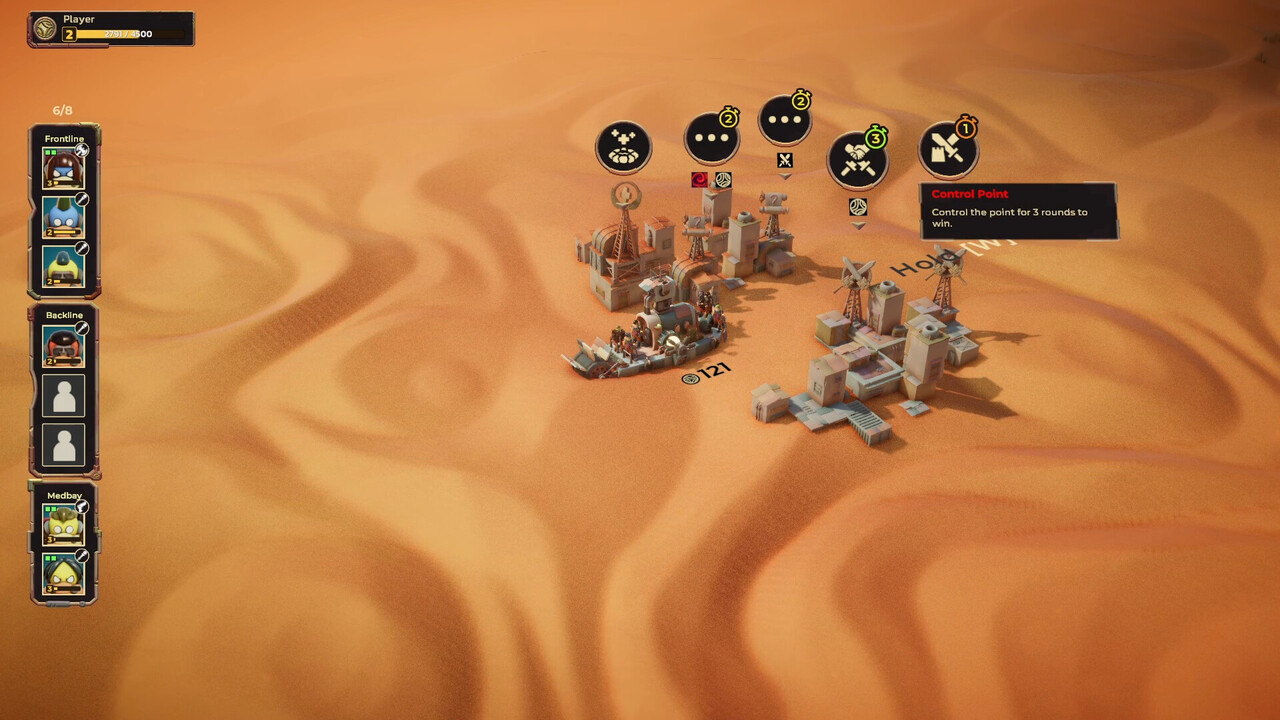
A roguelite tactical RPG, Dunebound Tactics splits its loop between real-time desert navigation and grid-based, turn-based combat. Elios is the resource that is at the center of everything in the game, acting not only as fuel while driving between points of interest, but also as your main way of healing party members, to name just a few things. Unsurprisingly, this means that resource management is far more important here than in most other genre entries. That said, we do feel the need to point out unintentional similarities between Dunebound Tactics’ Elios management and downtime in Fortune’s Weave, where actions you take, including map travel, also consume action points. The difference here is that Dunebound Tactics relies on a single, overarching resource pool, whereas in Fortune’s Weave, you’re given more freedom.
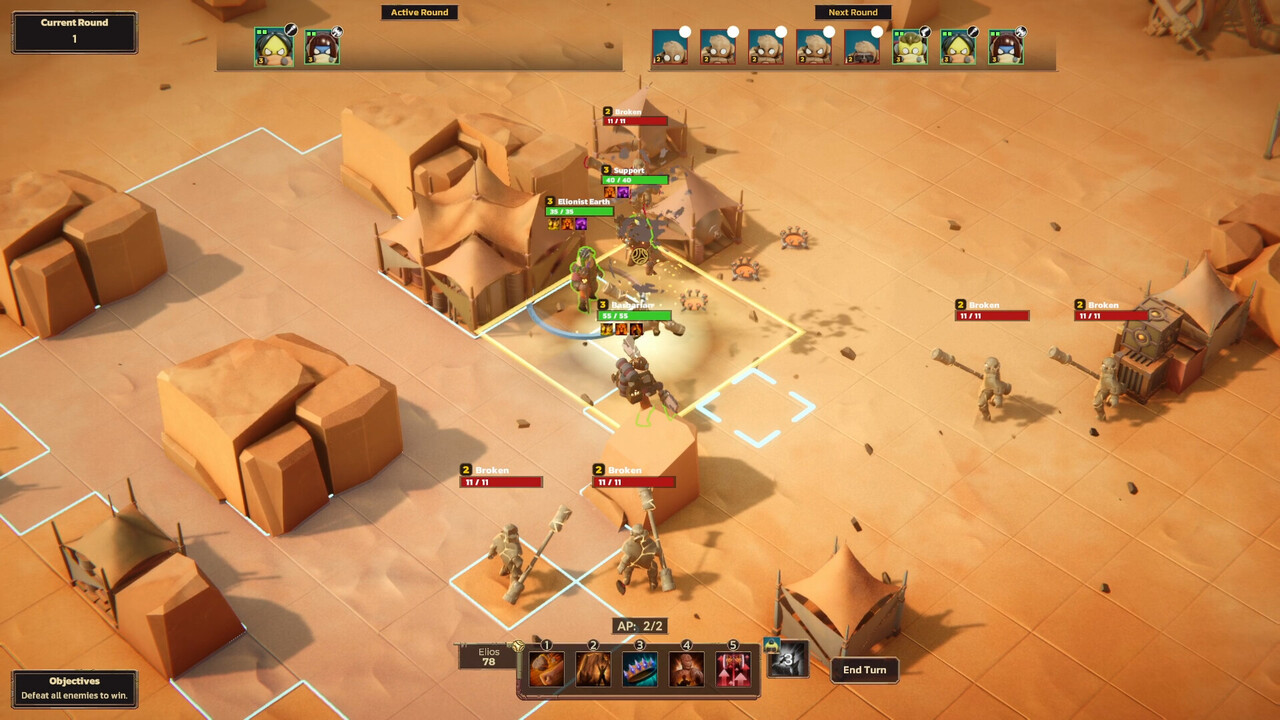
When it comes to combat, Dunebound Tactics isn’t afraid to stray away from the established conventions of the grid-based turn-based tactical formula. Battles feature 3 front-line combatants actively executing actions at your command, and 3 rear-guard support characters who provide passive map-wide abilities. These abilities tap into your Elios supply once again. Hits are guaranteed, instead of the RNG hit percentages that we’re familiar with from games like XCOM and (again) Fire Emblem. Even so, critical hits can still occur, but these are based on character stats and traits. The outcome of combat comes across as less luck-based and more strategic because of this approach, though as a whole it also feels more shallow than it does in the aforementioned titles. One standout mechanic worth mentioning is the way terrain is implemented in the battles. Characters can blow up cover, build elemental pillars, plant mines, and shove enemies into environmental hazards. Runs are bookended by boss battles. These boss fights are concise, tactical, and manageable with smart positioning and crowd control. Upon defeating a boss, you’re rewarded with permanent, persistent upgrades.
What sets Dunebound Tactics apart outside of its unconventional combat systems are those roguelite elements. Because so much of the game is procedurally generated, no two runs feel the same, which is great for replay value, though it also means that the game can feel unbalanced. Dunebound Tactics is hard, punitive, and aggressive. Resource management is tight, and early runs often result in rapid party wipes. This is by design, of course, and the aim isn’t to clear the game in as few runs as possible. Instead, there is meta-progression here in the form of circuit boards that permanently unlock improvements that make subsequent runs easier. Individual runs average around 40 minutes, and although the random nature of the game makes it very replayable, we did feel like we saw everything the game had to offer over the course of a single evening. Still, for €14.99, this is an excellent game for genre enthusiasts.
Conclusion
Ambitious and mechanically satisfying, Dunebound Tactics manages to carve its own niche in the turn-based tactical RPG space. While the procedurally generated nature of the game stands in the way of a fully fleshed-out story, this is a game we strongly recommend for fans of hard tactical RPGs, especially if you appreciate deep systems over narrative depth. Overall, Dunebound Tactics stands as a solid, compelling indie title that particularly shines for dedicated strategy and roguelite enthusiasts.





No Comments