


Developer: Riftpoint Entertainment
Publisher: Alibi Games
Platform: PC
Tested on: PC
Stackmon – Demo Review
We usually bring you full game reviews or previews of yet-to-be-released early access titles, but for Stackmon we’re taking a different approach. The game has been fully out since August, but it is still actively being worked on, based on player feedback. Given that it’s November, we’d normally file this one under our backlog reviews, but the main menu of the game actively tells you that Stackmon is still looking for your input. Who knows what’ll change over the coming months? Not only that, but when we were approached to give Stackmon a shot, we were provided with the demo rather than the full build of the game. As such, we’re not quite comfortable with calling this a full review… or even a preview. Instead, consider this our impressions of a game that is out but isn’t quite finished yet.
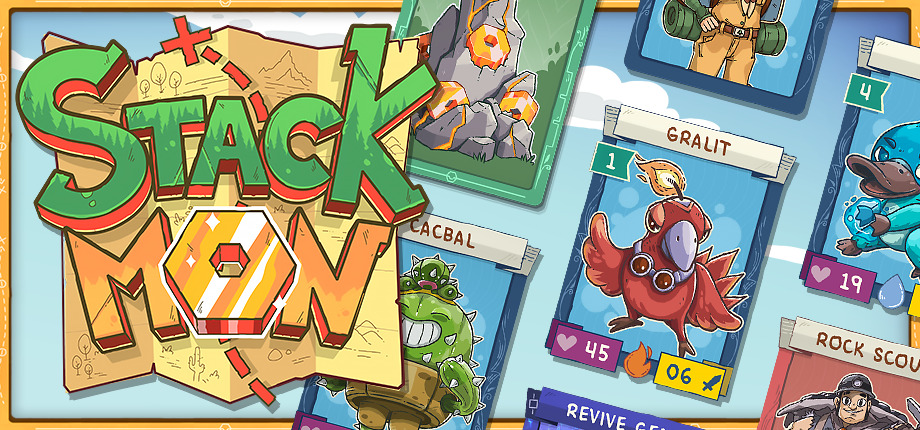
If the title didn’t already give away that Stackmon takes heavy inspiration from the Pokémon series, then the game’s intro sequence definitely makes it clear. You’re greeted by the game’s professor, given a choice of a water-, grass-, or fire-type starter Stackmon, and sent on a journey to defeat the regional leaders. The difference here is that everything is resolved through cards. It’s as if Stackmon takes the Pokémon blueprint and tries to cram that into a trading… card… game? No, wait, not like that! Rather than the elaborate deck building and turn-based battles of the official Pokémon Trading Card Game, Stackmon’s card mechanics are built around stacking cards.
From the monster designs to the different trainer classes, Stackmon proudly wears its main inspiration on its sleeve, though the exaggerated art style with its bright colours and thick outlines provides the game with an identity of its own. The game’s soundscape also feels reminiscent of that of Pokémon, with musical cues that mimic Junichi Masuda’s compositions almost too close for comfort. Even then, music is underutilised, with long stretches of awkward silence between tracks.
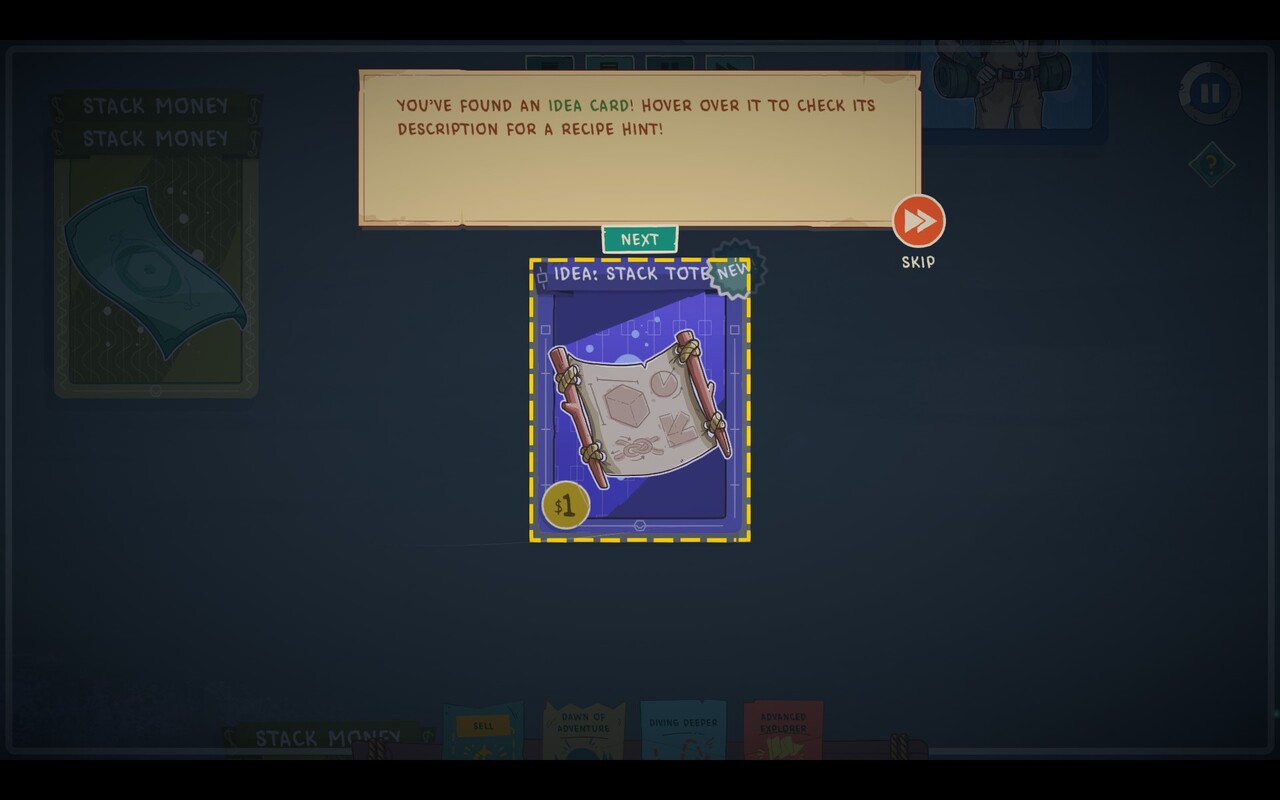
Gameplay is fast-paced, with easy-to-learn basics but a surprising amount of mechanical depth. You open packs of cards and stack the cards you find in them to trigger all sorts of effects. Putting down your trainer or one of your Stackmon on a tree card will turn that card into wood cards, for example, while putting a Stackmon on a tall grass card triggers an encounter against a wild Stackmon. Resolving card effects usually involves a cooldown timer. When you’re in the game’s hub area, you usually have plenty of time for these cooldowns to unfold, but if you’re on a timed challenge or when you’re out and about, you really need to keep an eye on whether or not actions can be resolved in time. The early game is mostly about resource management, and it sees you farm cards from booster packs, stack these to resolve them, and sell what you don’t need. The profits let you buy more booster packs, rinse and repeat.
Eventually, the professor’s assistant will pop up (from a booster pack, no less) to send you out on your journey, alongside your chosen starter Stackmon. This journey mirrors the flow of Pokémon games as well, with early game routes and other trainers to fight. Your journey still unfolds through opening booster packs. Battles, which trigger from tall grass cards or opposing trainer cards, are resolved automatically, though you can stack items on your Stackmon to heal them mid-battle. Once again, the cooldown timer comes into play, as you have a limited number of timed action points before you’re whisked back to the hub area. Fortunately, you can use the game’s pause button to strategise and plan your actions before letting the cooldown play out.
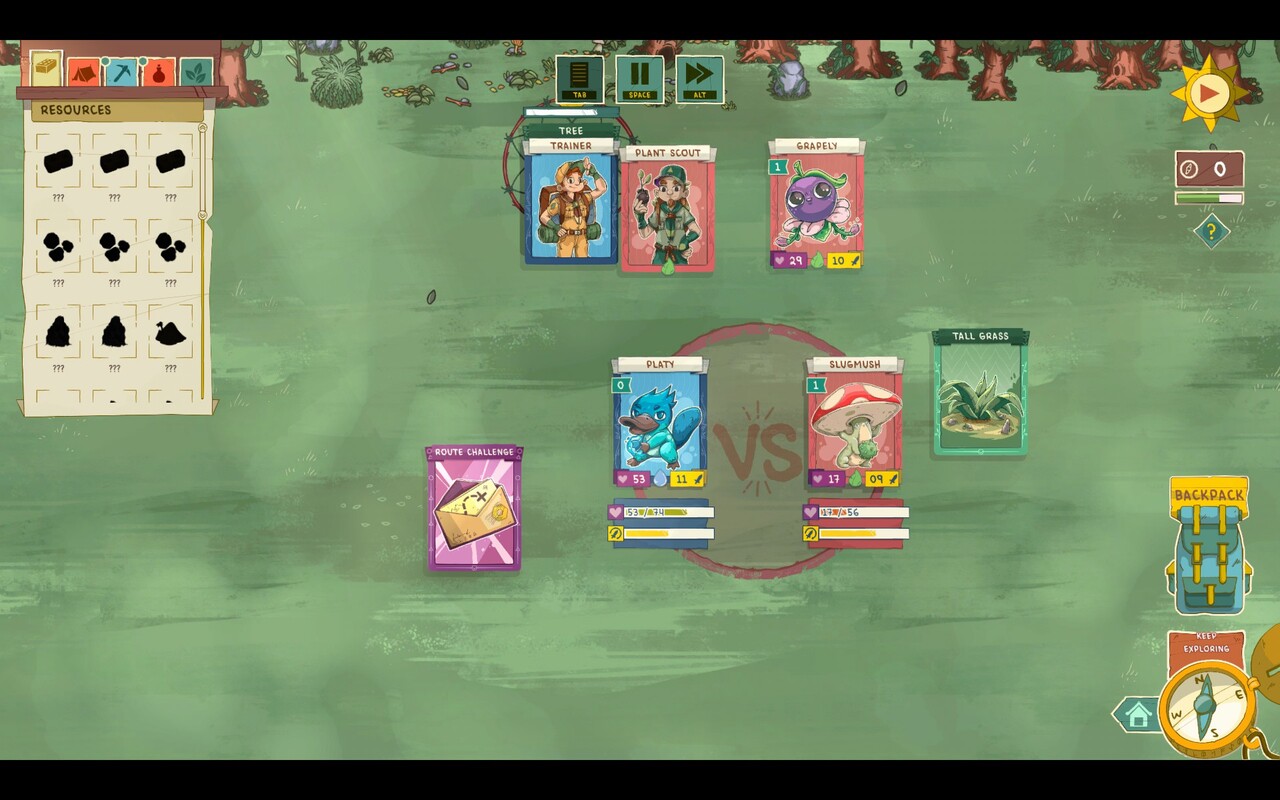
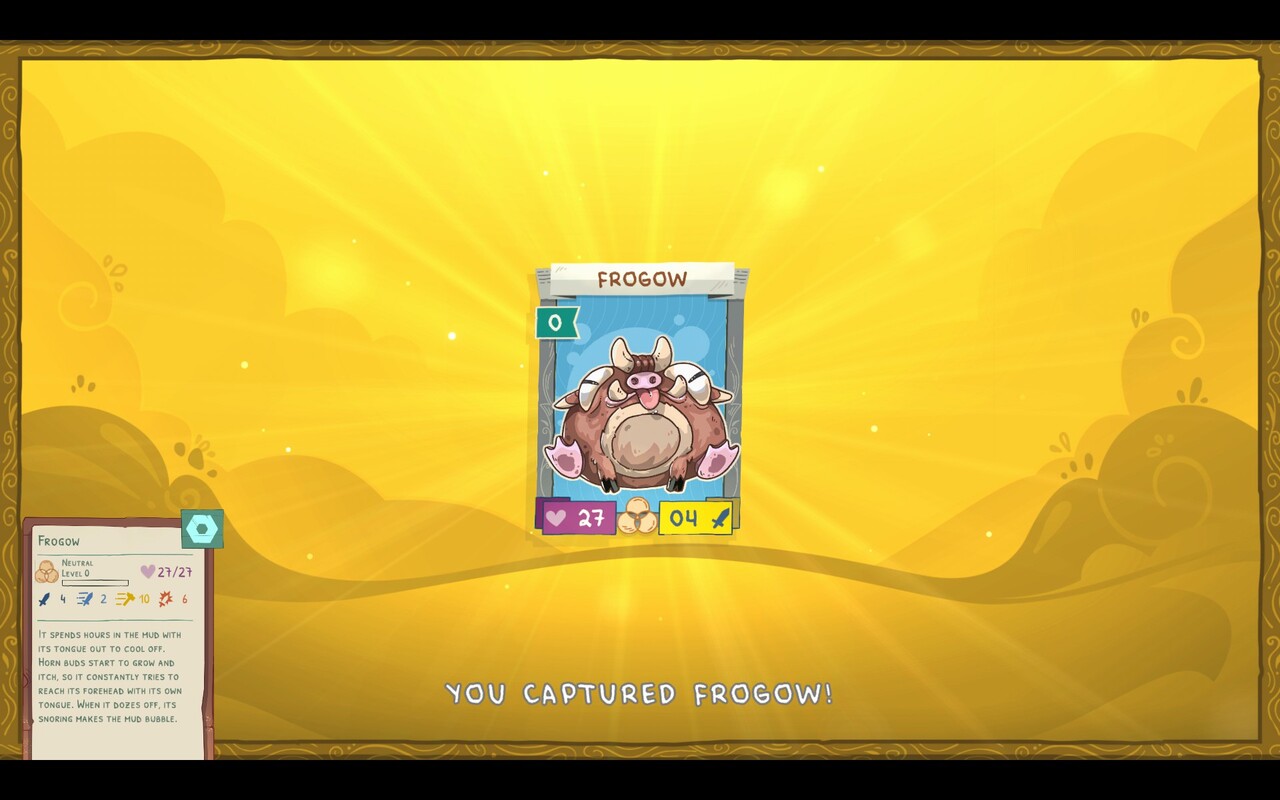
If you knock out a wild Stackmon, you can catch it with a totem card, though you have limited time to do so. The assumption is that you’re optimising your action points, and so you’re juggling different things at once while any encounters auto-resolve, so the challenge is to keep an eye on battles while you’re busy farming resources. You’ll need those resources to provide your captured critters with a new house at the base camp. That does bring us to our biggest frustration with the game: clutter. Since you physically drag cards to stack them on top of one another, and cards aren’t automatically sorted, a round of Stackmon inevitably becomes chaotic as different card stacks start to clutter the screen. Some of the mechanics are also a bit too obtuse for our liking, with different combinations having different effects, and it not always being clear which cards can be stacked and which can’t. Given the sheer amount of mechanics to keep track of, it takes some time and effort to start understanding the flow of the game.
During our limited time with Stackmon, we encountered status effect cards, both positive and negative, as well as equipment cards you can use to improve both your trainer and your Stackmon’s abilities. Your mons can level up and evolve as well. A particularly nice touch we found was that defeating an opposing Stackmon grants experience cards, but you don’t need to stack these on the winning critter. Instead, you can allocate any experience earned to one of your weaker Stackmon in order to level them up instead. Eventually, your Stackmon will also evolve. With over 100 different Stackmon to register in your Stackpedia, you supposedly have your work cut out for you if you’re going to complete the full game.
Conclusion
Although Stackmon’s demo did pique our interest, it wasn’t able to convince us of wanting to give the full game a shot. The amount of on-screen clutter, combined with the lack of clarity for some of its mechanics, prevented the game from truly clicking with us. The game’s presentation is appealing as both an homage to and a parody of Pokémon, but that isn’t enough to keep things interesting for long enough. We’d tell you to give the demo a shot for yourself, but it’s been removed from Steam. You’ll have to fully commit if you want to set out on your own Stackmon journey.





No Comments