


Developer: Tamsoft
Publisher: Bandai Namco
Platform: PC, PS4, PS5, Xbox Series X/S
Tested on: PS5
BLEACH: Rebirth of Souls – Review
BLEACH: Rebirth of Souls is the latest entry on a long list of games that retell the story of an anime, just like That Time I Got Reincarnated as a Slime: Isekai Chronicles. In the case of Rebirth of Souls, you’ll be able to revisit BLEACH‘s story through a series of 1v1 battles. So let us see if developer Tamsoft managed to strike a balance between a good story mode and creating interesting fighting mechanics.

Story
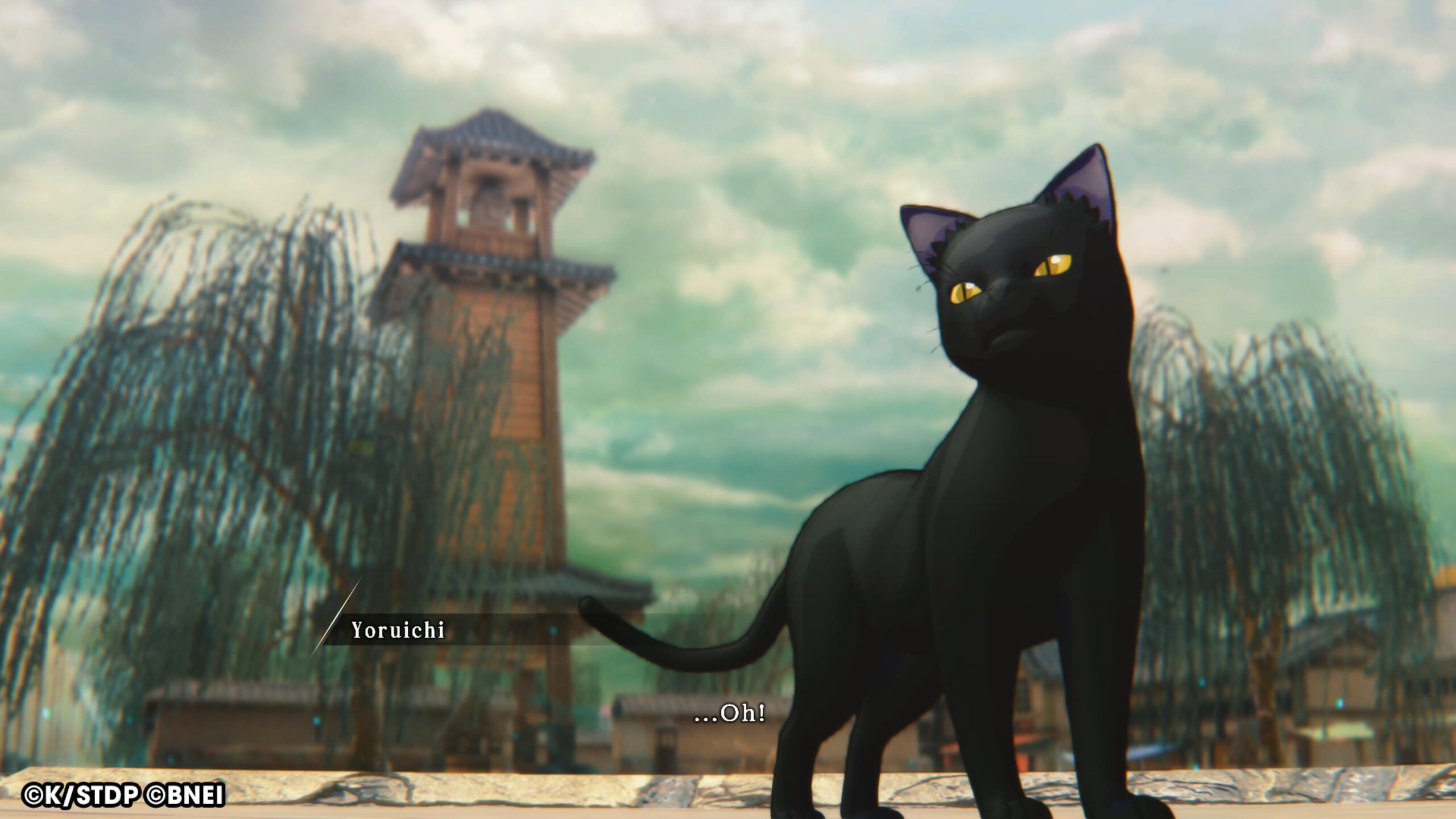
BLEACH: Rebirth of Souls manages to knock the storytelling out of the park. There are ten seasons worth of storytelling to abridge within the game’s story mode, but the game pulls this off. Through voice-overs, time-skips, recaps, flashbacks, and well-chosen content cuts, it manages to divide up the story into bite-sized, compelling pieces. These pieces make BLEACH: Rebirth of Souls a great entry point for people unfamiliar with the franchise, while not substituting for the anime or manga. And with the added secret stories, which give you a new point of view for the main plot, it also has something for players who already know the story.
The problem with the story, however, is that these bite-sized pieces are added one after the other, with battles far and few in between. This means you have to slog through 5 minutes of story to then fight a battle that might last one minute. At times, this gives the impression that, while in story mode, you’re playing a visual novel instead of an anime fighting game.

Graphics
Drawing from a wealth of pre-existing source material, you’d expect BLEACH: Rebirth of Souls to use a mix between 3D and 2D to stay as close to the anime as possible in appearance. However, the game fully commits to the 3D designs instead, adding all of the anime’s details to the outfits. The cutscenes also use these models, which all have carefully crafted expressions, giving the scenes the polished look you would expect from a triple-A game. During combat, your character may be surrounded by an aura, which persists into the animations of your cinematic finishing moves. However, it’s not only the characters that received special attention, as each arena has its own layout and design, and features its own obstructions. These obstructions and other details of the arena design can be destroyed during the battle, which adds a dynamic element to the environment.
Despite all of these moving pieces and detailed models, the action stays fluid with smooth animations and no performance issues. BLEACH: Rebirth of Souls really makes the most out of the PlayStation 5’s hardware to provide seamless and stunning visuals, both in and out of combat.
Sound
From the first moment you start up BLEACH: Rebirth of Souls, you are bombarded with a nostalgia blast back to the first season of the anime. This sense of nostalgia persists throughout the story mode, which features ending credits with a theme song at the end of each chapter. During combat scenes, the background theme gets joined by the grunts of the fighters, the sounds of their weapons clashing, and of the environment being destroyed. Both during combat and cutscenes, the voice acting is top-notch and only adds to the amazing sound design of the game.
Gameplay
BLEACH: Rebirth of Souls is, at its core, a mix between a fighting game and an arena game. The fights are purely 1v1, but you are stuck looking at each other like in an arena game. The main issue for fighting games is differentiating themselves from others in the genre while keeping their familiar mechanics recognizable. While playing the game, it was clear that this is what received the most attention, as variety is the name of the game.
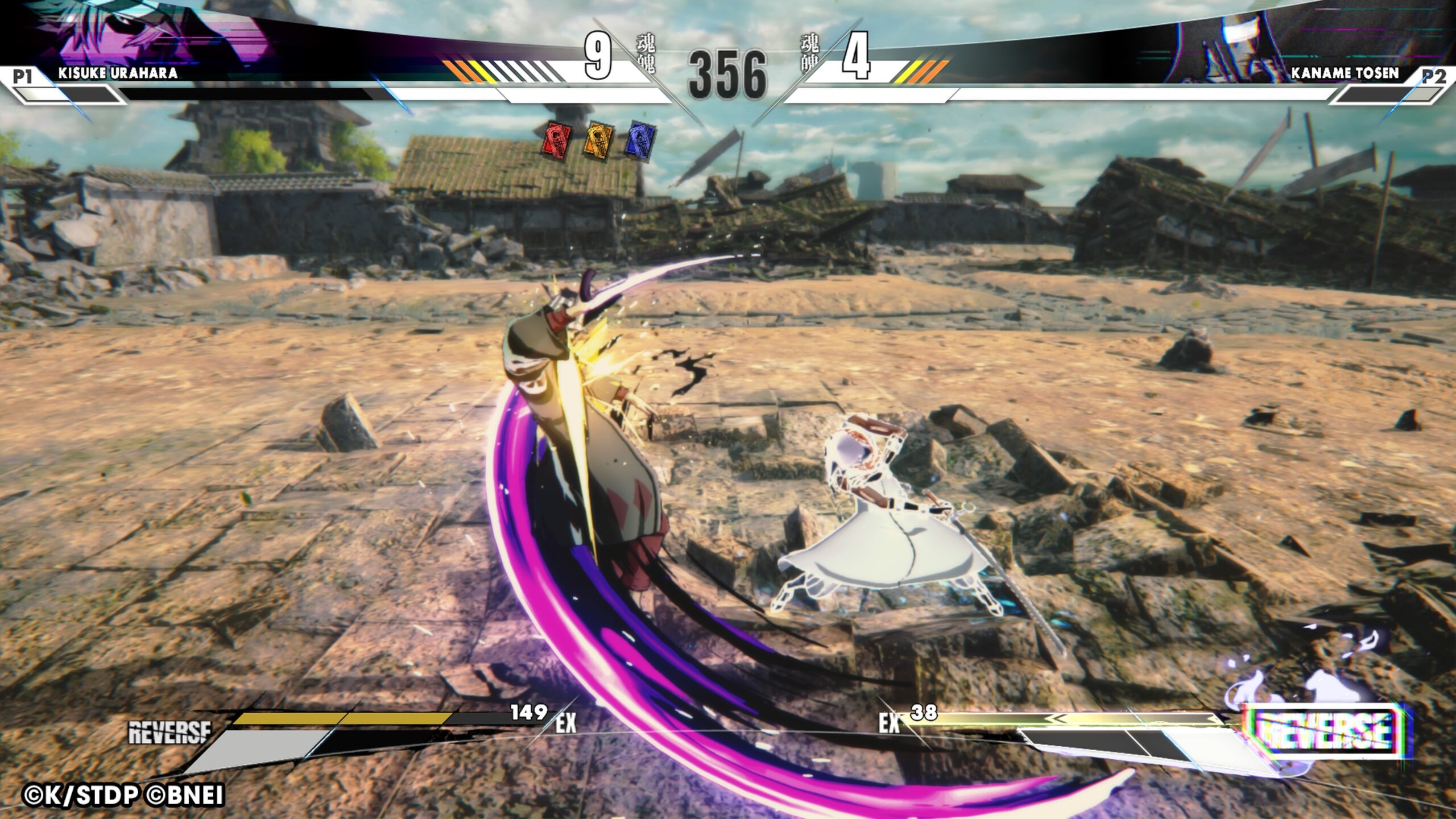
A fighting game typically comprises four main mechanics: movement, attacks, defenses, and a unique gimmick. These then get expanded upon through a variety of different characters, each with their own unique playstyle. In BLEACH: Rebirth of Souls, you have full three-dimensional movement, but your vertical movement, up and down, is not controlled by the player. Whether you are sky-walking or remain with your feet on the ground depends on the battle itself. Movement also brings us to the first of the special gimmicks: the Reverse bar. The Reverse bar slowly fills up throughout the fight and allows you to expend part of it to teleport behind your enemy, ready to deliver a punishing counter-attack. This also means that despite not having a jump button, you can still blast enemies far away without losing your combo or making a quick recovery from being sent flying yourself.
Attacks can be basic or special. Special attacks need you to fill up yet another meter, which is located right next to the Reverse bar, and this is called Spiritual Pressure. This bar gets depleted to use stronger versions of basic attacks. These special attacks, and the basic ability they upgrade, are different for each character. Every character has four basic attacks: Light Attacks for flurries of attacks, Flash Attacks that are slower but deal more damage, a signature move which is unique for every character, and a Guard Break Attack, which will break your opponents’ shield more quickly than normal attacks. This variety of attacks is a blessing, as most anime fighting games very easily devolve into learning one combo and spamming it. However, because your best attacks are locked behind your Spiritual Pressure, which you cannot charge up yourself, you have to take and deal damage to charge it. This means you will have to use your other attacks as well, and thus have to play around your opponent’s defenses.
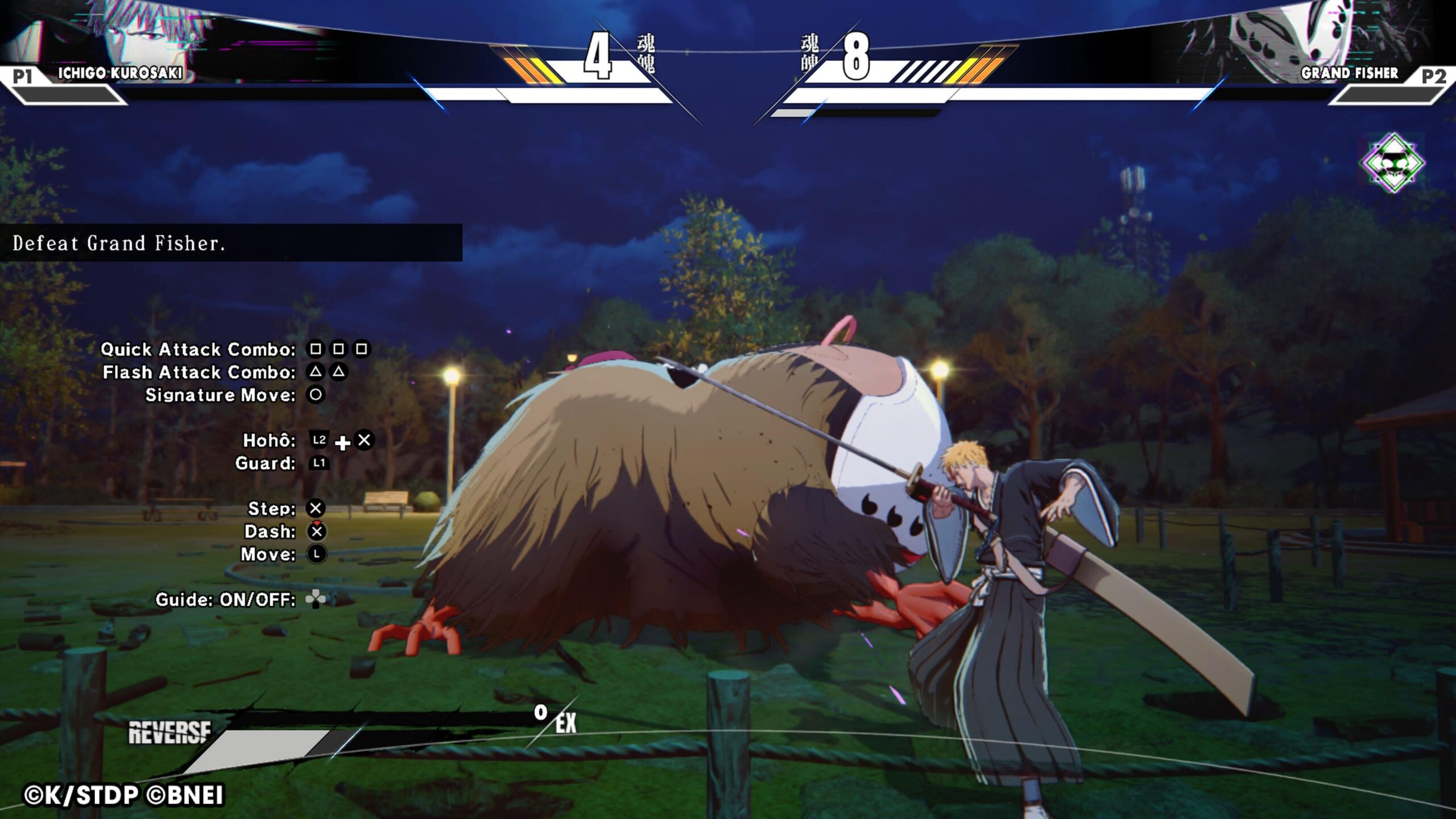
This is also where the first crack begins to show: Defenses. Besides using the Reverse bar to dash around and using your shield, the game offers very few defensive options. With your movement permanently focused on your opponent, creating distance is easier said than done. This means that you can very easily be locked into a combo with no means of escape.
This brings us to the final mechanic of fighting: the unique gimmicks that set BLEACH: Rebirth of Souls apart from other anime fighting games. The game does not use Lives and HP the same way as an ordinary fighting game, where you play three rounds and get a point for each round you win. Every character has a number of Konpaku, or Souls, which act as their lives, and when they reach zero, that character loses. However, these Souls can only be damaged when a character’s ‘Reishi’, their HP bar, is brought below 30% and they are hit with a Kikon move, a cinematic finishing move. To further complicate this process, Kikon doesn’t take one Soul away, but at least two. Depending on yet another bar, your character can undergo Evolution and reach Sublimation. These stages increase your overall statistics and add one to the amount of Souls taken away by your cinematic finishing move. Finally, if you wait to use your finisher until your opponent’s HP bar is at 0%, you will take yet another Soul away. This means that you can take up to five Souls away from your opponent at once. The amount of Souls a character would lose is highlighted on the battle screen to help make this clear.
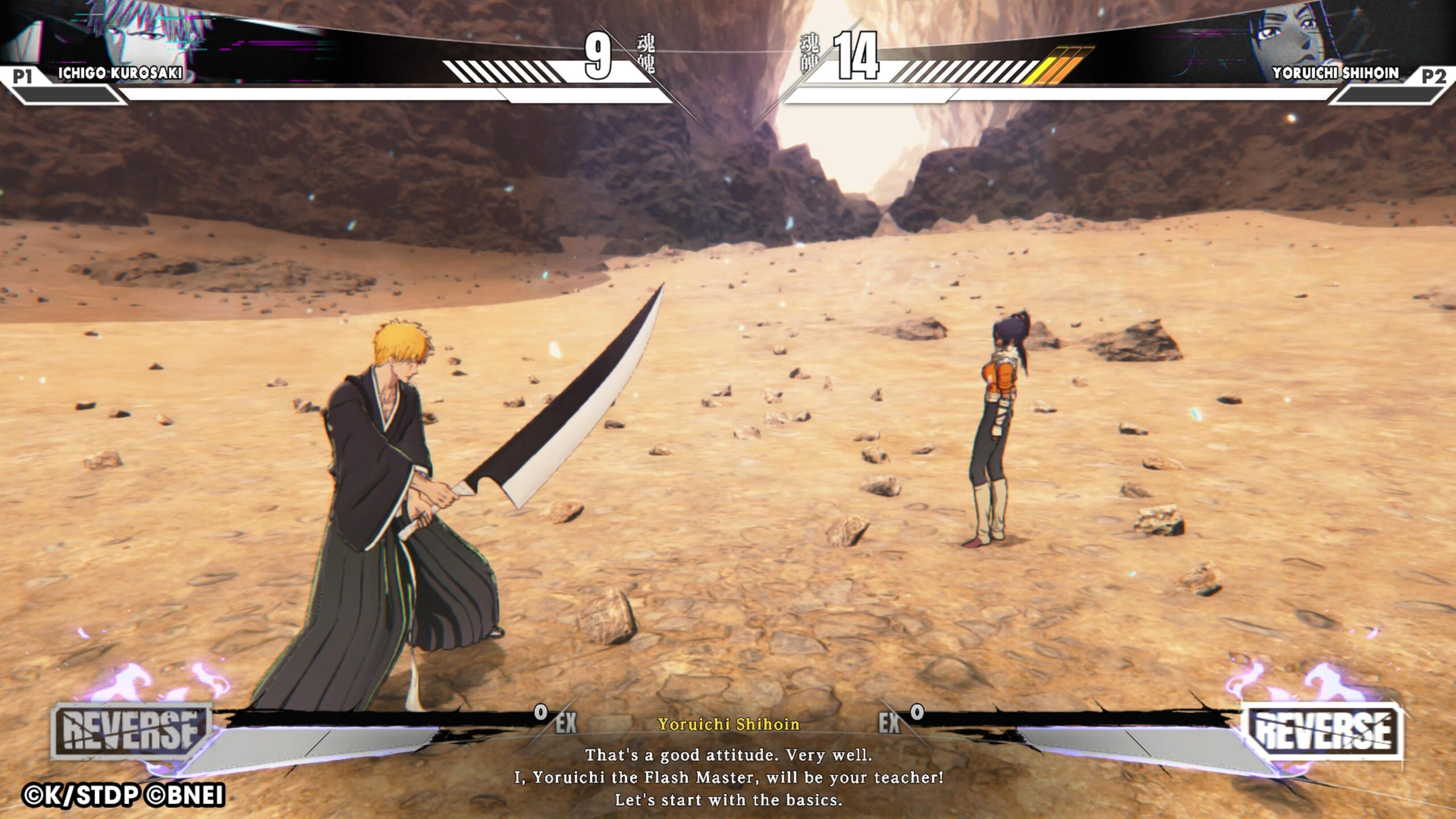
This polished, but very convoluted system has you actively keeping track of three bars with their own fill rates and gives each character completely different moves, ranges, and mechanics that make sense within the lore of BLEACH. This makes combat amazingly intricate, but only after you’ve familiarized yourself with it. The story does a better job of introducing the combat system than the actual tutorial. The tutorial dumps all of the information over the course of maybe twenty slides. The story, on the other hand, limits your access to these abilities and gives you sub-quests during combat to use these in actual combat with a moving opponent.
This makes for a very confusing entry into the fighting game genre, while veterans of fighting games will find the system easier to come to understand, as various other games also use bars that randomly fill up for their special abilities.
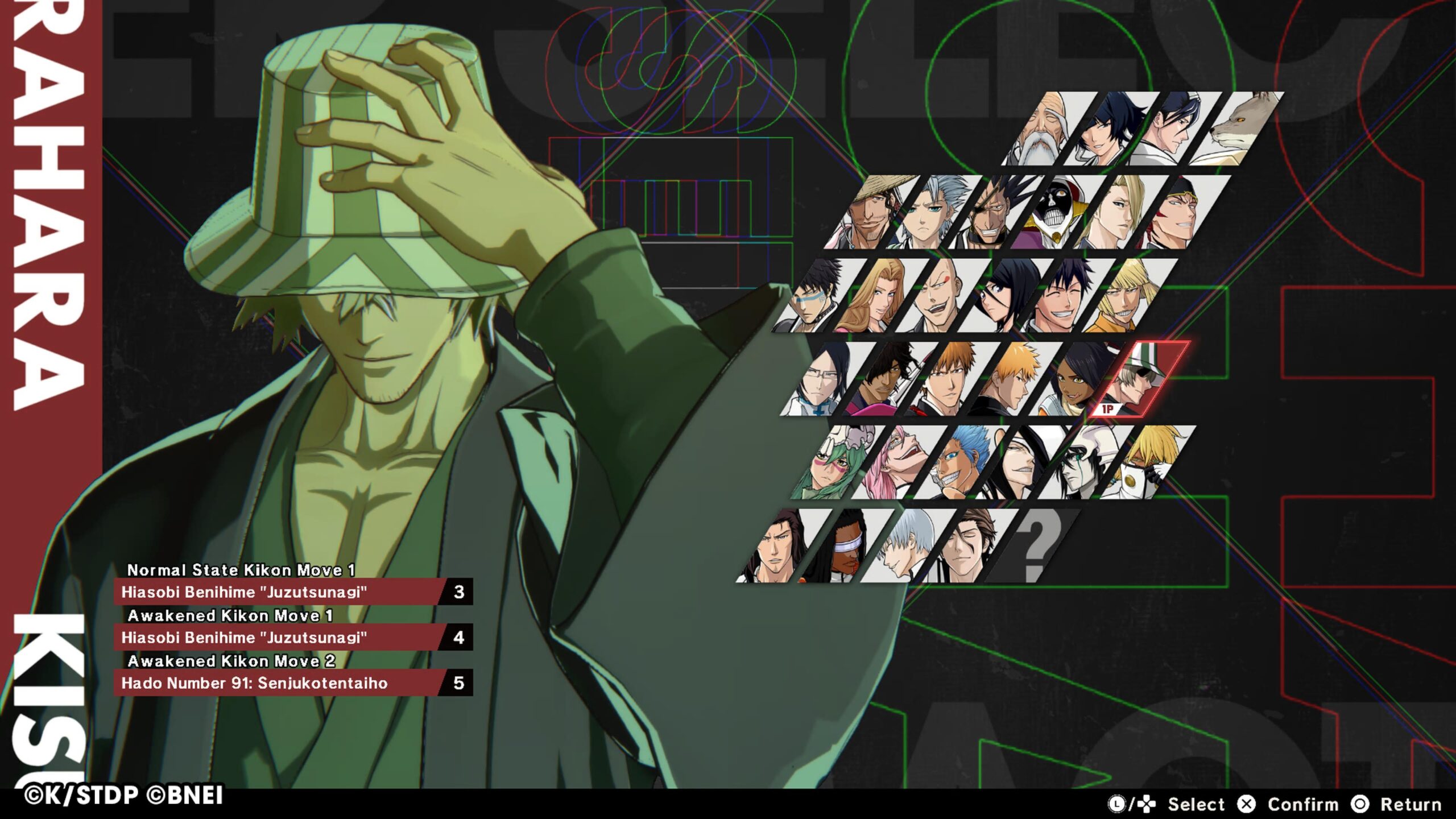
And, as if the Soul system didn’t give enough variety, the game also has 33 distinct characters plucked from the Mortal Realm, Soul Society, and Hueco Mundo. Each of these characters has their own moveset and specialty, with only one of them, Getsuga Ichigo, not being available in free play from the start. Getsuga Ichigo has to be unlocked by finishing the story mode of the game. All the other characters are available in free play from the very beginning, which makes the story completely optional to enjoy casual play.
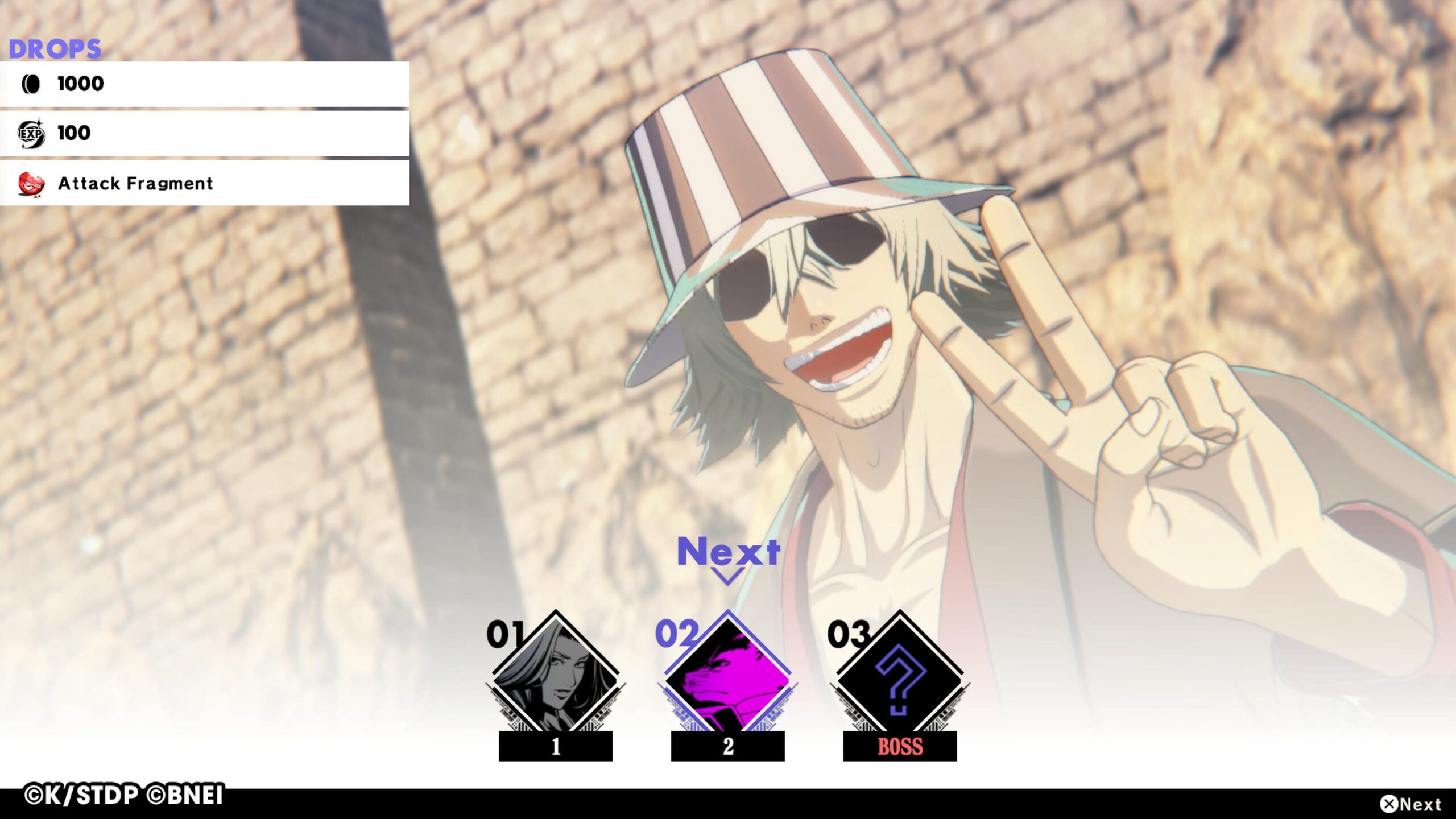
To these 33 characters and the Soul system, BLEACH: Rebirth of Souls adds two types of upgrades for your character: Talismans & Soul Crystals. These give your abilities buffs when a specific condition is met, such as having lost no Souls or having less than 50% of your Reishi remaining. Talismans are consumable buffs that can be used for one fight. Soul Crystals are permanent upgrades you can add to your characters. The great thing about Soul Crystals is that they can be equipped on multiple characters at the same time, meaning that you do not have to farm endlessly to equip all your favourites with the same Soul Crystal. Both buffs can only be used in PvE battles, so when fighting against other players, you only have the normal abilities your character starts with.
Conclusion
BLEACH: Rebirth of Souls enters the long list of anime fighting games but manages to avoid most of the pitfalls. The fight mechanics are intricate, and with the rich cast of characters, everyone will find someone to suit their tastes. Nonetheless, all of these new mechanics make the game off-putting for players with little to no experience in fighting games. The abridged story mode gives new players a solid entry into the plot of BLEACH, but falls short of being an actual replacement for the show. As such BLEACH: Rebirth of Souls is a better fighting game than an anime game, but it is still one of the better anime fighting games out there.





No Comments