


Developer: Hell Byte Studios
Publisher: Hell Byte Studios
Platform: PC
Tested on: PC
Blood Reaver – Preview
Ah, the humble wave shooter. The glory days of Halo‘s Firefight mode and Gears of War’s Horde mode may be well behind us, but the genre has endured in some form up until this day. Wave shooters are mainly a VR thing now, to the point that a focused PC entry in the genre has become a rarity… or an opportunity, as Hell Byte Studios must’ve thought. The developer’s latest title, Blood Reaver, just launched in Early Access and is set to offer players an unapologetically old-school wave shooter experience. How does Blood Reaver’s take on this tried-and-tested formula hold up in 2026?
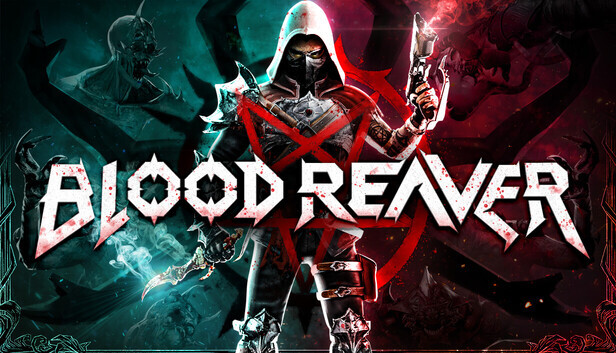
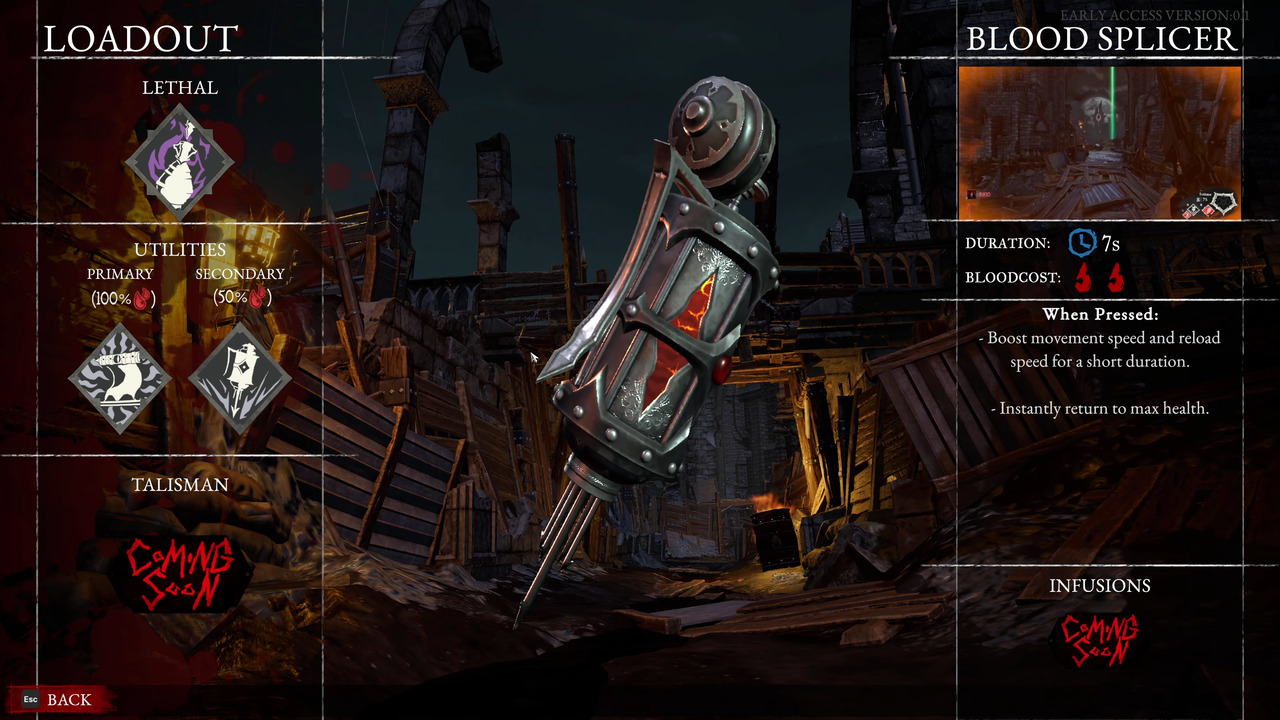
Taking more than a little inspiration from Call of Duty‘s Zombies DLC, Blood Reaver is a dark-fantasy, first-person shooter where you fight escalating waves of demonic enemies. The game blends traditional gunplay with blood-fueled magic systems across multiple schools. You can charge spells by killing enemies and customize builds through unique mechanics like the so-called Deck of Fates, which provides randomized upgrades between enemy waves, and the Blood Infuser, which enhances your weapons.
If you’re familiar with wave-based shooters, you can expect to get into Blood Reaver’s action pretty quickly. The core loop is as straightforward and familiar as it gets, so it doesn’t take long to understand the basics: you spawn into a map, fight off waves of enemies, earn resources and use those to unlock new weapons, other areas and upgrades, all while trying to survive as long as possible. Early runs can feel challenging. We were wiped multiple times before we were able to make any meaningful progress, which echoes the tougher, more punishing feel of the old-school horde modes of the early 2000s.

As it stands, Blood Reaver’s onboarding is decent but not especially robust, though. The game introduces its systems gradually during play rather than through extensive tutorials. This is fine for basic mechanics like shooting and movement, as these work like any other game in the genre. However, the game’s deeper systems, like spell synergies, the different magic schools, and progression tools, like the aforementioned Deck of Fates or Blood Infuser, do take some time to fully grasp. More thorough explanations would be welcome here, if only to ease you into these layers. Blood Reaver is accessible at a surface level, but expects you to learn by doing, with a bit of trial and error as you get comfortable.
There’s a strong emphasis on momentum as well as a risk-reward factor. Mechanics like blood harvesting encourage aggressive play to grow stronger, but overextending can get you overwhelmed. As waves progress, enemies become more diverse and bosses start to appear. Conversely, Blood Reaver’s challenge level escalates sharply, testing both your build and your execution. The game’s co-op, with up to 4 players, makes that feeling of escalation more manageable by adding coordination and shared strategy. Solo play is undoubtedly more punishing, although it’s still worth venturing out on your own, if only to master Blood Reaver’s mechanics without having to rely on your team members as a crutch.
Those core mechanics form the foundation of Blood Reaver, so they’re arguably the most important element of the game, but they’re still only just one piece of the puzzle. As it stands, Blood Reaver comes up short elsewhere. Given that the game has only just launched in Early Access, we imagine that most of what Blood Reaver is currently lacking is going to be dealt with over the coming months. At the time of writing, there is only a single map, ironically named “Final Stand”. This naturally limits replayability and can make the game start to feel repetitive after only a handful of runs. Performance isn’t always up to snuff either: frame rate drops and stuttering are common, especially during chaotic moments when there are lots of enemies and effects on screen. Speaking of visual effects, these can overlap, making it harder to track what’s happening mid-combat. Despite the overwhelming visual spectacle, Blood Reaver’s combat doesn’t always feel as impactful as it could, although that is to be expected given its EA status. Certain weapons, in particular, lack impact, with enemies not reacting strongly to them, which reduces the intensity of taking them down. The game’s core systems may be solid, but they’re certainly not fully refined yet.
To their credit, Hell Byte Studios have been very open about Blood Reaver’s future, framing the game as a work-in-progress that is supposed to be actively shaped by the Early Access period. They plan to use player feedback to guide updates and improvements as the game moves forward to that full 1.0 release. The game’s roadmap points towards two new maps and a main quest. Hopefully, the latter fleshes out Blood Reaver’s narrative too, as this is something the game could stand to see added, if only to make the single-player experience more engaging. As far as its current state shows, co-op is clearly central to Blood Reaver’s design, but the online player base is still limited at this stage, partially due to the game’s limited content.

Conclusion
As solid as Blood Reaver’s foundation is, the game needs a lot more content, optimisation, and polish to reach its full potential. The current build is geared towards co-op, which is a completely fine concept, but there isn’t enough here to keep you playing for more than an hour or so. To ensure Blood Reaver’s success and, in turn, longevity, the game really needs to be fleshed out. For now, it’s little more than a curiosity with the potential to become a classic. It just isn’t one yet.





No Comments