


Celestial Return – Review
The wait is finally over… at least for those of you who backed Metaphor Games’ Celestial Return on Kickstarter. As much as we loathe to admit it, and despite its remarkable success, the game completely flew under our radar while its crowdfunding campaign was up and running. When we eventually found out about it, we regretted not backing Celestial Return, as it seemed right up our alley. So when we were given the chance to review the game, we naturally jumped right on it. Does the final product match the hype of its Kickstarter campaign?
Story
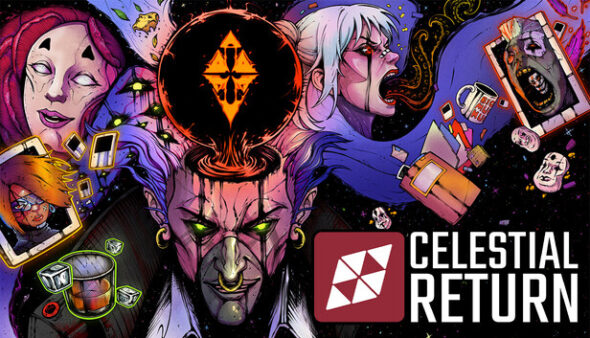
If there’s one thing that Celestial Return’s opening scene makes clear, it’s that we’re not in Kansas anymore. The prologue doesn’t just introduce our protagonist, detective Howard, but it also lays the foundation for some of the game’s outlandish concepts. The opening scene sees Howard and his squad of Paranormal Investigation Division (PID) agents hunt down a supernatural cosmic horror known as an Abstract inside a corporate lab. This culminates in a confrontation within a screaming field of roses that bear human faces. Howard ends up illegally and covertly saving the last of these rose creatures. Aptly named Rose, Howard’s unlikely new companion possesses the unique ability to speak with the dead. Fast forward three years, and our story begins in earnest. Now a worn-out private investigator, Howard is approached by a former colleague to assist in investigating a string of gruesome suicides spreading across the city.
Given Celestial Return’s narrative-driven nature, we’ll refrain from giving away anything else. Much of how the story evolves is going to be highly personal anyway, with both deliberate player choices and dice-related skill checks determining the outcome of key events. What we can tell you without spoiling anything is that Celestial Return’s narrative addresses heavy, existential themes including corporate greed, unchecked technology, religion, cults, nihilism, and survival, though it injects moments of snarky, meta, fourth-wall-breaking humor to break its grim tension.
Graphics
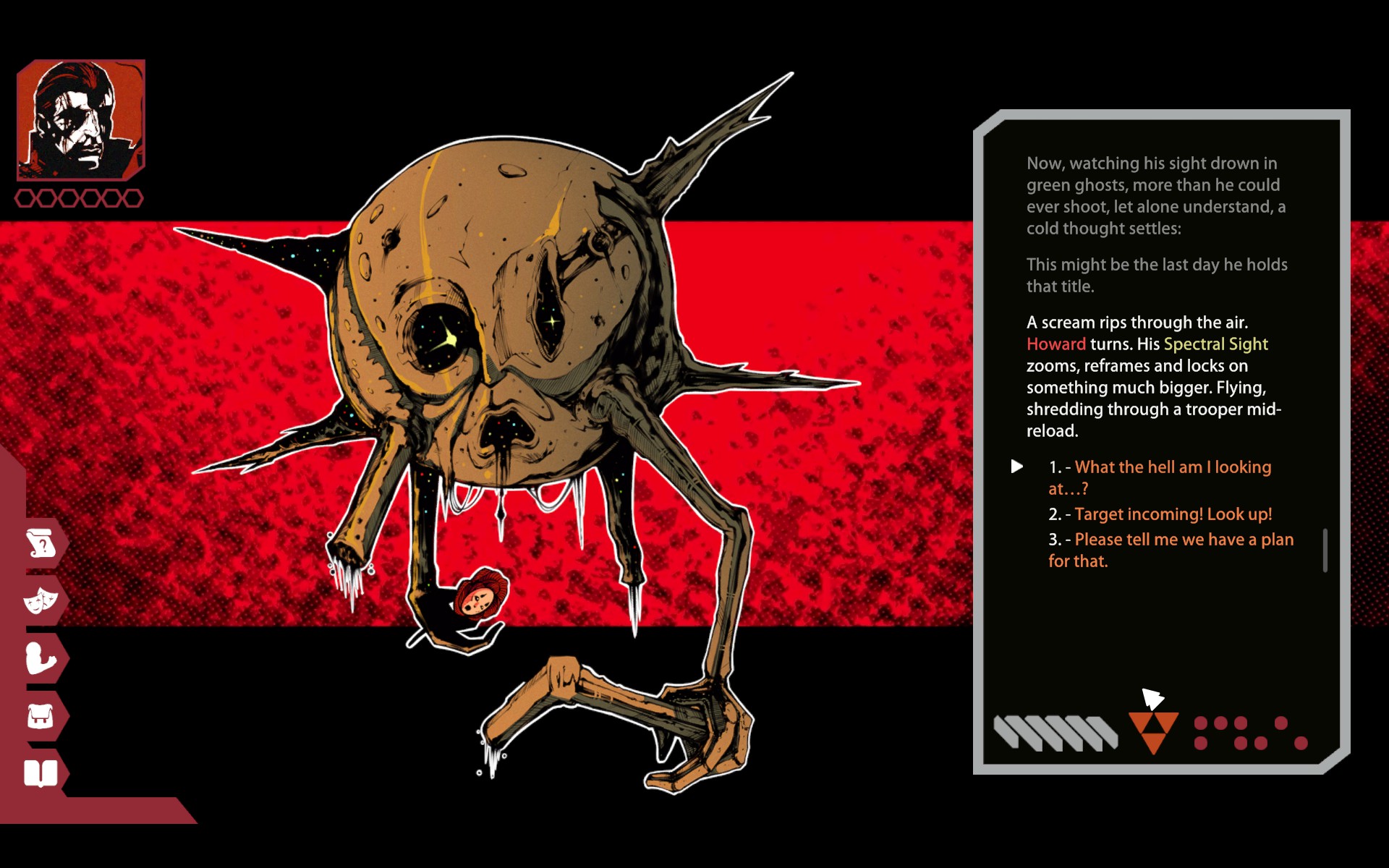
The neon-lit city of Netherveil and its menagerie of eccentric inhabitants are brought to life through a combination of striking, hand-drawn graphic novel-style art and highly stylized 3D environments that feel reminiscent of Blade Runner. Developer Metaphor Games has explicitly cited manga classics like Berserk and Akira as direct aesthetic influences. The developer has also confirmed that the game is 100% human-made with no AI generation used. Because the game heavily relies on visual novel panels, book-framed text screens, and static portraits rather than a traditional point-and-click or 3D environment, animation is understandably limited. Celestial Return isn’t a very demanding game, allowing the game to run smoothly even on modest hardware.
Sound
Nothing characterises Celestial Return’s blending of a cyberpunk setting with a classic noir story better than in Berk Şermet’s score. The soundtrack combines EDM and techno with jazz and even death metal, resulting in an atmospheric cocktail of music that shouldn’t work as well as it does. The game is also partially voice-acted, though we should note that the performances are uneven at best. To Metaphor Games’ credit, they had to work with a limited budget. High-end voice actors are expensive, so the developers lent their own voices to the game’s cast. Audible voices add a lot to the atmosphere, even if the end result comes across more like a DM putting on character voices during a casual Friday night D&D game than Troy Baker or Tawny Platis doing what they do best.
Gameplay
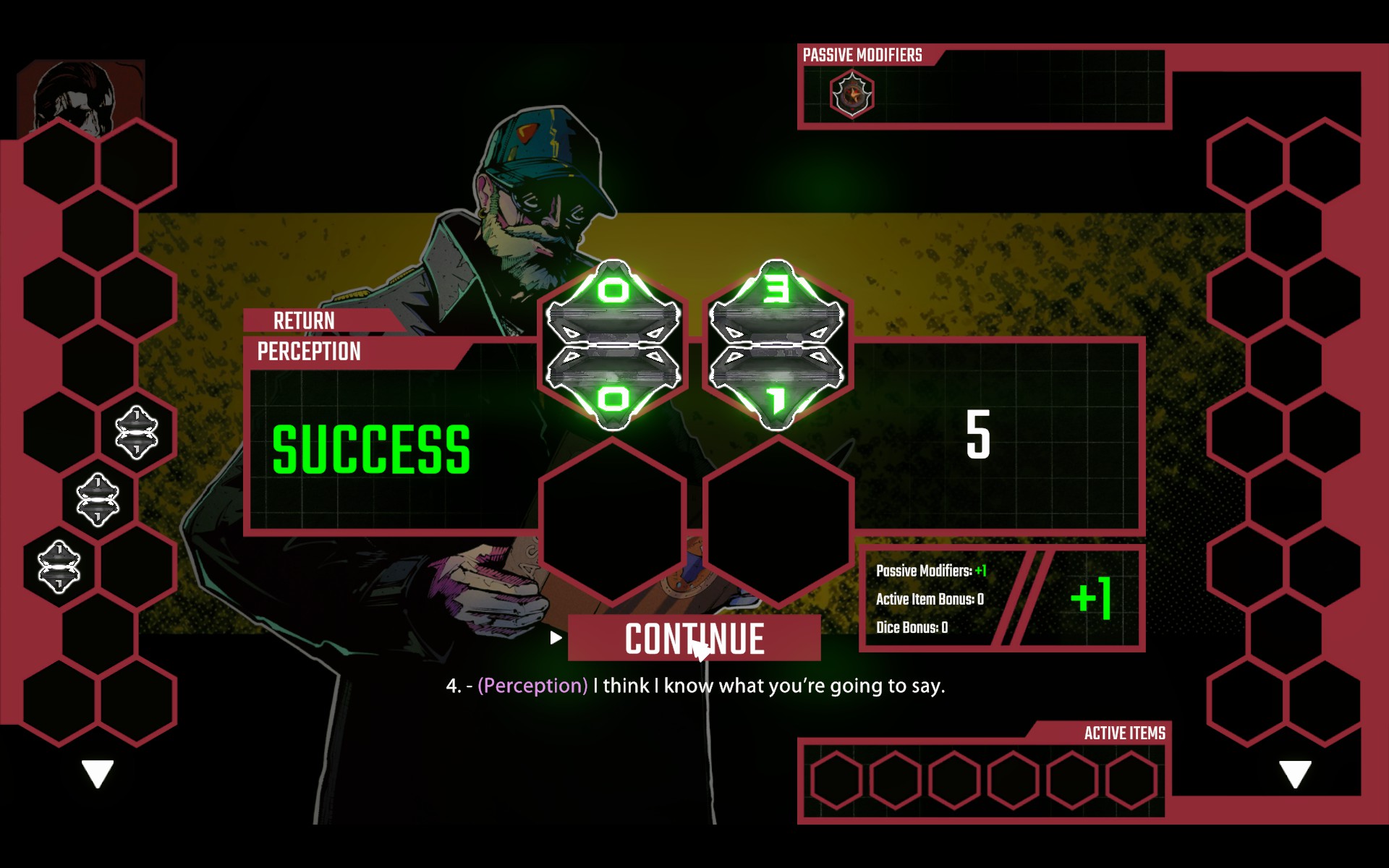
Up until this point, we’ve been ignoring the elephant in the room, but we can’t talk about Celestial Return’s gameplay without addressing that, yes, this is a Disco Elysium-clone. That doesn’t have to be a bad thing per se, as long as a game uses the Disco Elysium formula as a mere framework but puts its own spin on things. The core gameplay centres around investigation, exploration, dialogue choices, and resource management. To overcome story-related obstacles or environmental skill checks, you roll dice from your inventory. Each check shows its difficulty requirement up front, ranging from easy tasks to Overlord tiers. So far, so familiar. Where Celestial Return sets itself apart is by how those dice are managed. Dice operate as an actual in-game resource and currency; they can be looted from environments, bought at shops, or given as quest rewards, and characters in the story actively acknowledge them. You can roll up to four dice at once to maximise success, but dice are single-use consumables, resulting in a constant need to balance risk with reward.
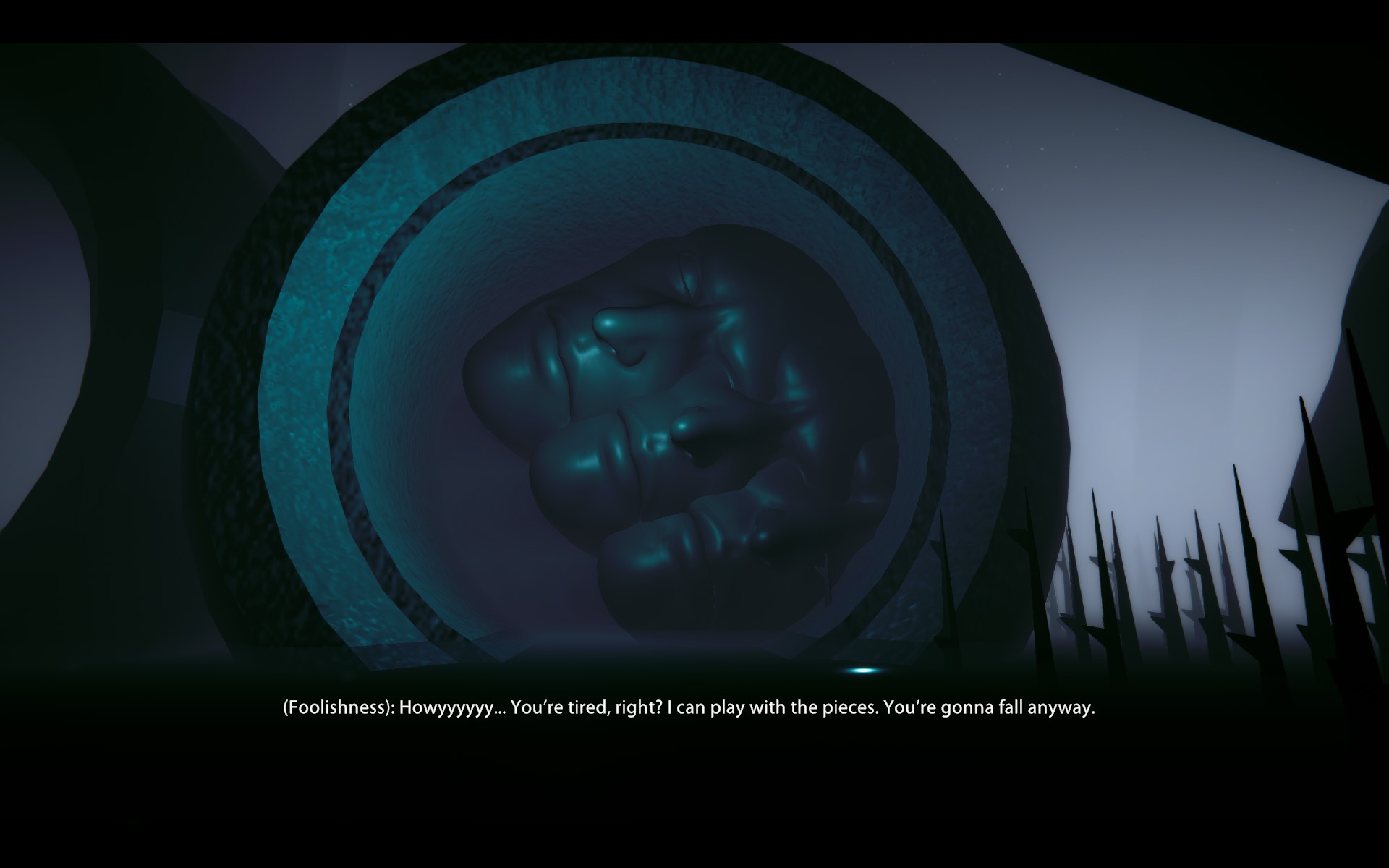
Circling back to Disco Elysium then, dice aren’t the only contributing factor to Howard’s successes. Like Harry Dubois, detective Howard has a fragmented psyche that manifests in the form of an RPG-style skillset, complete with voices in our protagonist’s head. It’s not quite the exact same set of voices, mind you, but the general idea will still be very familiar to anyone who has spent some time in Revachol. Earning XP lets you upgrade specific traits so that new narrative paths are unlocked, or helpful mechanical modifiers and passive buffs are applied to your dice rolls. Much of Celestial Return’s fun and replayability comes from leaning into specific traits, to see how things play out. Focusing on Anger Issues results in aggressive, impulsive actions, for example, whereas Foolishness instead lets you act as a comedic agent of chaos, relying on absurd, non-sequitur responses.
A single playthrough of Celestial Return takes approximately six hours. That may not seem like a very long time, but with multiple endings and different ways to tackle the problems it throws at you (not to mention whether or not you’re successful at overcoming them), the game has plenty of replay value. At the time of writing, the pricing for the game hasn’t even been revealed officially (although if the game’s Kickstarter pricing is any indication, we’re looking at a €20-ish ballpark), so we can’t comment on whether you’re getting bang for your buck, but we can tell you that the final product is an exceptionally polished take on a familiar formula. That said, Celestial Return doesn’t quite do enough to fully get out of Disco Elysium’s shadow. We constantly felt Harry Dubois’ alcohol-induced breath down our neck as we accompanied detective Howard in the streets of Netherveil.
Conclusion
Rather than reinvent the wheel, Celestial Return takes familiar ingredients and tries to make its own dish with them. The game mixes a dash of Cyberpunk with a spoonful of Film Noir, a pinch of existential horror, and a whole lot of Disco Elysium. The result may not be the most original, but it sure as hell is expertly prepared and tasty to boot! If you’re not convinced, then you can give Celestial Return’s hour-long free demo a try, but be warned. There’s a good chance you’ll be back for seconds.





No Comments