


Developer: Unreliable Narrators, Manavoid Entertainment
Publisher: Unreliable Narrators, Indie Asylum
Platform: PC, PS5
Tested on: PC
The Caribou Trail – Review
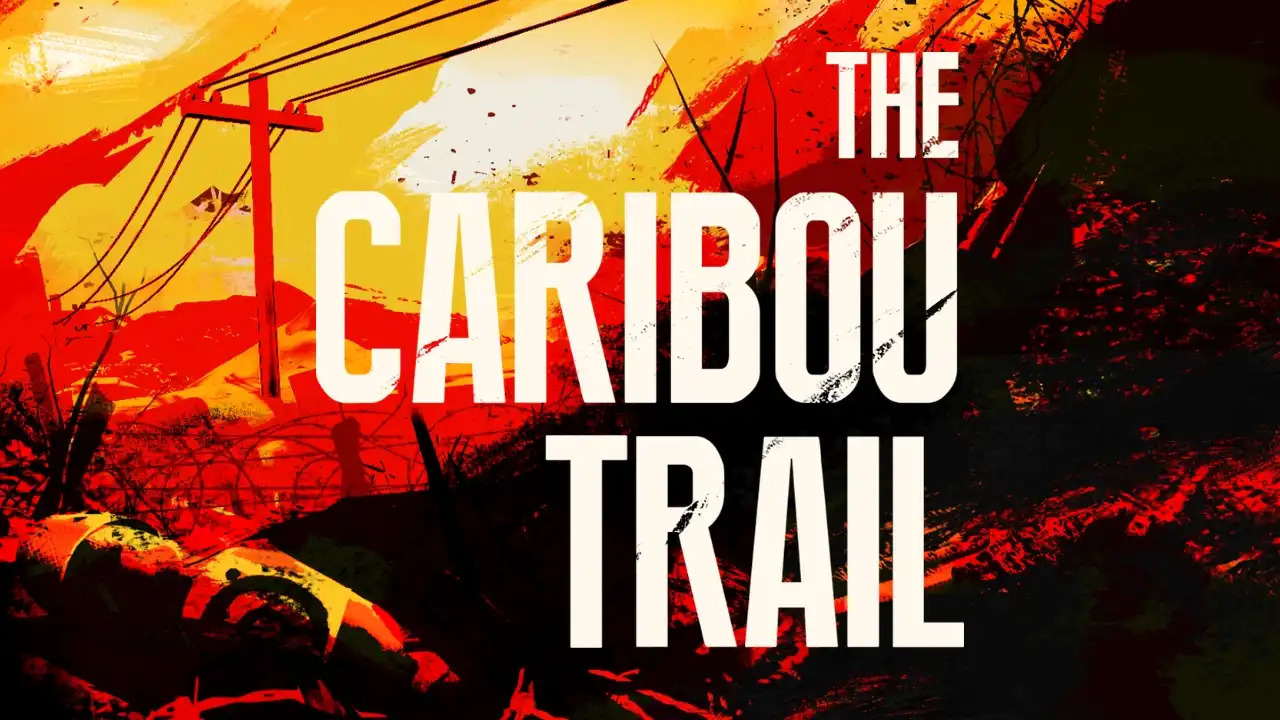
If you ask the average person about World War 1, you’ll probably get an answer that mentions the assassination of Franz Ferdinand, Germany, and Flanders Fields. The scope of WWI was much larger than its best-known central conflict though, and against the backdrop of the Great War, many lesser-known conflicts took place. These included the Gallipoli Campaign, which saw the Allied Powers take on the Ottoman Empire. It’s this conflict that serves as the setting for The Caribou Trail, a narrative game that takes players to 1915’s Turkey. It stands out from other WWI games because of an ambitious, unconventional take on the subject matter, but can the game live up to those very same ambitions?
Story
Unlike most games inspired by WWI, The Caribou Trail explores a personal, grounded story inspired by real testimonies from the Royal Newfoundland Regiment. You experience the war through the eyes of a soldier named Fisher. Alongside his close friends Lonnie and Gordon, Fisher enlists, expecting a grand adventure. Instead, the young men are plunged into the grim realities of trench warfare, sickness, hunger, and persistent dread. The narrative is structured around the bonds of friendship, isolation, and the sheer psychological toll of enduring constant terror. The writing is a highlight: it’s brutally honest and visceral, but also portrays these men respectfully.
Graphics
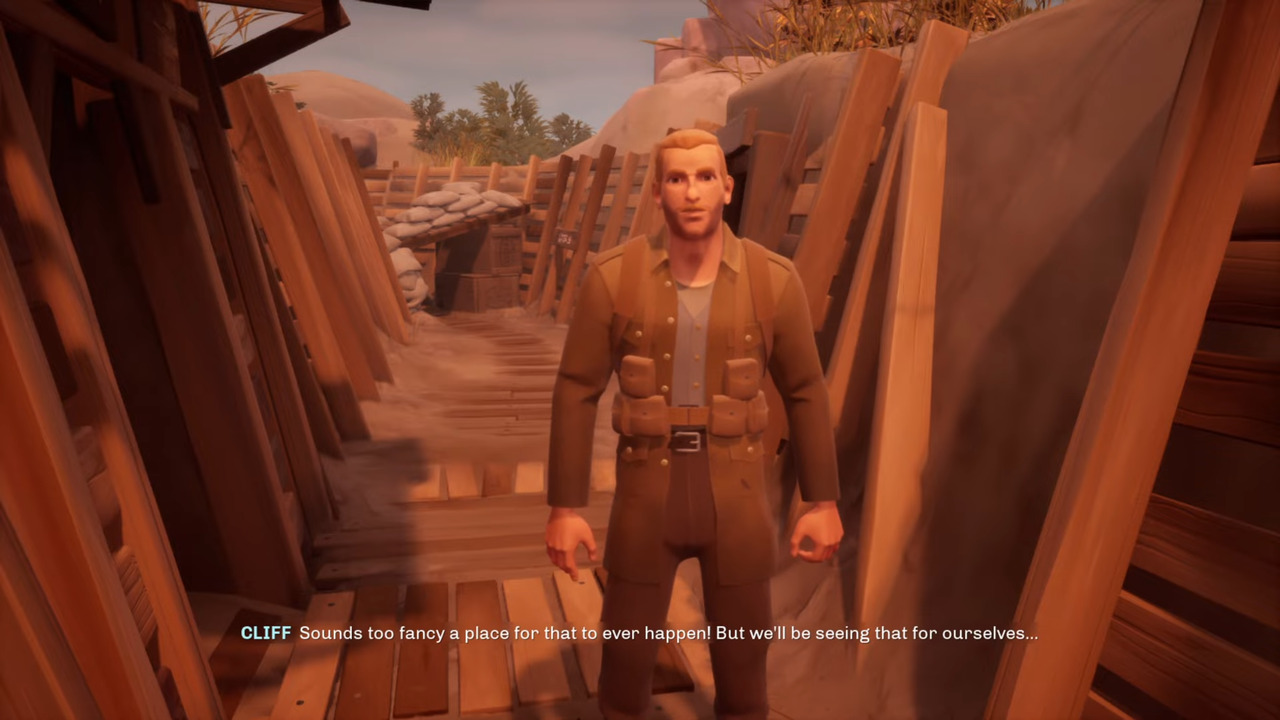
Unfortunately, the game’s visuals don’t always follow suit. The psychological uncertainty of these young men can be both read and heard, but isn’t shown. Harrowing dialogue is undercut by the character models not showing any emotion. The game’s stylized medium-poly art direction comes across as too clean as a whole, and doesn’t showcase the physical decay that real life WWI soldiers would’ve endured. The game’s environments fare better, fortunately. The Caribou Trail’s portrayal of Gallipoli depicts mud-slicked trenches, empty fortifications, and ruined coastal landscapes that convey a strong sense of place. Atmospheric lighting plays a huge part in this, with shifting colors that capture distinct moods, ranging from the warmth of campfires under a red night sky to dark rainy days and dreary mornings. The game also doesn’t make use of a traditional HUD, instead tasking you with relying on a hand-drawn map to navigate the trenches. While this does add some realism, it’s also frustratingly easy to get lost in such similar-looking environments.
Sound
Ironically enough, the contrast between the stiffness of the character models and the emotional depth of their voices highlights just how fantastic a job the game’s voice cast did. The performances come across as genuine, not in the least thanks to that aforementioned strong dialogue writing, which gives the actors a lot to work with. A solid soundtrack, composed by Nicolas Des Alliers, further contributes to the atmosphere and cinematic feeling of the game, successfully underscoring a wide range of emotional tones. Rounding things out in terms of sound design is expertly crafted environmental audio. The game frequently utilizes silence, punctuated by the howling of the wind, squelching mud, and distant, muffled artillery and gunfire, creating a highly tense, immersive, and eerie atmosphere.
Gameplay
WWI games typically focus on the grand theater of war, rather than the quiet reality of the individual soldier. More often than not, you’re commanding an entire army in a strategy game, piloting a fighter plane or going in guns blazing as if you’re the 1915 equivalent of John Rambo. That isn’t the case here. A profound, deeply human story like that of The Caribou Trail can only be told convincingly if its gameplay keeps things grounded. We’ll refrain from outright calling The Caribou Trail a “walking sim”, as that definition doesn’t quite capture the essence of the game, but this is still a linear narrative journey. You move through predetermined pathways, follow instructions, engage in dialogue, and complete simple, scripted tasks to progress the story.
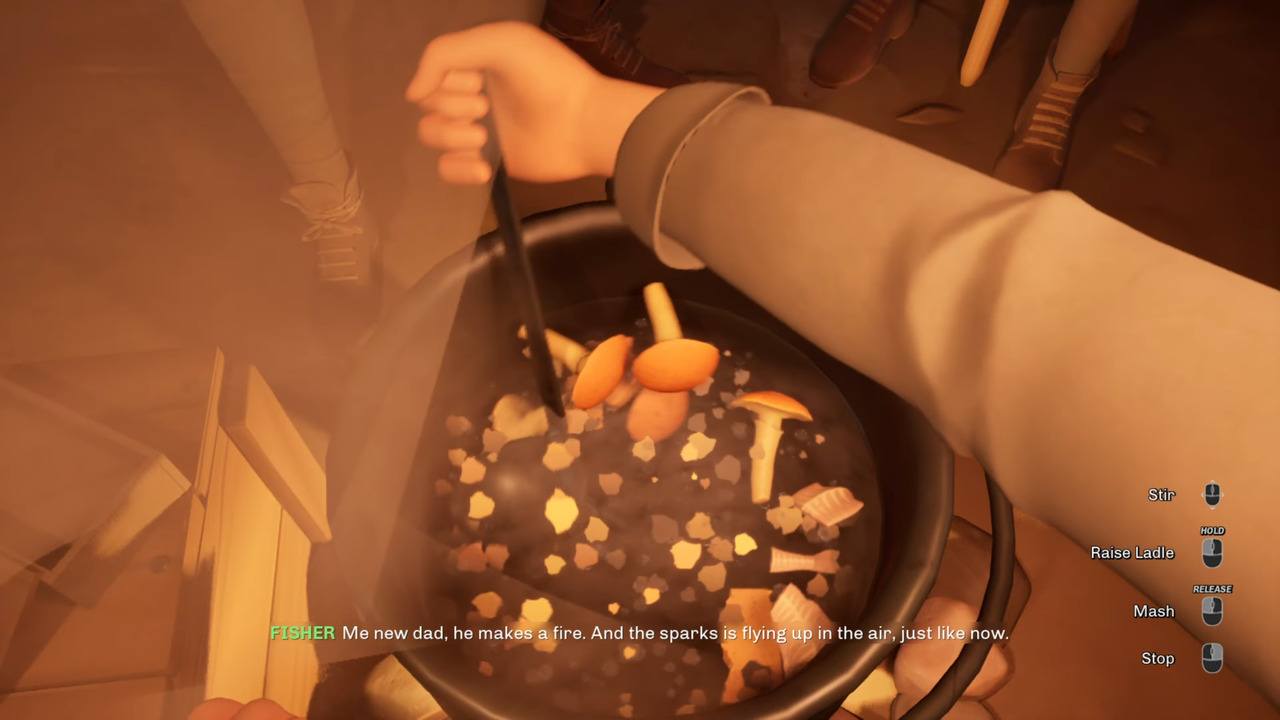
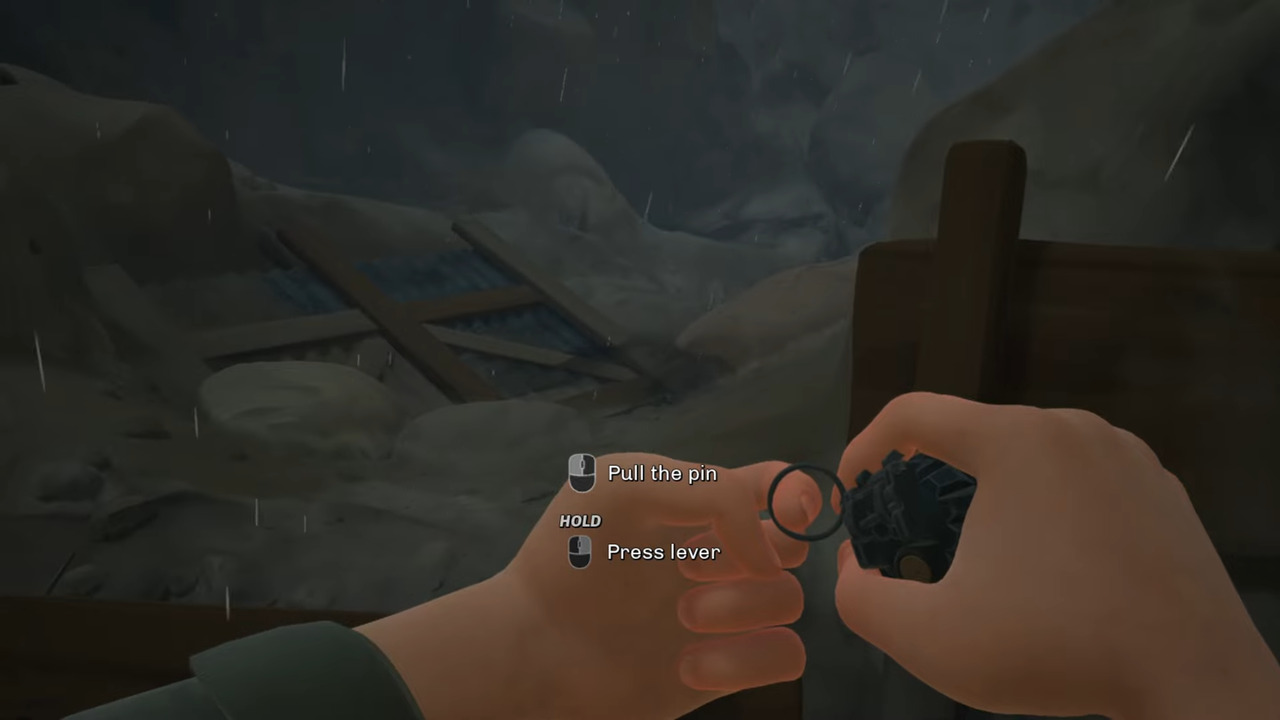
At times, The Caribou Trail is almost frustratingly monotone, though we’re inclined to say that this is by design. To reflect the everyday reality of trench life, you’ll need to perform mundane chores like delivering mail, digging trenches and cooking. The latter comes in the form of a minigame, where you mash ingredients and stir soup with a ladle while listening to conversations. We’re still on the fence about whether or not this intended monotony is a brilliant way to reflect the reality of soldier life, or if it’s a needlessly tedious bit of gameplay, as repeating the exact same prompts does get boring rather quickly. Of course, soldier life isn’t just about making food, and you’ll find yourself in the thick of the fighting as well. Here, The Caribou Trail sticks to its unconventional approach to WWI gaming, as there is no traditional combat system or action. The few dangerous scenarios that you end up in, such as dodging sniper fire or fleeing an artillery bombardment, are highly scripted and linear. They exist to support the narrative, but because they are so obviously ‘on-rails’, they also undermine the constant sense of tension that you’re supposed to feel during quieter scenes.
With a runtime of roughly 3 hours and its focus on delivering a highly linear narrative, The Caribou Trail almost comes across as an interactive WWI movie rather than a video game. You can easily complete it in a single sitting, provided you don’t mind the repetitiveness of some of those quieter sections. Replay value is virtually non-existent, although we should say that this is a game that doesn’t expect you to revisit it in the first place. The Caribou Trail is poised to tell its story and hammer home its underlying message about the horrors of war. In this regard, the game delivers exactly what it promises. Whether or not that’s worth the €12.79 asking price depends entirely on how much you want to listen to what it has to say.
Conclusion
It’s very clear what The Caribou Trail sets out to do, even if it falters somewhat when it comes to execution. The game’s narrative is an important one, not only because it teaches you about the past, but also because its central message echoes into the present, perhaps now even more than it would have a generation ago. It’s a bit of a shame that this same message is undermined by the game’s visuals and, to a lesser extent, the monotony and linearity of its gameplay.





No Comments