


Developer: Red Art Games
Publisher: RED ART GAMES
Platform: PS5, Xbos Series X|S, Switch (2)
Tested on: Switch 2
Gobliiins Collection – Review
There is no ‘i’ in team, but there are three of them in Gobliiins. The beloved classic series of point-and-click puzzle adventure games has arrived on consoles in the form of Gobliiins Collection, just in time for the 35th anniversary of the first game. Whether you’re entirely new to the Gobliiinsverse or a returning fan looking to revisit the games (and perhaps even play the entries you missed), we invite you to first take a look at how well these games have stood the test of time before you go into goblin mode yourself.
Story
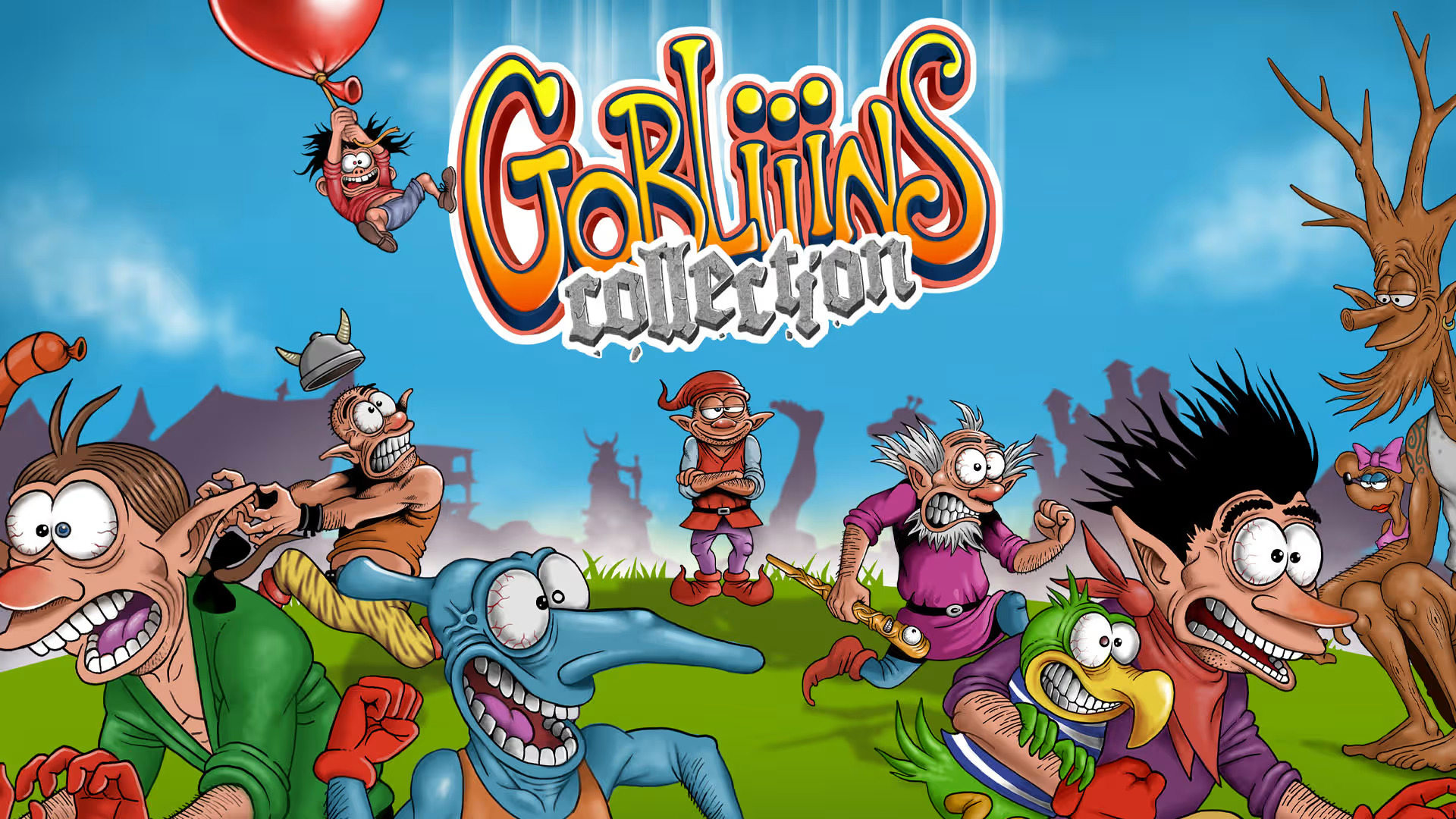
Forget the greenskins from Warhammer or The Lord of the Rings. The goblins that sprang from the mind of French game designer Pierre Gilhodes look more like they belong on a Rice Krispies box than in the pages of Tolkien. Gobliiins Collection features a set of standalone stories, all set in a medieval fantasy world filled with kings, castles and wizards, and our titular goblins of course. The individual stories are deliberately simple affairs, allowing both the puzzles and the zany humour to take center stage. Each story follows the goblins as they work together to deal with whatever problem is at hand, whether that’s breaking a voodoo curse cast on the king or figuring out how and why other goblins are being turned into potatoes. Narrative connections between the games are tenuous at best, with returning characters forming the bulk of connective tissue. The way Gilhodes’ world is structured reminded us of The Smurfs, albeit with much more crude humor.
Graphics
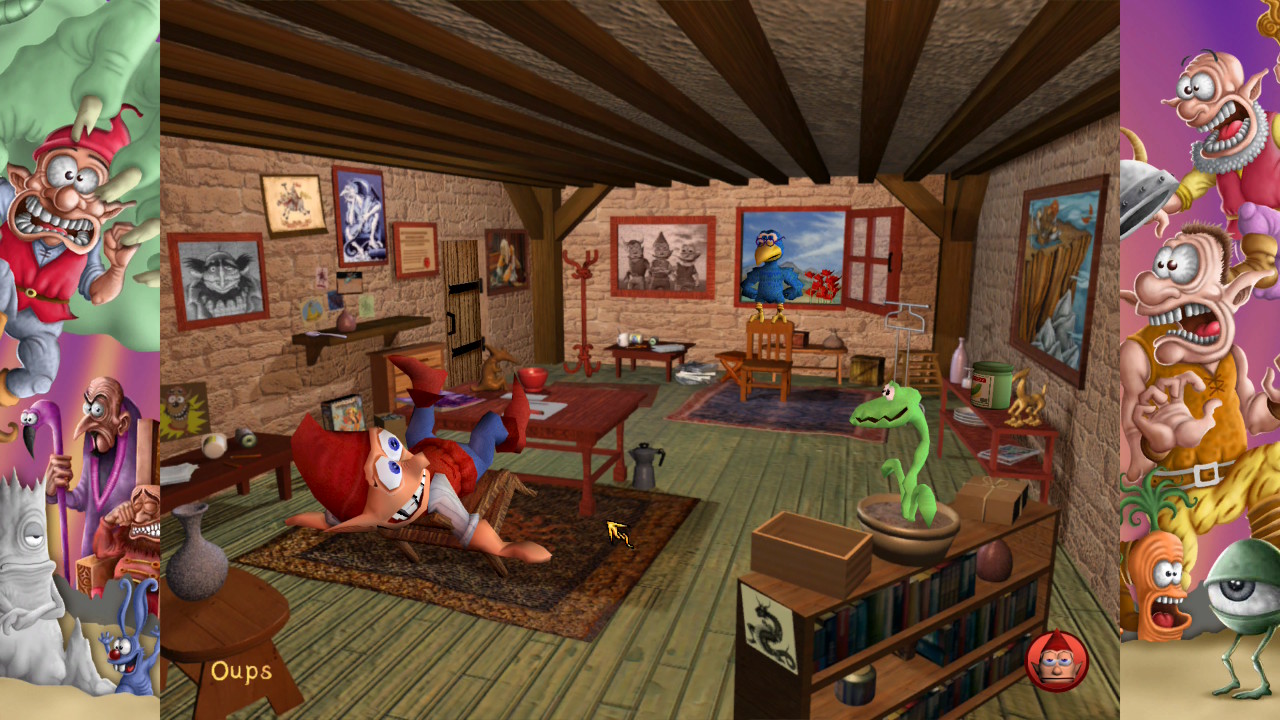
There are several decades spanning the five games included in Gobliiins Collection, resulting in a noticeable visual evolution across the series. The first three games in the series were released close to one another, and make use of cartoonish pixel art. There is a difference between the original floppy disk versions of the games and the later CD ROM versions, which feature improved animations and more color depth. Regardless of which version you play, the visuals aren’t exactly mind-blowing, especially by modern standards, but they are very charming and really set the tone. Even with only one year between each release, the pixel art becomes more detailed with each subsequent release. Gobliiins 4 then switches from that gorgeous 2D pixel art to crude 3D graphics, which feels like a serious step back. Gobliiins 5 rectifies this, returning to 2D visuals that are far more detailed than any previous entry. It is by far the best-looking game in the series, and the increase in detail has no negative effects on its performance either.
Sound
Just like the visuals, the soundscapes across Gobliiins Collection evolve over the course of the series. Hardware limitations are more noticeable with audio than they are with the visuals, however. The most noticeable differences are between the floppy disk and CD ROM versions, especially when it comes to vocalisation. Where the so-called “goblinese” language is rendered in digital blips and boops on the floppy versions, the CD ROM versions feature voice acting… as long as you consider straight-up gibberish voice acting, that is. Elsewhere, sound effects and ambience do their job but aren’t particularly memorable, although that same increase in quality is present here. The star of the soundscape is the music, which is catchy and fitting with the overall wacky atmosphere of the series.
Gameplay
The gameplay foundation remains consistent throughout the five games included in Gobliiins Collection, although each game introduces its own unique spin on the formula as well. Said formula is that of a simple, humorous point-and-click puzzle adventure, where you simultaneously control multiple characters, each with their own abilities. We’ll focus on the original Gobliiins to break down that formula, as that is where it all began, and then we’ll explain where the sequels differ. In Gobliiins, you’re in charge of Asgard, Ignatius and Oups, respectively a warrior, a magician and a technician. Asgard can punch things, Ignatius uses magic, and Oups can interact with different objects. Gobliiins comprises 22 interconnected puzzles, each taking place on a single screen. You need to use the different abilities of the goblins to solve the puzzle. After successfully doing so, a button appears that lets you progress to the next screen. Controls are very simple: you use your mouse pointer to select a goblin or make it move to a specific spot, or you switch to the action button to have them perform their signature ability. What isn’t very simple though, are the puzzles themselves: these hail from a different era, and they are very obtuse. It’s not even always clear what your puzzle objective is.
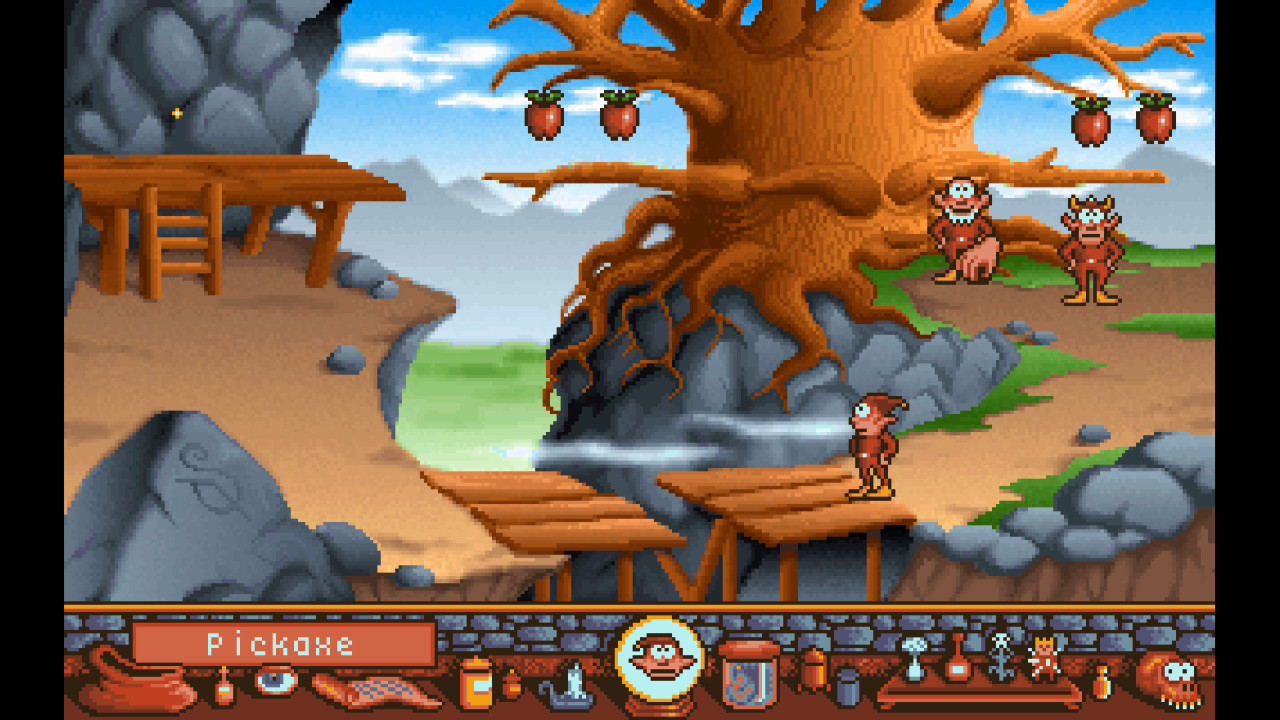
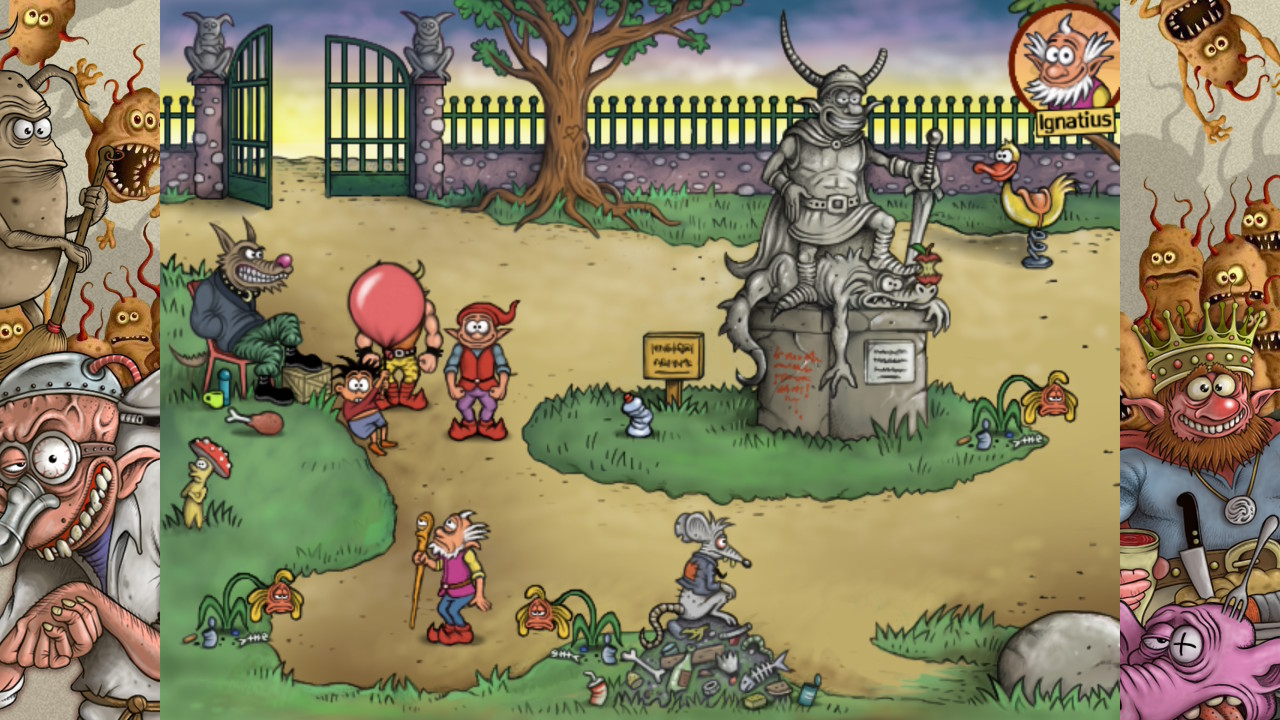
Take a look at the above screenshot as an example. Without the game telling you anything, you need to make Ignatius climb the tree and use his magic to enlarge two specific apples. Next, Asgard needs to punch the apples so that they fall. Oups then has to pick up the apples and use them to fill in the hole in the bridge so that he can get across and mine for diamonds. Picking the wrong apples spells trouble: one of them contains a snake, and another will make Asgard fall into a chasm, resulting in his death. Needless to say, we had to resort to a guide to complete Gobliiins. The sequels follow a similar setup, although they are more forgiving, especially when it comes to goblins dying: mistakes don’t result in a game over anymore. It’s worth mentioning that the ‘i’ in the title refers to the number of goblins you control. 1992’s Gobliins 2: The Prince Buffoon features only two goblins, each able to use items in different ways, and introduces timing-based puzzles. 1993’s Goblins Quest 3 only has one goblin, but he is accompanied by different companions, including a parrot and a snake. In this one, our goblin pal also transforms into a wolf. The game introduces much larger screens that require scrolling. As we mentioned before, 2009’s Gobliiins 4’s most noticeable gimmick is that it replaces the charming pixel art with 3D graphics, although the gameplay doesn’t really change. Gobliiins 4 is the weakest entry in the series and comes across like a failed reboot, a feeling that is reinforced by where it sits in the overall timeline. Contrasting with this is 2023’s Gobliiins 5, which would be the successful reboot, partially owing to an effective crowdfunding campaign. This one brings back the original trio, although the death mechanics from the first game do not make a return.
We’re not entirely sure about Gobliiins Collection’s appeal to modern audiences, mostly because of how obtuse the puzzles are. If you’re a returning fan or a retro enthusiast though, there is a lot to love here, and not just in terms of pure gameplay. A lot of care has gone into making sure that Gobliiins Collection feels like a complete package, especially when it comes to preserving Gilhodes’ vision and legacy. For the older games, you can choose between the CD ROM or floppy disk versions, for example. There are several extras included here too, including a music player that even includes previously unreleased tracks, a documentary mini-series about the making of Gobliiins, and an interview with Gilhodes himself. The only thing that prevents Gobliiins Collection from feeling like the definitive series compendium is that it’s missing Gobliins 6: The Madmen of the Year 1000. Given that this most recent entry in the series is only a few months old, that’s something that we can forgive.
Conclusion
Regardless of the quality of the individual games or how well they stood the test of time, Gobliiins Collection is a shining example of game preservation done right. With its slew of bonus content and different versions of the games, existing Gobliiins fans can indulge in the history of the series, while new players can learn what makes these games so beloved. We’ll admit that the design philosophy behind the puzzles of the original trilogy hasn’t aged very well, but if you look at these games as products of their time and maybe use a guide to overcome the puzzles, you’ll probably end up appreciating them. We certainly did.


No Comments