

SANCTUARY’S NEW SHADOW: A FIRST LOOK AT DIABLO IV’S WARLOCK, WITH BJORN MIKKELSON
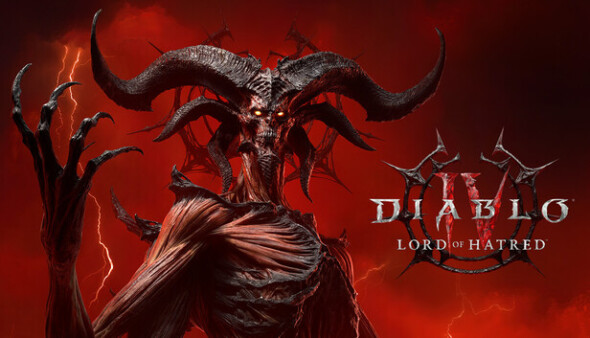
On the 28th of April, the Warlock class will be joining the Paladin as the second new class arriving to Diablo IV as a part of the game’s second expansion. Lord of Hatred is the showstopping culmination in the Age of Hatred, a story that started in the base game. The new class delivers on the quintessential dark-fantasy promise of the franchise, using the powers of the Burning Hells and forbidden knowledge to fight against evil.
The Warlock completes the expansion’s core duality, a deliberate pairing of holy conviction and infernal compulsion. Its class mechanic is rooted in binding powerful demons into artificial soul shards and implanting them into the Warlock’s own body to steal their power and shape distinct playstyles. In this interview, Bjorn Mikkelson, Class Designer, breaks down why now is the right moment for Diablo IV’s most metal class, and how its chains, demons, and explosive pacing are built to feel unmistakably powerful in players’ hands.
Q: Why is Warlock the right class to introduce into the Diablo universe now?
Bjorn: “The Warlock fits really well with this expansion, because we’re also launching it alongside the Paladin. The class lives and breathes the infamous eternal battle between Heaven and Hell. This duality is a big part of the expansion; it’s really cool to have those dual classes playing off each other. And with this being Diablo’s 30th anniversary, the Warlock is also a really nice fit. When you think of a demon game, what is more quintessential than the demon-summoning class? It’s kind of
like Diablo all rolled up into one class.”
Q: What’s the Warlock’s class mechanic, and what will players feel makes it different in Diablo IV?
Bjorn: “The class’s power stems from the Warlock binding several very powerful demons to artificial soul shards and then implanting them into themself, which I think is pretty wild, because you’re sort of stealing their power as you do that and it helps you find your play style. It also became a fun challenge for us to make each of those four classic demons feel truly distinct, because they all play in different ways, and they each bring different mechanics.”
“And we’re supporting four overarching archetypes and play styles. We have Legion, which is all about spamming tons of demons at the wall in waves, with that ramp up and ramp down feel. We have Vanguard, which is very speed focused, throwing yourself into the fray and running through as a demon. We have Mastermind, which is really good at zone control and locking down an area, deliberately directing your demons where to go and what to do. And we have Ritualist, which has that set up combo play style that’s really good at exploding large groups of enemies. Each demon gives you a different skill and you get to unleash their power by using that skill. When you are spending your summoning resource, you have the autonomy to decide how often you summon and how big of a demon you summon.”
Q: In practical gameplay terms, what should players feel and be able to do that proves the Warlock is operating at peak power?
Bjorn: “ The Diablo IV Warlock has a very expansive skill kit that takes the core fantasy and turns it up to 11, letting you summon massive demons, tear open entire shadow realms, and fully lean into the feeling of Warlock power at its peak. Diablo IV is meant to feel like you have all the toys, with the expertise and customisability to shape that power into lots of different themes and playstyles”
Q: The Warlock is defined by chains, flames, and destructive power. What are the core pillars of that fantasy?
Bjorn: “Our core class pillars are that the Warlock is a visceral caster that conjures Hell and exploits demons. The class has a kit that feels weighty and impactful both in the moment of casting and in the way it changes the world around you. You are bringing volatile, anti-Sanctuary forces into Sanctuary where they are not meant to be. The demons you summon aren’t effigies; you are summoning actual demons that aren’t friendly companions. These demons are your tools, and when you are done with them, you get rid of them. It’s fighting fire with fire. It’s making Hell fight itself.”
Q: Why were chains chosen as a defining motif for the Warlock, and how do they show up in combat?
Bjorn: “We have chain skills in the kit, from a prison of chains to the ability to wrap things up in chains, and even ways to chain yourself to your demons so you can attack people along the way. These aren’t demons that want to obey you, so a chain is a much more visceral way of controlling something. Chains communicate to the player that these are effectively like prisoners you’ve dominated, and they are not happy about it.”
“We also have a couple of different types of chains. A lot of the full physical metal chains are on the demons, and they are there to show they are bound, controlled, or maybe they have just broken out. The primary chains you use directly as skills are shadow chains, which tie into our abyss theme of domination to the maximum, like you dredged something up out of the abyss on a hook. Then we have flaming chains, where you can set it on fire and whip it around, and that is much more about destruction.”
Q: How does the Warlock communicate the promise of turning the wrath of Hell against itself through gameplay?
Bjorn: “One of the fun mechanical ways we show that is through how the Warlock treats demons. They are not your friends, they are your tools. When one of your demons dies, explodes, or gets dragged back to Hell, that counts as the Warlock killing something mechanically for the game. You don’t get experience or gold for it, but it still counts as a kill.”
“So if you imagine on-kill bonuses, or sigils where you’re supposed to kill things to feed the ritual, you can kill enemies in them and you can also feed your own demons. When you kill a demon with a demon, that’s two kills.”
+++
Pre-order Diablo IV: Lord of Hatred now to gain instant access to the divine justice of the Paladin class, celestial cosmetics, heavenly cosmetics, brand-new mount type, holy companion and more. Diablo IV: Lord of Hatred launches on April 28th, 2026.
See you in Sanctuary.




No Comments