


Developer: Influsion Inc.
Publisher: Influsion Inc.
Platforms: PC
Tested on: PC
SENARA: The Sacrament – Review
From BTS to Squid Game to K-Pop Demon Hunters, South Korean pop culture has seen a massive rise in popularity in the West in recent years. Major video games like PUBG and indie hits like Dave the Diver are proof that the nation is also capable of capturing the attention of gamers. Even so, it’s still rare for a game to actively show its Korean roots, which is why SENARA: The Sacrament stood out to us from the get-go, as it features a Korean cast and no English voice track. But does this third entry in Influsion Inc’s Lovecraft-inspired survival horror series manage to stay afloat beyond its roots?

Story
In SENARA, you take on the role of a stowaway who wakes up inside the cargo hold of a massive ocean liner, the titular Senara. You have no idea how you got there, but that’s the least of your worries, as the vessel has been overrun by what appears to be the Korean branch of Innsmouth’s Esoteric Order of Dagon. The cultists slaughtered crew and passengers alike as part of an eldritch ritual involving fish-men. The lifeboats have been rendered useless, and your only chance of escape is triggering a distress beacon to call a rescue helicopter. The ship’s captain, who was heavily wounded when the cultists struck, entrusts you with the knowledge that there is gold hidden aboard. This appears to be part of the reason why the ship was targeted in the first place. In a bizarre twist of fate, that same treasure is something you need to pay for your helicopter ride to safety. It’s a ridiculous plot, even by B-movie standards, which SENARA seems to be taking inspiration from. This is the kind of game that wants you to suspend your disbelief and instead let its Lovecraftian horror and claustrophobic isolation wash over you, but with plot holes so big you could drive the ship itself through them, it’s hard to take the narrative seriously.
Graphics
The plot of SENARA may be unrealistic, but the visuals sure as hell aren’t. The design of the ship is based on a real 6,000-ton vessel, featuring highly detailed interiors. The downside of this dedication to realism is that it leads to visual repetition, as many of the ship’s corridors look nearly identical to one another. The game features moody lighting, realistic reflections, and varied color palettes to create a dark, eerie atmosphere across a modern transatlantic cruise ship. We have no qualms calling the Senara itself the star of the show, as the game’s character models are rough around the edges, to put it kindly. Character animations are unrealistic, with instant-kill cutscenes standing out as particularly unrefined. As much as we lauded the design of the ship itself, one thing that irked us was SENARA’s tendency to blatantly rely on generative AI for its in-game artwork, some of which was even rendered in immersion-breaking lower resolution.

Sound
To SENARA’s credit, if there is one thing that the game absolutely nails, it’s its soundscape. The ambience aboard the ship is genuinely unsettling, with eerie ambient ship noises, unnerving voices echoing in the distance, and haunting radio chatter that enhances the feeling of isolation. Music is haunting, reinforcing the tense mood. There is limited voice acting present in the game as well, in Korean, accompanied by English subtitles. Unfortunately, this is limited to key scenes, rather than having the game fully voiced.
Gameplay
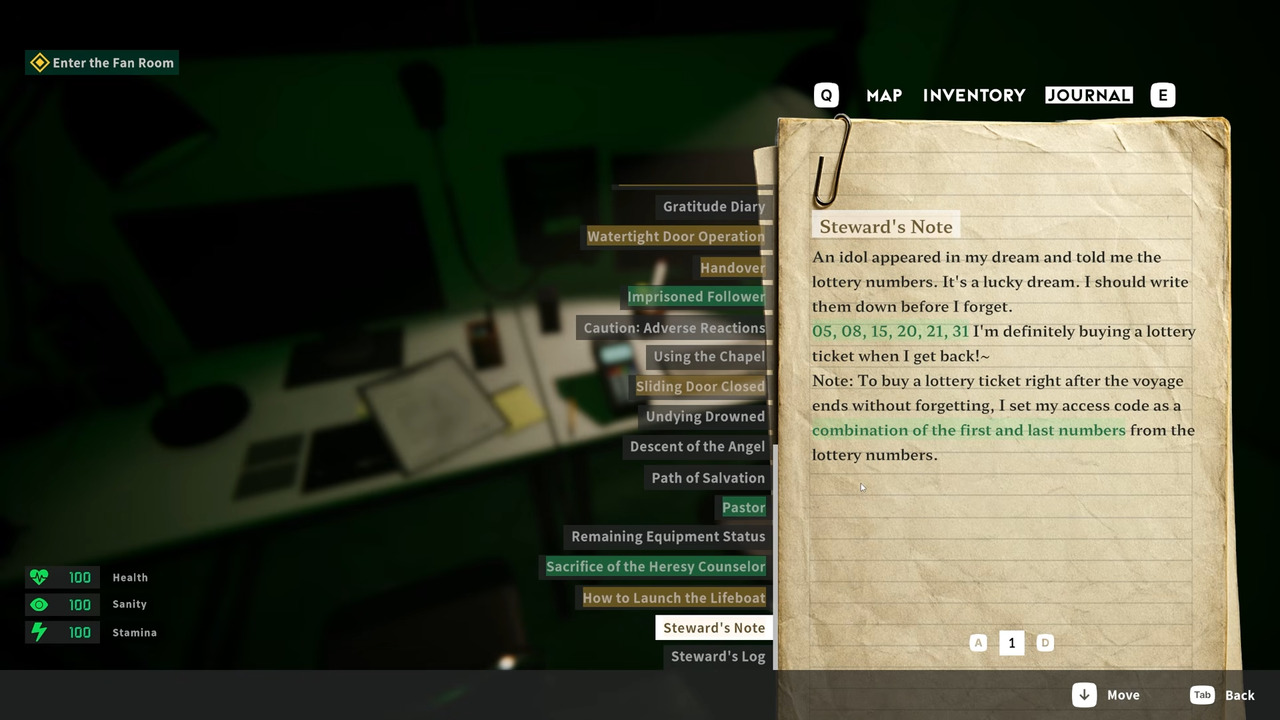
The core gameplay loop of SENARA has you explore the sprawling ship, which is filled with hostile cultists, mutated creatures, and perhaps the most ancient of survival horror enemies: environmental puzzles. Gameplay involves finding both keycards and physical keys, dealing with numerical codes and assembling artifacts that give you access to new areas. Because your inventory is limited, you can’t just hold on to everything in sight either, and you’ll need to rely on storage boxes scattered across the ship. While inventory management is annoyingly clunky because of this design choice, it does make sense within SENARA’s context, and it really emphasises the ‘survival’ part of survival horror.
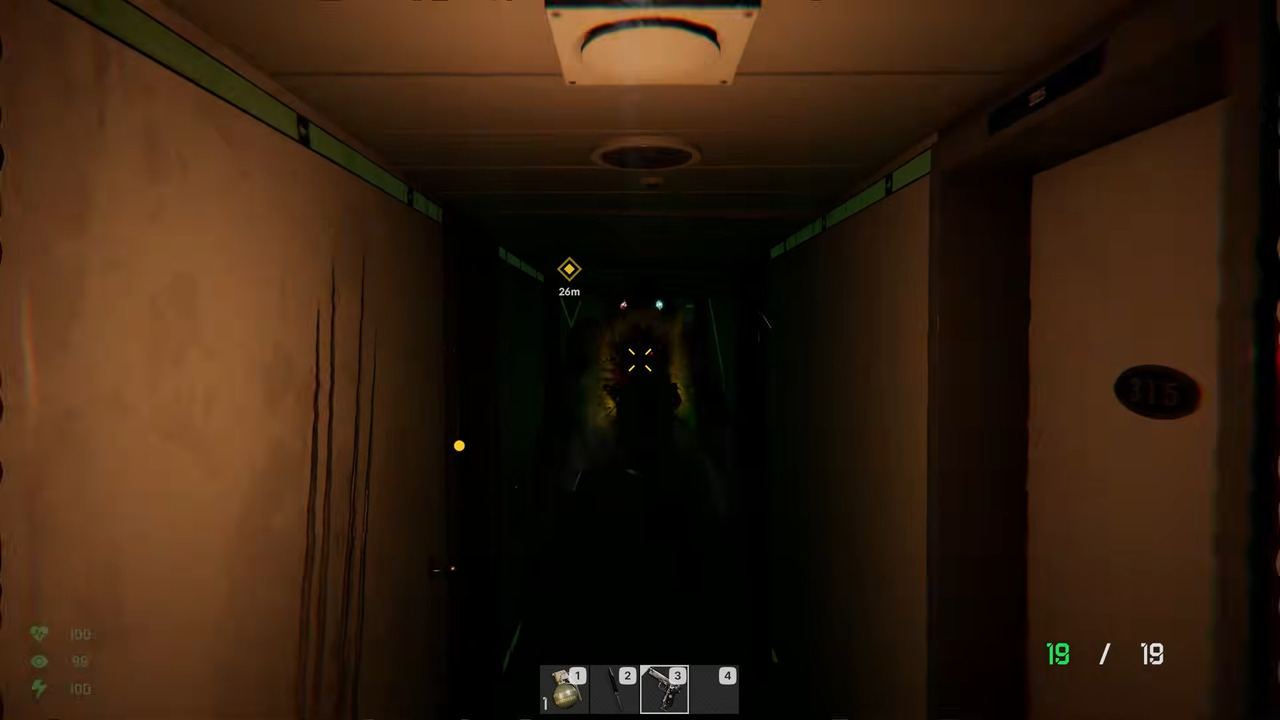
This is further exacerbated by the way enemies work. You have three tools at your disposal: a handgun that can be upgraded over time, a stamina-draining knife that is essentially your last resort, and good old stealth. Ammo is extremely scarce and late-game enemies become bullet sponges, so it’s more than likely that you’ll heavily rely on the latter to make it to the end. As if murderous cultists didn’t make SENARA challenging enough, the strange anomalies that you encounter also actively drain your sanity, and you’ll need to use that precious ammunition to deal with them before you lose your mind, as you can’t stealth your way around them. There is one major issue that we ran into concerning enemies. When you save the game, which is done by interacting with a landline phone, any nearby enemies respawn without restoring spent ammunition. This actively discourages saving progress, and feels like a counterintuitive design choice.
Fortunately, that might be something to be fixed in the future. Post-launch, SENARA’s developers are working hard on adjusting the game based on player feedback. Even if the game’s premise is paper-thin, SENARA does succeed where it matters for a survival horror game, and that is creating a genuinely unsettling atmosphere. The game also doesn’t overstay its welcome, with our playthrough eating up a single evening. Given that there are multiple endings though, it’s only a matter of time before we return to the ship. Admittedly, that won’t be for a while, as we’re going to be waiting for some of the already-announced updates and improvements. Don’t let those not being here yet stop you from already getting stuck in the cargo hold if you’re a genre enthusiast. For a mere €18.25, you too can try and escape the Senara’s floating hellscape.
Conclusion
Our expectations for SENARA weren’t all that high because of its silly premise, but the game was able to redeem itself through its excellent survival horror gameplay. If you can overlook the B-movie plot, AI-generated artwork, and some rough gameplay design edges, you’re in for an atmospheric treat. We’d fully understand it if you’d wait for those edges to be filed off, but any self-respecting survival horror fans owe it to themselves to set sail on the Senara eventually.





No Comments