


Developer: Nintendo EPD
Publisher: Nintendo
Platform: Switch 2
Tested on: Switch 2
Splatoon Raiders – Review
You’re a kid now, you’re a squid now! Over a decade ago (yes, really!) Splatoon took the gaming world by storm, first as one of the few success stories on the Wii U and then with Splatoon 2 and Splatoon 3 on the Switch. The series now makes the squid jump onto the Switch 2, albeit in a slightly different form. Does Splatoon’s signature blend of shooting and swimming in ink still work if you strip away its arena-based multiplayer? Splatoon Raiders holds the answer.
Story
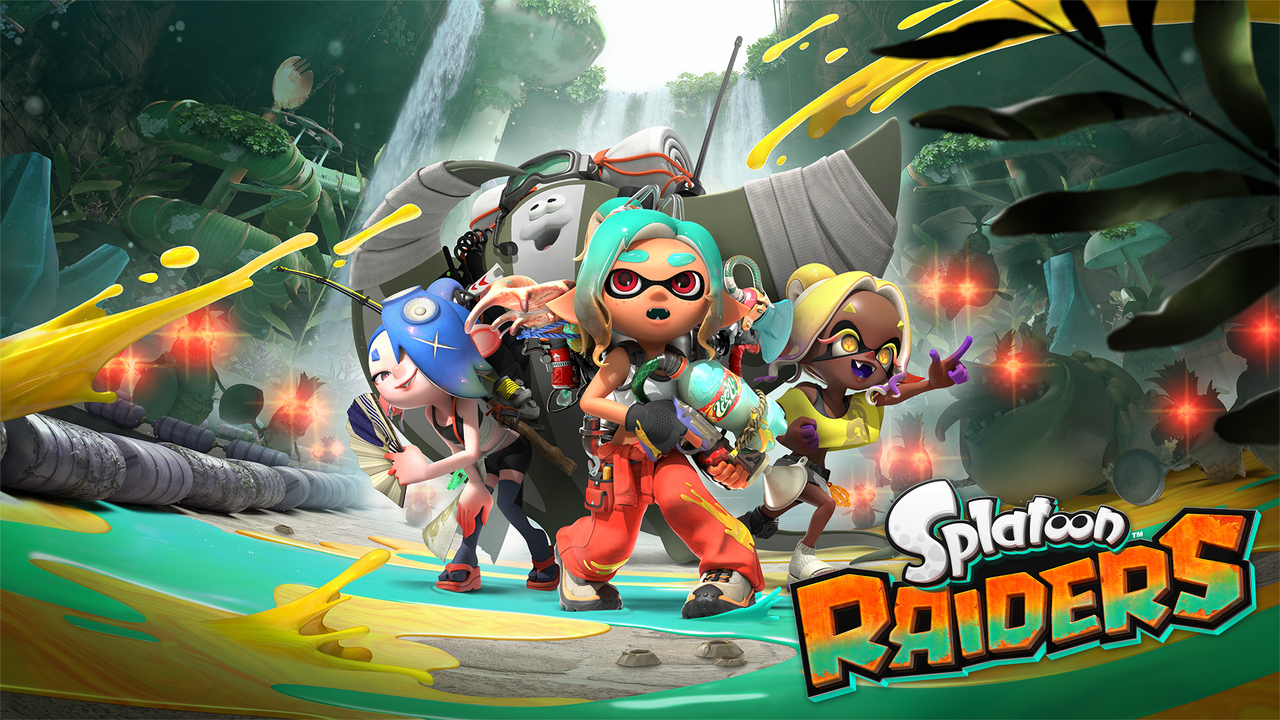
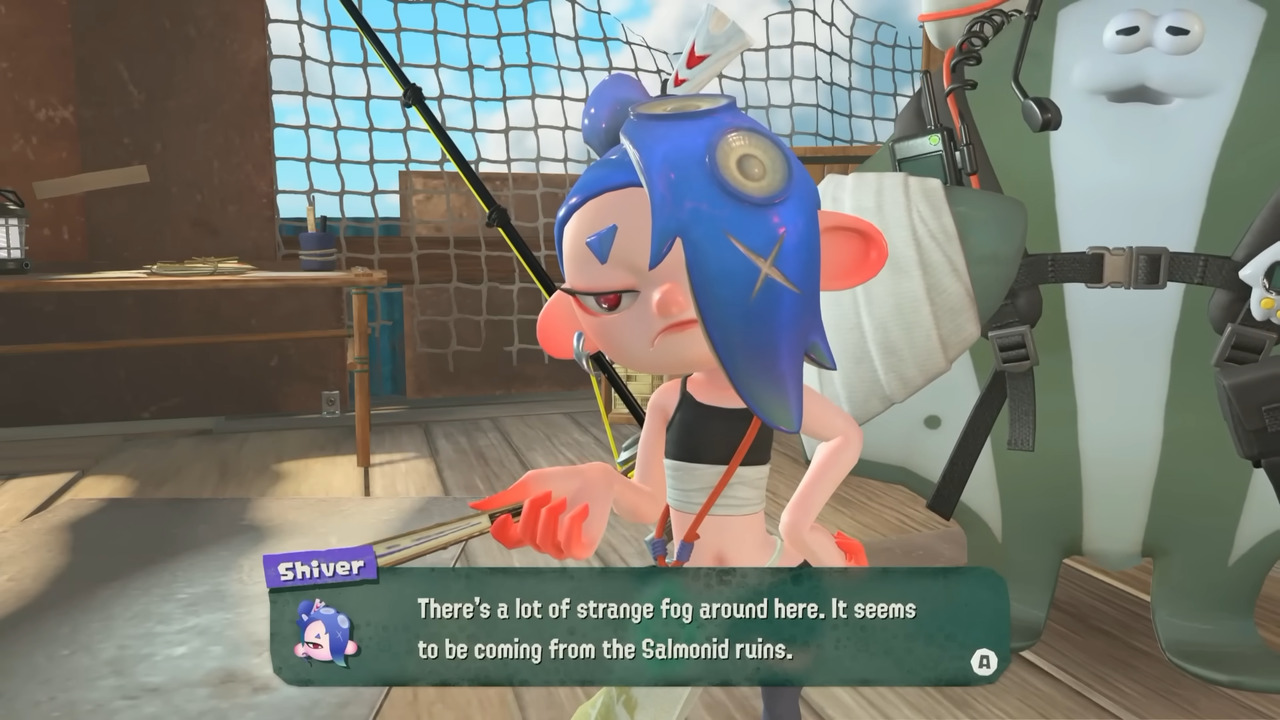
The opening cutscene of Raiders reunites us with the familiar faces of Splatoon 3’s Deep Cut idol trio, consisting of Shiver, Frye and the Big Man. They’re out hunting for treasure to pay off Splatville’s debts. After their helicopter crashes in the remote Spirhalite Islands, the group sets up a makeshift base camp called the Hideaway Ship. It’s here that we’re introduced to the Mechanic, a young Inkling who happens to be… well, you. Fortunately for our troublesome foursome, the Spirhalite Islands are home to tons of valuable loot. Unfortunately, the islands are also the territory of the Salmonids. Can our heroes collect what they need to find a way home and earn enough treasure in the process?
Graphics
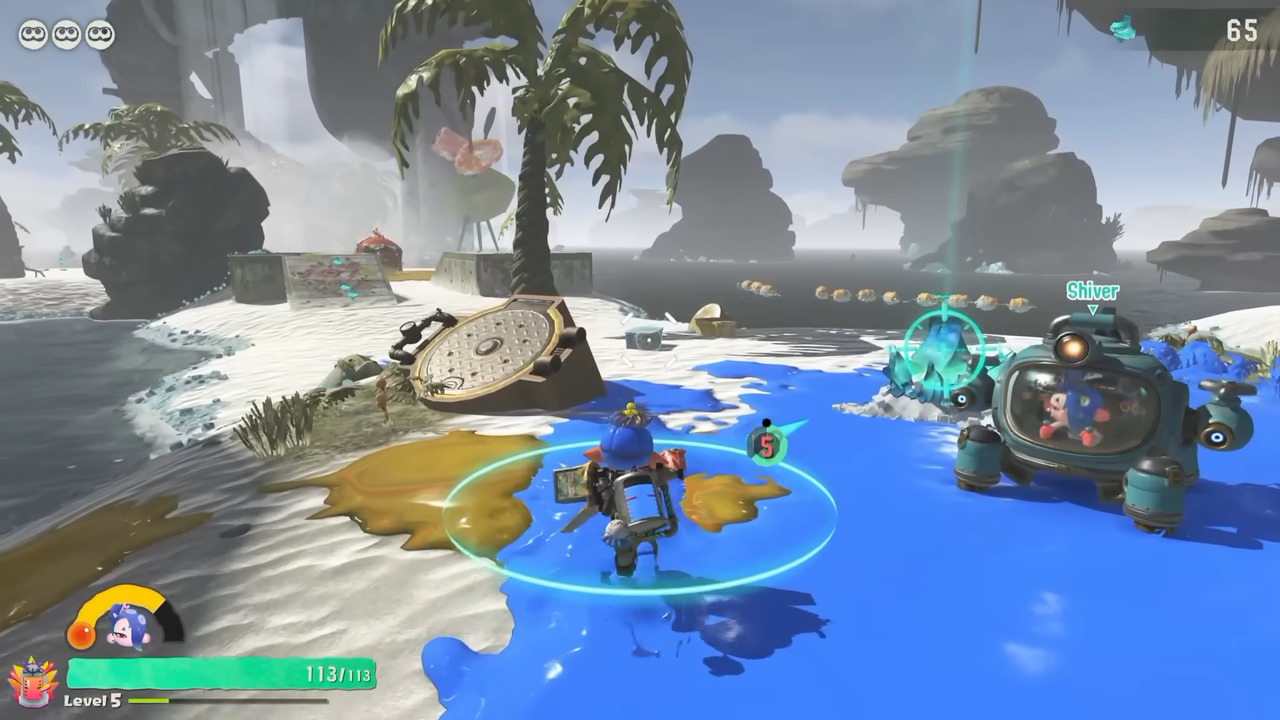
The shift in setting allows Raiders to incorporate a scrappy, nautical survival theme while retaining the series’ signature vibrant, colourful aesthetic. The game takes full advantage of the Switch 2’s improved hardware and is capable of keeping up a flawless 60 FPS framerate. This is in part because that same cartoony aesthetic isn’t all that demanding. If there’s one tiny bit of criticism we have about Raiders’ visuals, then it is that this latest entry doesn’t quite push any graphical boundaries. Sure, the bump in resolution is noticeable (and appreciated), but apart from that hardware-related extra layer of polish, Raiders feels like a sidegrade rather than a step-up.
Sound
The tonal shift from the main series is perhaps most noticeable in Raiders’ soundtrack. Instead of the signature poppy tunes we’ve come to know and love, Raiders’ OST is more dramatic and darker. It’s definitely fitting here, as taking on the Salmonid bosses while a cheerful pop song plays just wouldn’t feel right. The game’s sound effects are as great as ever, with crisp ink-splatting audio and dynamic enemy siren sounds. Inklings still talk in the same, charming gibberish language.
Gameplay
The three mainline Splatoon entries all featured a single player campaign, but those felt more like tutorials for the game’s multiplayer action. Raiders, on the other hand, presents a full-fledged, fleshed-out single player Splatoon experience. We’re hesitant to call it a spin-off because the core mechanics and controls are identical to those of previous series entries. That means traditional ink shooting, swimming, and movement mechanics, as well as motion controls for aiming. You select a loadout at base camp, launch into bite-sized raids where you gather loot and fight off Salmonid hordes. On these raids, you are accompanied by a Deep Cut member in an Exploration Bot who provides fire support, aerial launch points, and powerful Showstopper special attacks. In between raids, you return to base camp where you upgrade your equipment, weapons, gadgets and stats. This loop probably sounds familiar, because what Nintendo did here was take Splatoon and retrofitted it into a traditional looter shooter. Raiders doesn’t tear up the looter shooter rulebook, but by fusing Splatoon’s iconic movement and ink mechanics with an extraordinarily tight progression loop, it stands out as one of the most fun and polished entries in the genre.
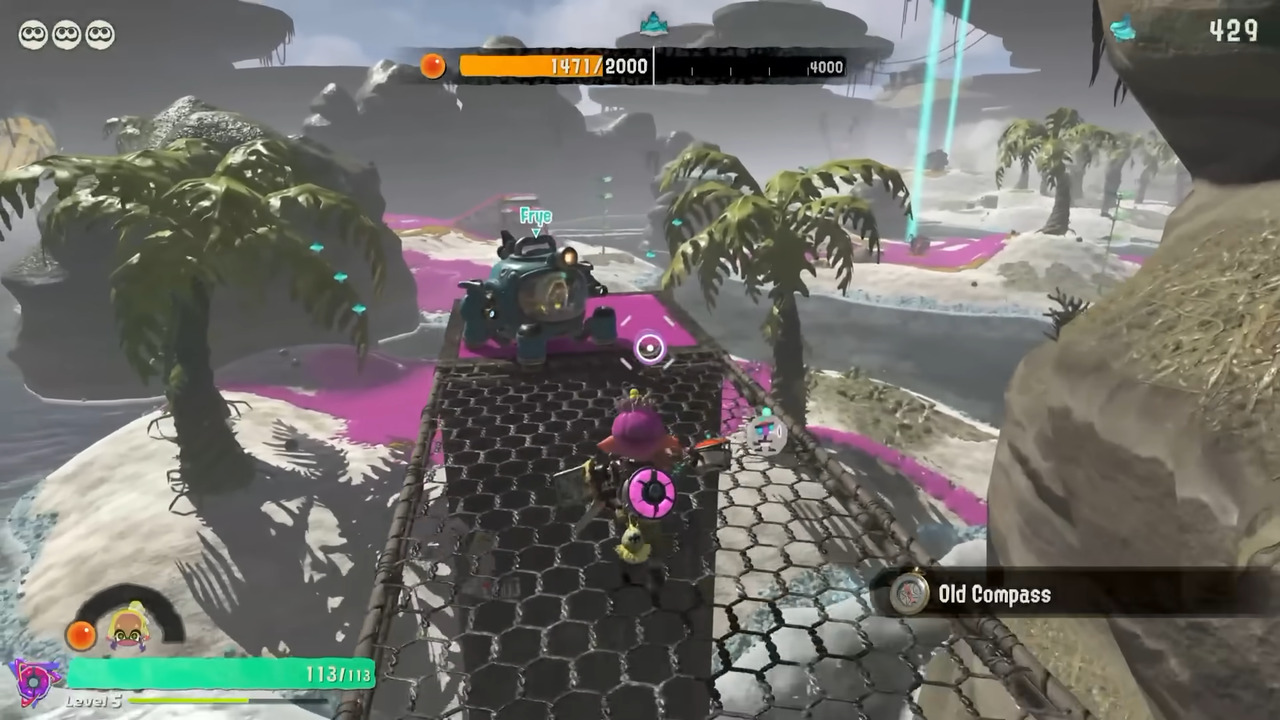
The mechanics that set Raiders apart from both mainline Splatoon and other looter shooters feel like a logical progression. The familiar sub-weapons are replaced by gadgets tied to different ink tank classes. They operate on cooldowns rather than consuming ink, and you can heavily tinker with parts and perks to modify their effectiveness. The Mechanic’s own progression relies on traditional RPG systems, with skill points increasing health, damage output and gadget budgets. Raiders’ customisation is surprisingly deep, but in practice it never gets overwhelming, and newcomers will feel just as confident using relics to grant stacked passive perks as veterans will. Although the core gameplay is accessible and familiar, Raiders manages to avoid feeling repetitive, thanks to a wide variety of level types including linear path stages, timed multi-floor dungeons, horde defense, crystal mining, single-loadout puzzle sampler dungeons and of course, boss battles. The latter aren’t always as inventive as those we fought in the mainline games but they still provide memorable challenges.
Although Raiders offers several selectable difficulties, we found that its biggest challenge was getting reacquainted with the game’s control scheme. It has been four years since Splatoon 3 and our skills were a bit rusty. Not only that, but the form factor of the Switch 2 is different from that of the lighter, smaller OG Switch. Raiders relies on motion controls for aiming, meaning you need to physically tilt your controller or Switch 2, and this does take some getting used to. This is a game that is less suitable for playing in handheld mode, so if any Switch 2 Lite owners are reading this from the future, consider this your warning. If you can get past the controls but things are still too difficult, then you can team up with up to three other players to tackle Raiders’ campaign together. Solo players can also use a ‘Call for Help’ beacon (subject to a 30-minute cooldown) to summon online assistance. Regardless of whether or not you tackle Raiders’ story campaign alone or together, you’re looking at a 25-ish hour campaign. Add in unlockable higher difficulty modes, over 100 weapons to collect and a ton of unique gadget combinations, and you’re looking at a game that you’ll be playing for long after the credits roll. Despite this, Raiders comes in cheaper than some other first-party Switch 2 titles, with a digital price tag of €49.99. Compared to Yoshi and the Mysterious Book or Mario Tennis Fever, both of which are more expensive but offer a lot less in terms of content, that’s a steal.
Conclusion
This game simply shouldn’t work as well as it does. On paper, Splatoon Raiders plays things too safe. The gameplay doesn’t break any new ground. The audiovisual presentation doesn’t push the series beyond what we’ve seen before. The story isn’t going to blow anyone’s mind. And yet, somehow, Nintendo managed to deliver one of the most fun and addictive looter shooters that we’ve played in recent years. It doesn’t matter if you’re a complete newcomer to the series or if you’re a Splatoon veteran who only focused on multiplayer up until this point: Splatoon Raiders is a certified fresh addition to your Switch 2 library.




No Comments