

Developer: OhNoo Studio
Publisher: OhNoo Studio
Platform: PC
Tested on: PC
Tormentum II – Review
The original Tormentum – Dark Sorrow slipped under our personal radar when it debuted back in… wait, 2015? Yes, you read that right. More than a full decade after the release of Tormentum, the original development team decided it was time for a sequel. With that much time between both games, we imagine we’re definitely not the only ones who outright missed out on playing the first game. One of our fellow reviewers did cover that first game, but as you’ll find in our review of Tormentum II, you can go into the sequel blind and still have a good time with it.
Story
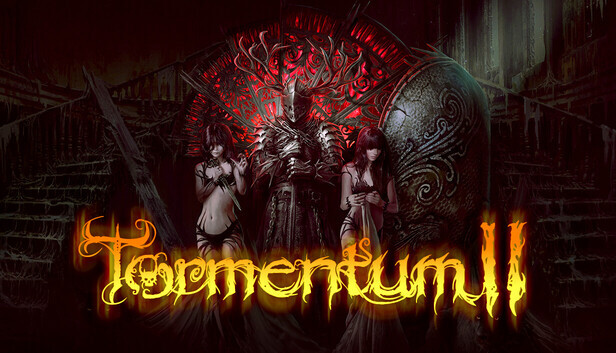
Let’s start by answering the most important question about the story: We had no issues with following Tormentum II’s narrative without having played through the original Tormentum. We’re not entirely sure whether returning fans will get more out of this supposed sequel compared to us newcomers, or if it’s a matter of the game simply wanting to rely on name recognition. Either way, Tormentum II functions as a standalone narrative. Set in the not-too-distant future, the game follows David, an artist who becomes consumed by a fictional world of his own creation. Plagued by recurring nightmares of a mysterious chest that calls to him, David purchases a coprocessor from an anonymous source, only to be thrust into a dreamlike nightmare where the boundaries of reality and simulation blur. The digital creatures that inhabit the simulation appear to have spiraled out of control and speak of Gods from distant places. As David navigates this dark, surreal world, he must face walking nightmares, encounter grotesque beings, and make pivotal decisions. The story is the main driving force to keep playing here, even if the script itself is uneven at times… though we can’t go into too much detail as the unsettling narrative changes based on the morally ambiguous choices you’re forced to make. Your best option is to go in blind and simply see where the story takes you.
Graphics
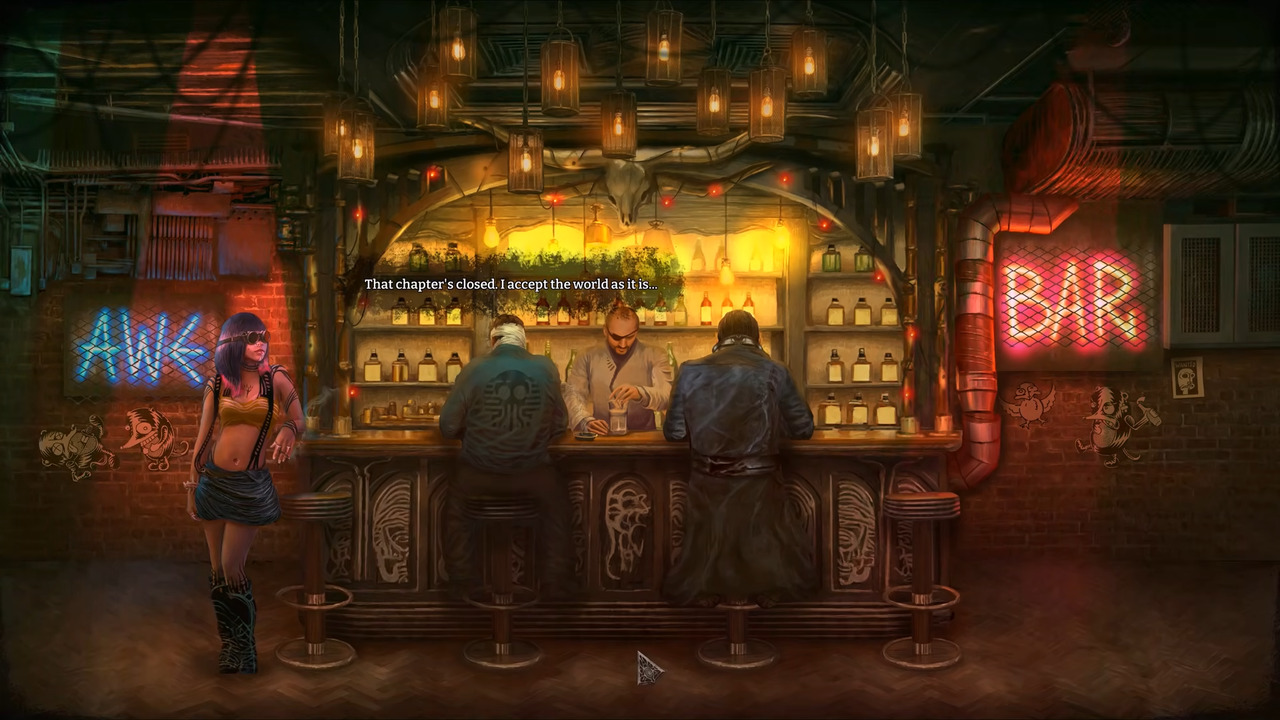
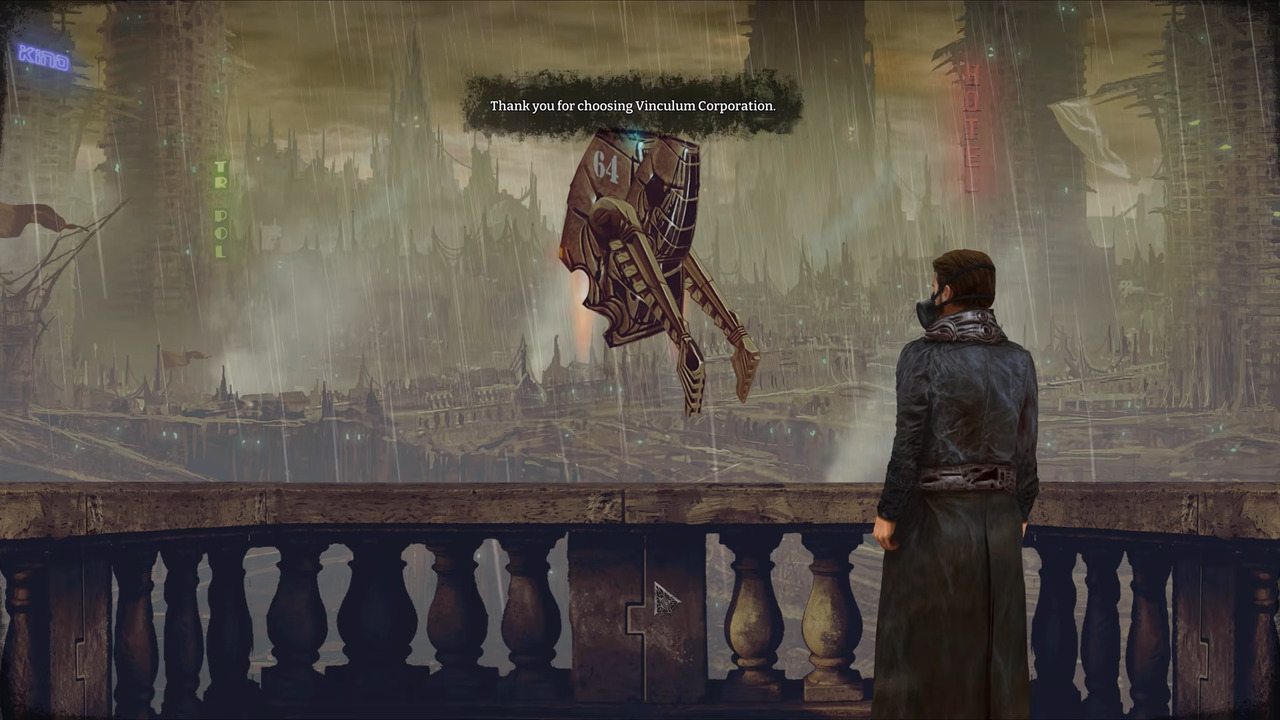
Visual design is without a doubt Tormentum II’s strongest suit. The game’s art style takes inspiration from H.R. Giger’s biomechanical horror and Zdzisław Beksiński’s decaying, boneyard surrealism. The world is filled with organic-industrial architecture, rusted spires, knots of bone and metal, alien faces, phallic objects, fleshy machinery, and figures embedded in walls. Tormentum II reportedly consists of over 200 unique hand-drawn scenes. The game’s world relies heavily on static, painted still screens rather than heavy animation, resulting in a game that isn’t too demanding in terms of visual performance. It also imbues the overall feeling of a 90s PC game, thanks to the staticness of its art, even though the increased resolution firmly places Tormentum II in 2026.
Sound
The strong visuals are accompanied by a moody, haunting, and atmospheric soundtrack that ranges across different genres, including eerie synths and even elements reaching into metal. Music acts as a key element, playing an important part in swelling the atmosphere and unease throughout the quiet, static scenes. This is further supplemented by strong sound design that utilizes evocative clings and clangs of fleshy machinery. Sound is also integrated directly into certain environmental puzzles, such as when you have to click stone dolls in a specific sequence to produce a haunting melody. The only letdown in Tormentum II’s soundscape is that the game lacks voice acting, which is something that really would’ve enhanced the unsettling mood even further.
Gameplay
Beneath Tormentum II’s grotesque horror facade, you’ll find a classic, old-fashioned point-and-click adventure loop. You navigate between fixed, painted screens, examine environmental details, collect items into an inventory, interact with grotesque NPCs, and solve puzzles to unlock new areas.There is no combat, action, or reflex-based mechanics here, although this doesn’t take away the constant feeling of dread and unease that accompanies the game itself.
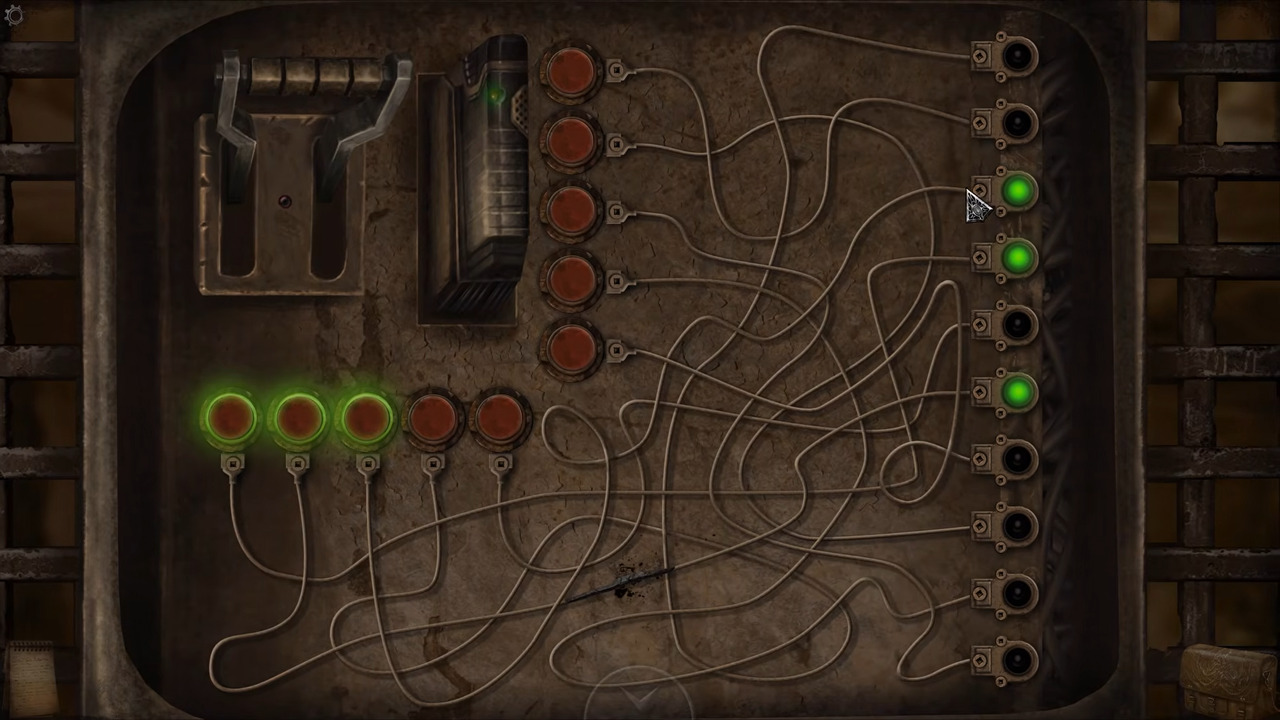
Puzzles are split into two categories: inventory combination riddles and self-contained environmental logic puzzles. Seasoned point-and-click veterans probably won’t find either category particularly challenging, though we’ll admit that the game does fall into the common trap of solutions being obtuse or logic-defying. Notes and clues can be reviewed in David’s sketchbook to assist with puzzle solutions, and we did heavily rely on that to carry us through some of the conundrums we were faced with. That’s not to say that Tormentum II feels poorly designed. We definitely appreciated the attention to accessibility here: interactable items are highlighted to reduce pixel-hunting, hint systems are streamlined and there are no timed inputs or fail states present.
Perhaps the most remarkable thing about Tormentum II is how replayable it is. Point-and-click adventure games typically only offer a single “right” way to make it to the end, but here you’re repeatedly forced to make decisions that carry no clear clean answer, dictating life-or-death outcomes for NPCs and altering the course toward multiple distinct endings. While a single playthrough only takes 8 to 12 hours, a second playthrough offers genuine incentive to see alternate narrative paths, drastically increasing the length and value proposition of the game. At €18.99, you’re getting a good deal here.
Conclusion
Within its chosen genre niche, Tormentum II achieves almost everything it sets out to accomplish. The hand-drawn art is nothing short of outstanding, and the eerie sound design elevates the experience, offering immense artistic value across an 8- to 12-hour playthrough. The game perhaps plays it a bit too safe when it comes to its classical point-and-click mechanics, and the lack of voice acting also prevents it from reaching absolute perfection, but there is enough here to outright recommend this one.





No Comments