


Developer: Team Quantum Games
Publisher: EastAsiaSoft
Platform: PC, Switch (2), PS4, PS5, Xbox One, Xbox Series X|S
Tested on: Switch 2
Clarity: The Seven Demons of Vanguardia – Review
If you’ve been paying attention to our reviews, you’ll have noticed that the vast majority of EastAsiaSoft’s releases over the last few months have been bite-sized puzzle games and visual novels. The days when every other EastAsiaSoft title was instead a lewd or borderline hentai game seem to be over (fortunately). Their latest release, Team Quantum Games’ Clarity: The Seven Demons of Vanguardia, is neither a visual novel nor a puzzle game, indicating that the publisher is at least still open to more than just those. Does Clarity provide a welcome change of pace to EastAsiaSoft’s library?
Story
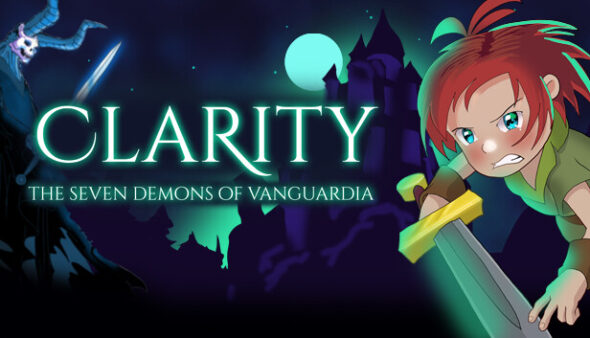
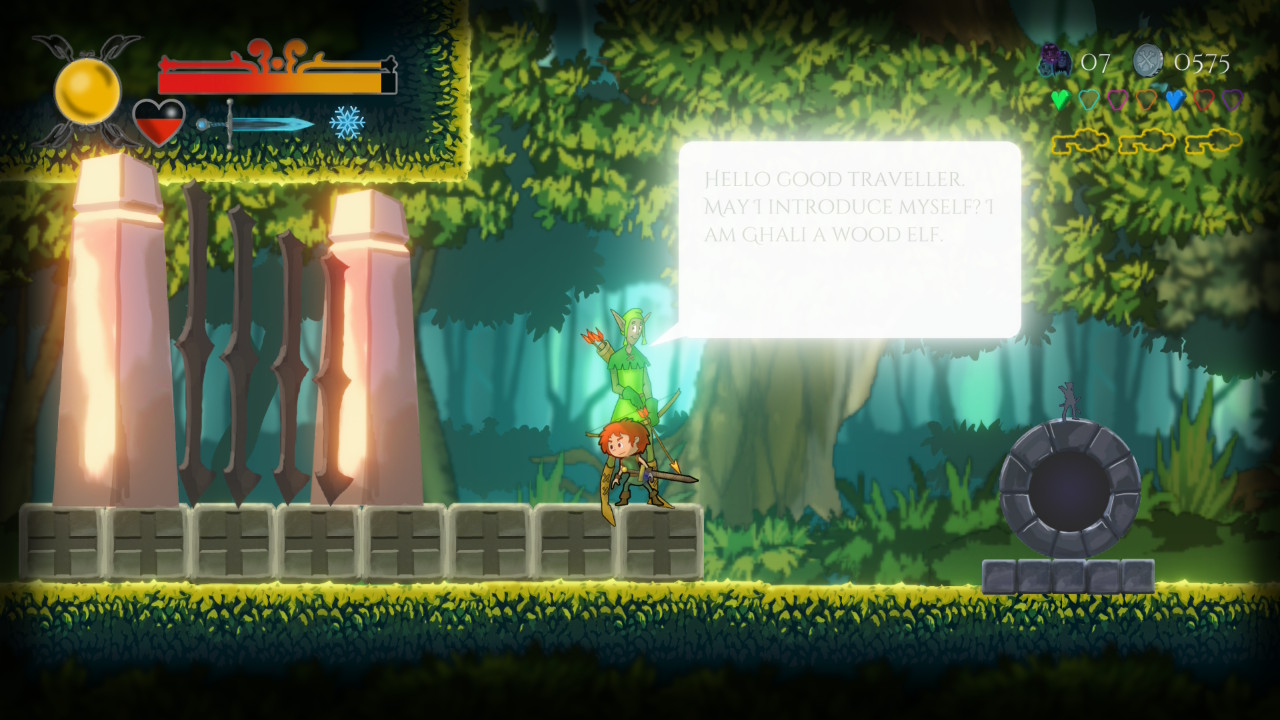
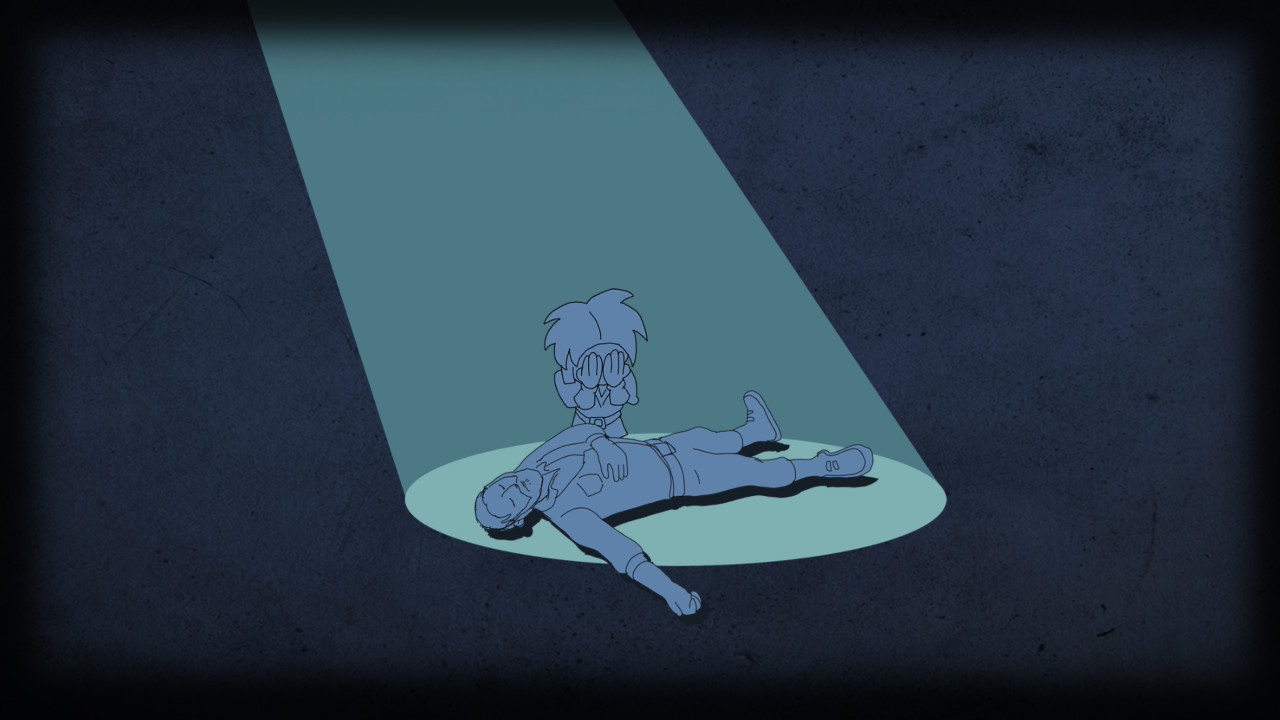
A cutscene opens Clarity, showing our protagonist enjoying a peaceful moment of father-and-son bonding. Suddenly, an evil skeleton bursts in. The bony fiend kills the protagonist’s father, refuses to elaborate, and leaves. Now fatherless, our young hero sets out for revenge. As straightforward as this base premise is, the events that unfold over the course of the game are vague to say the least. From what we could piece together, the murdering skeleton is the leader of a group of seven elemental skeletons, which we assume are the titular Demons. The presence of these skeletons is never explained. They’re just kind of… there. Before we can exact revenge, we’ll need to venture deep into each of the world’s biomes to slay the other six. Along the way, there’s a cast of quirky characters, including Ghali, a wood elf who has lost his magic arrow, and a friendly blue dragon guarding a gate. However, Clarity never does anything interesting with its cast. They act mostly as set dressing and hand out simple fetch quests. To add insult to injury, their dialogue is either poorly translated or poorly written, as it is riddled with spelling and grammar errors.
Graphics
We feel like we understand what Clarity’s art direction is trying to do, but its execution leaves a lot to be desired. Aesthetically, the visuals come across as cobbled together, with an inconsistent level of detail across the game. The game’s best assets, mostly its environments, look fine, if a little generic. At its worst, the game’s assets simply look like they weren’t drawn by a professional artist but instead by an inexperienced DeviantArt user attempting to copy something better. Animations are choppy rather than fluid, and we even ran into a visual glitch where an enemy simply turned invisible when its attacking animation started. For some reason, dialogue boxes are bathed in a white glow, making it very difficult to read the text within them.
Sound
When it comes to Clarity’s soundtrack, ‘tonal whiplash’ comes to mind. While the game itself is an action platformer, the music is made up of relaxing, soothing tunes that simply don’t fit the overall atmosphere. The only voice ‘acting’ present in the game doesn’t involve dialogue, but instead consists of effects like the whiny whimpers of our protagonist when he gets hit and the evil laughter of skeleton bosses. As for sound effects, the only thing notable about these is that they serve a gameplay purpose. They often telegraph the position of enemies or environmental hazards like falling crystal spikes. We wouldn’t be surprised if the entirety of Clarity’s soundscape was made up of pre-existing assets.
Gameplay
As far as platformers go, Clarity is a bit of an oddity. It’s not a straightforward ‘point A to point B’ game, but it’s not quite a Metroidvania either, sitting somewhere in the middle. A brief tutorial introduces you to the game’s basic controls. When the game begins, abilities like dashing, rolling, and double-jumping are already unlocked. As such, there is no need for backtracking in order to reach previously inaccessible areas, as every nook and cranny is explorable from the get-go. Each of the six elemental stages can be tackled in any order too, leading up to that final boss. These stages are non-linear and massive, with the Ice area taking us roughly 45 minutes to complete. Although each stage stands on its own, if you look at the in-game map, you’ll see where they are relative to one another. The non-linear structure adds to the game’s overall Metroidvania feel. That said, the stages are simply poorly designed. Checkpoints are too few and far between, and the tasks in each stage feel like an afterthought. Looking back at the Ice area, for example, the aforementioned blue dragon tasks you with collecting three keys to open a gate. You’d expect the keys to be spread out over the world, incentivizing you to go out and look for them, but instead they are pretty much next to each other, which defeats the point of there being three instead of one.
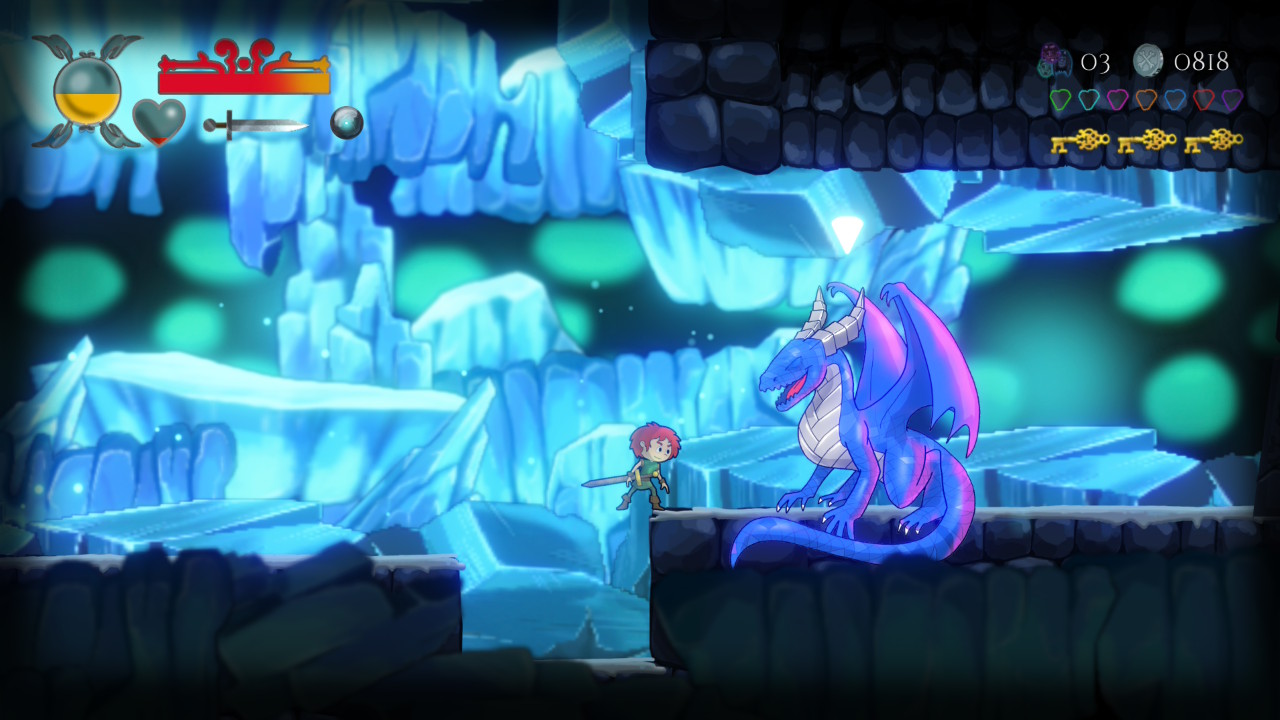
Controlling our protagonist is a challenge in its own right. Jumping never feels quite right. Double jumps are floaty, and wall jumping doesn’t involve ricocheting off an opposite wall but instead has you jump upward along the same wall. Obstacles range from being laughably easy to clear to ones that seem impossible to dodge, mostly because they appear in quick succession. The same can be said for certain enemy attacks. Take the fire-breathing turtles, for example: these little buggers will shoot twice in quick succession, and if you dodge the first blast, you’ll inevitably end up getting hit by the second. This brings us to Clarity’s health management, which is among the worst we’ve seen in any game we’ve played recently. You have both a health and a mana meter, the latter being used to launch elemental spells. When you get hit by an attack or run into an obstacle, your health meter depletes, as expected. However, picking up hearts does not refill it. Instead, a separate heart gauge fills up. In order to heal, you need to stand still and push a button to transfer health from the heart gauge to your health meter. To highlight how absurd a mechanic this is: the mana meter fills up as normal when you pick up mana, and you can instantly cast spells with it.
This adds up to the overall feeling that Clarity lacks… well, clarity. Based on the lack of explanation for some of its mechanics, the game expects you to be at least somewhat familiar with the conventions of platformers or Metroidvanias, but then proceeds to defy those very same conventions. You can upgrade your protagonist’s stats by purchasing improved health and mana meters from an in-game shop, either with currency dropped by enemies or… decapitated heads that are hidden across the levels. Why decapitated heads? We have no idea. The boss battles against the elemental skeletons are ridiculously easy, but certain level sections are frustrating death gauntlets, with no checkpoint in sight. It’s quite frankly baffling just how much the game gets wrong about what a Metroidvania or a platformer should be.
Conclusion
As a whole, Clarity comes across as if the developers had a checklist of ingredients they wanted to throw into the game, but completely ignored how those elements actually balance out. It’s mechanically functional, but the lackluster audiovisual presentation, poorly explained story, unintuitive controls, and thoughtless level design all add up to a platformer that simply isn’t worth your time or money.


No Comments