


Developer: さんぼん堂 (Sanbondo)
Publisher: Phoenixx Inc.
Platform: PC
Tested on: PC
Fantasy Maiden Wars – DREAM OF THE STRAY DREAMER – Review
The fictional land ‘Gensokyo’ is never without incidents. There’s a barrier, where youkai and humans live together, usually in peace. When that peace gets disturbed, it is up to our faithful shrine maiden, Reimu Hakurei, and her human friend and magician, Marisa, to solve these issues. DREAM OF THE STRAY DREAMER, developed by Sanbondo and published by Phoenixx Inc., follows our two main protagonists between the canon titles in fun, and oftentimes intense, moments. This review will follow the Marisa route and will mention some of the original Touhou games, but prior knowledge isn’t necessary to play or appreciate this game.

Story
The start of the Marisa route makes it very clear that we are at the beginning of the famous ‘Scarlet Mist’ incident. A nudge to Touhou 6, Embodiment of Scarlet Devil. When she notices that her lazy friend Reimu hasn’t gone off to solve the problem at hand yet, she senses an opportunity to be taken seriously and goes off on her own.
Typical Marisa-style, she runs into trouble along the way, of course. First, she meets the smart kappa Nitori, who is attacked by reporter Aya and soldier Momiji, two Tengu tasked to protect the Youkai Mountain. It is here that there is a small hint of another character appearing, namely Sanae, who doesn’t appear until Touhou 10, Mountain of Faith. After Marisa stands up for her newly made friend, the pair goes off to visit Alice.
Though not canon, it is clear that the creator of the game has put a lot of thought into the storytelling of this fan-made creation. They also did their best to stay as true as possible to the character’s personality. Marisa is still her typical “shoot first, ask later”-personality, whilst Alice Margatroid is the calm and introverted voice of reason behind her.
Graphics
The visuals in DREAM OF THE STRAY DREAMER switch between these gorgeous paitning-esque backgrounds during storytelling, and a grid-like map with our beloved characters in a fun and recognisable pixel style.

Whilst there isn’t much to say on the story backgrounds, as they are just there to set the mood. There are several notable aspects to point out about the map during fight sequences. The field is mapped out in a rather classic 1990s style, depicting the area where our characters are fighting. Though they do set the tone for ambience, the map itself is nothing more than a simple background as well. Because all the fights essentially take place in the air, things like trees and lakes have the same effect as a normal pathway in between them. More on that later when we cover the gameplay.
However, for fans, it’s still a pleasant view. One of the fights takes place outside Alice’s house, and the creators made sure to include her house on the map, as it plays an essential role during the fight. Although it remains a simple background, it indicates where the ‘boss’ will spawn once specific conditions are met. It’s a nice little detail that makes the otherwise flat environment somewhat alive.
Sound
Fans of the Touhou franchise know that sound is as important to the characters as they are themselves. Every named character in the original games has their own theme, and Sanbondo was very aware of this. Throughout the gameplay, players are met with Sanbondo’s take on the character’s themes and places. They especially shine when a character properly attacks. For example, when Nitori shoots missiles at some fairies (yes, this is that game), a remix of her theme ‘Candid Friend’ plays in the background. It is a shame the themes don’t go on for longer than the initial fight; however, as it leaves us little time to enjoy these fantastic remixes.

Though the menu does give us the option to go into the ‘library’ to listen to all the collected tracks, it is a shame these are more of a side-thing than implemented longer in the actual gameplay.
Furthermore, during the menu or storytelling, more relaxing songs are played that really give you the idea that you yourself are inside the place where the story takes place. For example, when Marisa visits Kourindou, an antique store, the background will play a casual eastern-inspired tune. This is very fitting for the scene that plays in front of us at that moment.
Gameplay
Fantasy Maiden Wars – DREAM OF THE STRAY DREAMER is a strategy title where battles take place on grid-covered maps, but with a Touhou twist. Allied units can each move and attack characters within their vicinity or buff nearby allies. The fun part is that every character has unique skills and abilities, making every character their own thing, rather than just a skin for a deployed unit. For example, Alice can summon dolls that work as little dummies to bait enemies so she can attack them from afar. Marisa has long-range offensive attacks, and Nitori can heal her allies with her nifty gadgets.

To make the gameplay fit Touhou even more, characters have a certain ‘aura’ around them. Once a character is inside these tiles, dodging the attacks will become more difficult, and the chances of taking higher damage become more prominent. Although this concept is hard to grasp at first, the tutorials make it somewhat clear enough to comprehend, albeit with a little trial and error.
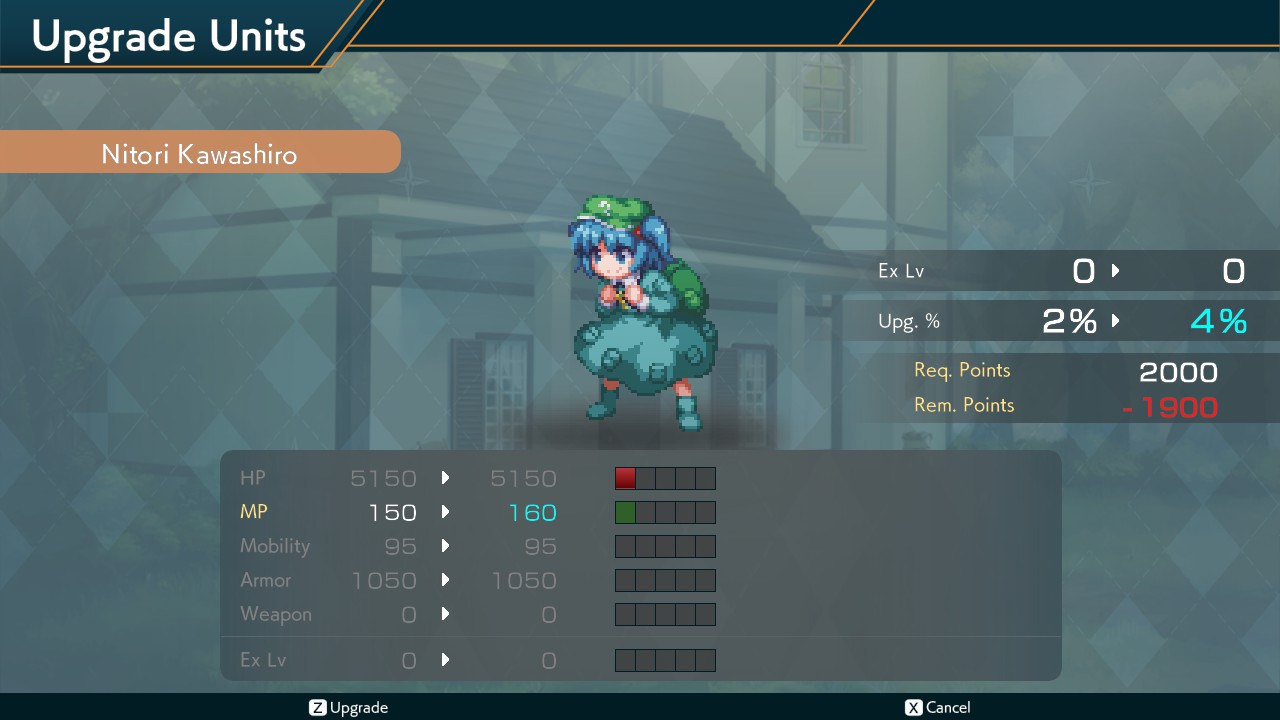
Where DREAM OF THE STRAY DREAMER may lose some players is in the rather filled way of leveling up your characters. When upgrading, 5 stats can be managed: HP, MP, Mobility, Armor, and Weapon. Aside from upgrading units, you can also equip them with various items. The number of items a character can be equipped with, as well as which stats to upgrade, is overwhelming and questionable at times. Players unfamiliar with this genre of games might be held back by this aspect or not fully understand how to maximize the potential of their favorite characters.
Conclusion
Fans of Touhou will have an absolute blast seeing their favorite franchise put in a new light, where characters intertwine who previously hadn’t before. A solid story combined with subtle hints of canon games and lore alike, mixed with a new way of danmaku battles, Sanbondo really tried their best with this fanmade game. Players who have little to no experience with tactical strategy RPGs may find themselves held back by unit management or not fully understanding the gameplay at first. All in all, DREAM OF THE STRAY DREAMER is a great fan-made Touhou game.





No Comments