


Developer: Jack Astral
Publisher: EastAsiaSoft
Platform: PC, PS4, PS5, Switch (2), Xbox One, Xbox Series X|S
Tested on: Switch 2
Faye Falling – Review
Once again, we’re taking a dive into our backlog to bring you a game that slipped through the cracks. Today’s subject, Faye Falling, debuted on the Switch back in August. It’s the kind of game that, on paper at least, demanded that we sat down and paid attention, at least more so than relatively simple palette cleansers like Super Mining Mechs or Heroes Battle Awakening. We wanted to give Faye Falling the time it deserved, which ironically meant it slid down our priority list, as more prominent titles were vying for our attention. We’re rectifying that now, however. So, did we fall for Faye Falling or was it a Faye-l?

Story
Much of Faye Falling’s story is deliberately shrouded in vagueness. The game doesn’t spell things out but focuses on mood, symbolism and visual cues, expecting players to interpret things for themselves. This starts with our protagonist, a recently deceased soul who cannot remember their past life, or even how they died. An unknown entity guides the spirit protagonist through a decaying version of purgatory. Our spirit must defeat a growing darkness there, while simultaneously uncovering the truth about itself. As it progresses, it recovers fragments of its memory and meets strange characters. The story isn’t afraid to touch on heavier themes like mental health and mortality, and it handles these themes well.
Graphics
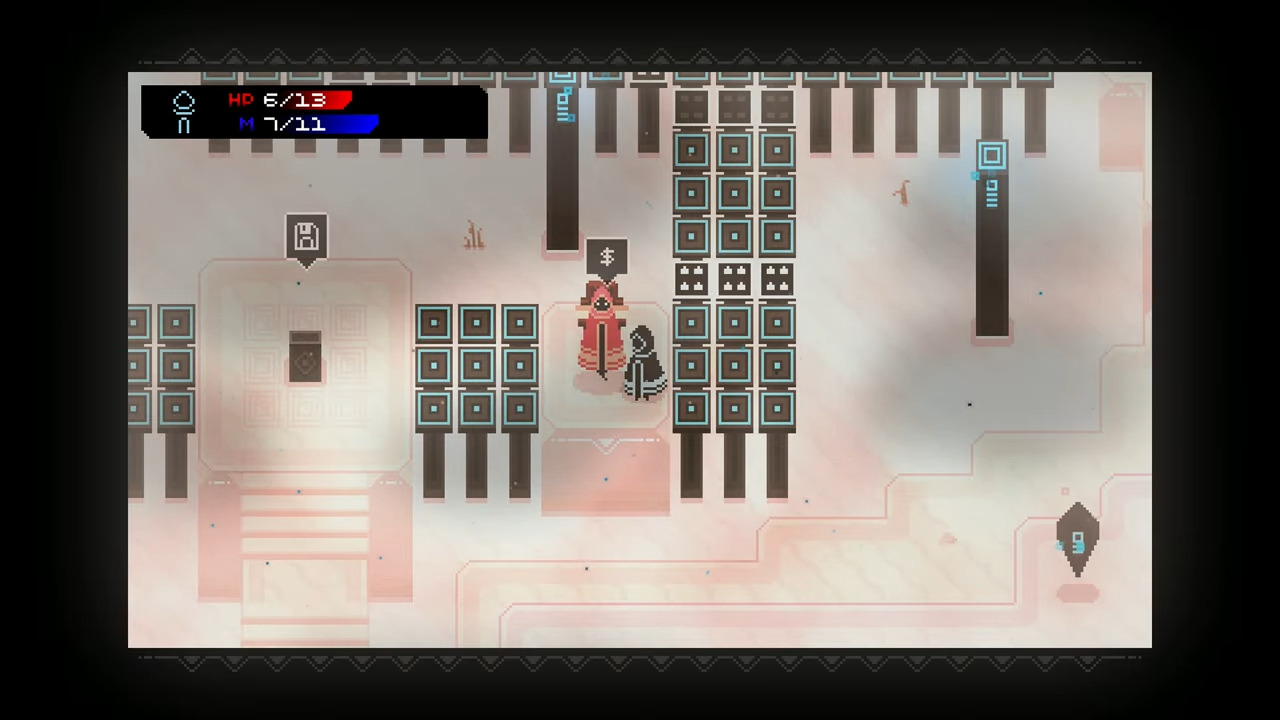
Despite the inherent simplicity of its visual style, or perhaps because of it, Faye Falling is a striking-looking game. The game uses top-down 2D pixel art that feels like it was pulled right out of the Game Boy Color era. The game’s colour palette in particular stands out: the bright, vibrant overworld contrasts with dark, dimly lit tunnels and bleak buildings. The crumbling depiction of the afterlife matches the game’s narrative themes of death, loss and mortality. This does come at a cost, however: the character designs aren’t particularly memorable. We understand that Faye Falling opts for generic hooded NPCs for narrative reasons, and it works to a certain degree, but a couple of standout characters would have gone a long way here.
Sound
The synth-driven soundtrack plays a load-bearing role for Faye Falling’s atmosphere. It alternates between peaceful, ethereal exploration music and intense, high-energy tracks that play during battles. The irony here is that the rest of Faye Falling’s soundscape falls flat. The music takes center stage, not just because of how good it is, but also because there isn’t anything of substance audio-wise to contend with it. Voice acting is non-existent, and the game’s ambience and sound effects are functional but also completely forgettable.
Gameplay
Up until this point, we’ve been avoiding direct comparisons between Faye Falling and Undertale, but the elephant in the room has gotten too prominent to ignore. Faye Falling is heavily inspired by Toby Fox’s smash hit, and nowhere is this more clear than in its gameplay. What you’re getting here is a top-down turn-based RPG adventure that combines puzzles and exploration with hybrid combat. Progress often requires memorizing the locations of obstacles and blocked routes, which can be overcome later on, when you unlock new abilities, like a dash move. Unlocking new abilities and other rewards are in turn, often tied to mini-game challenges, like having to collect a number of coins while avoiding hazards.
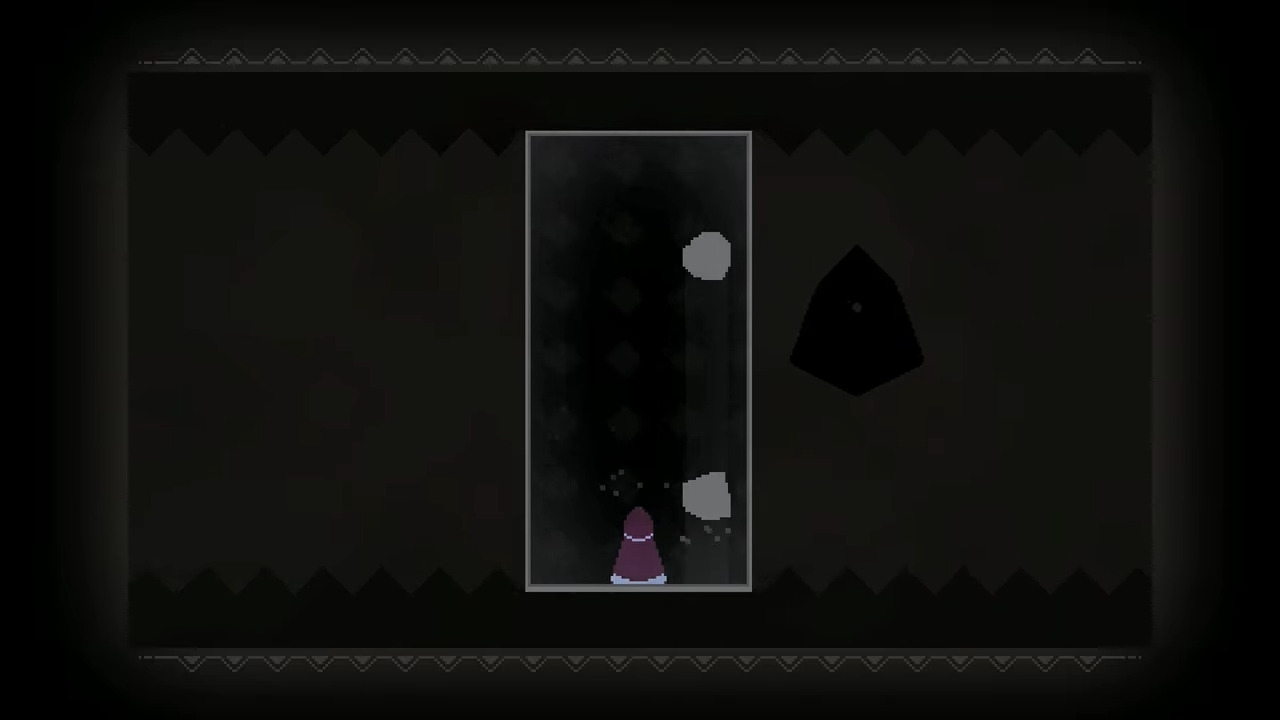
Combat is perhaps where Faye Falling most closely resembles Undertale. Battles are mostly turn-based, but when enemies attack you, the game switches to a fast-paced dodging mini-game. Successfully avoiding damage can then enable stronger counterattacks. On your turn, you choose between melee attacks, spells and items, with timing occasionally affecting damage output, or you can attempt to flee. Defeating enemies nets you experience. This allows you to level up, upgrade your stats and unlock new spells. There are several paths to choose from, such as Mind, Soul or Heart, that supposedly influence stat growth, although the differences between these are relatively minor.
Combined with how linear Faye Falling feels, that does translate into a game that lacks replayability, especially compared to its main source of inspiration. While the game boasts a New Game+ mode and branching endings, the core experience becomes repetitive fairly quickly. There wasn’t enough to compel us to immediately return to Faye Falling after the credits rolled, although perhaps we’ll give it another shot a couple of months down the line. That first playthrough took us around 7 hours, which feels fair for the €7.99 RRP. However, since this is an “older” game, relatively speaking, it goes on a 50% discount fairly often, so at that price point, it should be a no-brainer if you’re a fan of Undertale or Deltarune.

Conclusion
The strength of Faye Falling isn’t in its gameplay, but in its narrative and presentation, particularly its soundtrack. It takes more than a few pages from Undertale’s book, and fans of that will definitely enjoy what’s on offer here, but Faye Falling’s appeal is wider than that. The way Faye Falling handles the universal themes of its narrative gives the game an identity of its own. Don’t get us wrong, Faye Falling is still very much a niche game rather than one with a mainstream appeal, but if you happen to fall in that niche, this one comes highly recommended, even if it has a few shortcomings.




No Comments